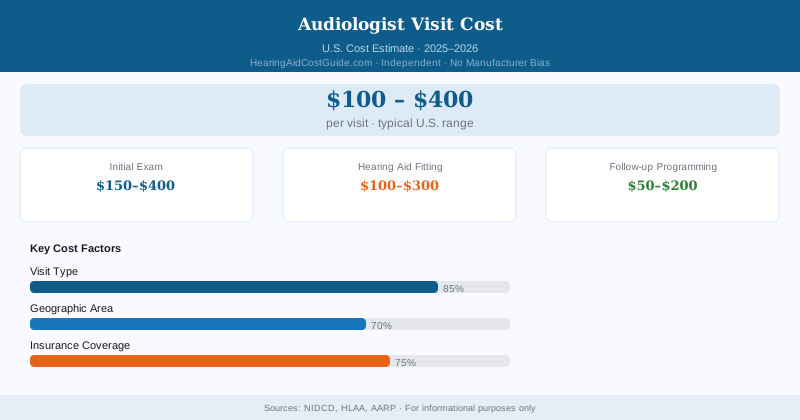
Before you make an audiology appointment, it helps to know what you’re actually paying for — and how the billing structure at the clinic you’re calling might affect your total cost. The answer isn’t as simple as a single price tag. It depends heavily on whether the practice uses bundled or unbundled pricing, and on what services you actually need.
Audiologist Visit Costs by Appointment Type
| Visit Type | Typical Cost (Without Insurance) | Duration |
|---|---|---|
| Initial consultation (no testing) | $100–$200 | 30–45 min |
| Comprehensive audiological evaluation | $200–$350 | 60–90 min |
| Hearing aid consultation/recommendation | $0–$150 (often bundled) | 45–60 min |
| Hearing aid fitting (initial) | $200–$400 (or bundled) | 60–90 min |
| Hearing aid programming/adjustment | $75–$200 per visit | 30–45 min |
| Real-ear measurement (standalone) | $100–$200 | 30–45 min |
| Annual follow-up exam | $100–$250 | 30–60 min |
| Tinnitus evaluation | $200–$400 | 60–90 min |
| Pediatric evaluation | $250–$500 | 60–120 min |
Bundled vs. Unbundled: The Pricing Question That Changes Everything
This is probably the most important thing to understand before you walk into any audiology clinic.
Bundled pricing is the traditional model: the clinic wraps 1–3 years of professional services into the hearing aid purchase price. A $5,500 pair of hearing aids “includes” your initial evaluation, the fitting, and all follow-up adjustments for the next 2–3 years. There’s no separate bill each time you come back for a tune-up.
What you gain: Predictable total cost. No invoice after every appointment. An incentive to actually show up for follow-ups (which is good — most people don’t use their hearing aids optimally because they skip them).
What you give up: Flexibility. If you move cities, change audiologists, or your clinic closes, you’ve pre-paid for services you’ll never receive. It’s also nearly impossible to compare prices across clinics when the professional services cost is buried inside the device price.
Unbundled pricing is the transparent alternative — increasingly common at academic medical center audiology departments and some independent practices. You pay for the device at or near wholesale cost, and separately for each service as you use it.
What you gain: Full cost visibility. You pay only for what you actually use. It’s the better model if you’re a confident self-manager who won’t need frequent adjustments.
What it costs: Out-of-pocket each visit. If you need four adjustment appointments in year one, that’s $300–$800 in service fees on top of the device.
Call ahead and ask: “Do you use bundled or unbundled pricing? If bundled, what is the device price and what services are included? If unbundled, what are your charges for an initial audiogram, fitting, and follow-up visits?” Most practices will answer these questions by phone. If they won’t provide any pricing information, that’s a red flag.
What Your First Visit Looks Like (Step by Step)
A first visit to an audiologist generally goes like this:
- Case history: 10–15 minutes of questions about your noise exposure history, family history of hearing loss, any medications that might affect hearing, and your specific complaints
- Otoscopy: Visual inspection of your ear canal and eardrum — quick, often reveals obvious issues like wax impaction
- Tympanometry: Middle ear pressure and eardrum mobility assessment
- Pure-tone audiometry: Air and bone conduction testing that maps your hearing thresholds
- Speech audiometry: Word recognition score — how well you understand speech at comfortable volumes
- Results counseling: The audiologist walks through your audiogram with you and explains what it means
- Recommendations: Whether hearing aids are appropriate, what type, and what referrals (if any) are needed
This full evaluation costs $200–$350 at most private practices. At hospital-affiliated departments, you’ll typically pay your specialist copay instead.
Year One With Hearing Aids: What Follow-Ups Actually Cost
The first year usually involves four to six appointments, and most people underestimate how important these are. The fitting is just the starting point — what makes hearing aids work is the follow-up.
- Initial fitting: $200–$400 standalone; included in bundled pricing
- 2–3 week check-in: Adjustments based on real-world experience — $75–$150
- 6-week follow-up: Fine-tuning, real-ear verification if not done at fitting — $75–$200
- 3-month follow-up: Most users are adapting well by now — $75–$150
- Annual check: Battery, cleaning, programming review — $100–$250
Under unbundled pricing, that first year of service runs $500–$1,200. Under bundled pricing, it’s all included — which is why the bundled device price looks high but isn’t always the worse deal.
According to data from the Hearing Industries Association, only about half of hearing aid users attend all recommended follow-up appointments in their first year. People who do attend see significantly better satisfaction outcomes. That context matters when you’re evaluating pricing models.
What Insurance Pays For
Medicare Part B covers diagnostic audiological evaluations when a physician orders them and they’re deemed medically necessary. It doesn’t cover routine annual tests or hearing aids themselves — a significant gap given that the NIDCD estimates 28.8 million U.S. adults could benefit from hearing aids.
Private insurance covers audiological evaluations as specialist visits at typical specialist copay rates ($30–$75 after deductible). Hearing aid coverage under private plans varies enormously — some cover $500–$1,500 per pair every 3 years, others cover nothing.
Medicaid covers audiology services in most states. Hearing aid coverage varies by state.
Billing codes matter. An audiological evaluation billed as a diagnostic procedure under the correct CPT code (92557, 92553, etc.) is usually covered by insurance. The same services billed as a “hearing screening” may not be. Ask your audiologist’s billing staff to use diagnostic CPT codes if you have an existing hearing complaint.
Audiologist vs. Hearing Instrument Specialist: Does It Matter?
Audiologist (AuD): Doctoral-level degree with four years of post-graduate clinical training. Can diagnose hearing disorders, fit all hearing aid types, evaluate pediatric patients, and coordinate with ENTs on complex cases. Best choice for anything outside straightforward adult hearing aid fitting.
Hearing Instrument Specialist (HIS): State-licensed, with a more focused scope around hearing aid dispensing. Not a doctoral-level clinician. Entirely appropriate for uncomplicated adult hearing aid needs.
Costco Hearing Centers, HearingLife, and most retail chains primarily employ HIS staff. Hospital audiology departments and academic medical centers employ AuD-level clinicians. For a 68-year-old with bilateral age-related hearing loss who needs hearing aids? Either works fine. For anything more complex — one-sided loss, sudden changes, pediatric evaluation, or tinnitus management — go with an audiologist.
Frequently Asked Questions
An initial audiological evaluation typically costs $100–$300 without insurance, depending on the complexity of testing and whether the clinic uses bundled or unbundled pricing models. This exam includes hearing tests, ear canal inspection, and a detailed assessment of your hearing loss, and usually takes 60–90 minutes.
Many health insurance plans cover diagnostic hearing tests (initial exams) as preventive care, though you may have a copay of $20–$50, but most plans do not cover hearing aid fittings or the devices themselves, leaving you to pay $200–$400 out-of-pocket for fitting appointments. Medicare covers one diagnostic hearing test every 12 months with a copay, but excludes hearing aids; some supplemental plans may offer limited coverage.
Most patients require 2–4 follow-up programming and adjustment sessions over the first 3–6 months, each costing $75–$200, to optimize hearing aid settings and address any fit or comfort issues. After the initial adjustment period, annual check-ups typically cost $75–$150 and are often included free with hearing aid purchases from the same provider.