42% of Americans who’ve purchased hearing aids bought them from a hearing instrument specialist or hearing aid dispenser — not a Doctor of Audiology. For many of them, that was the right call. For some, it wasn’t. The difference isn’t always obvious from the outside, and the cost gap is often misunderstood. Here’s how to sort it out.
The Credential Difference
Audiologist (AuD): A Doctor of Audiology holds a four-year professional doctoral degree following undergraduate study — typically 8+ years of training total. They’re licensed to diagnose hearing and balance disorders, provide medical audiological evaluations, and manage complex cases including cochlear implant candidacy, auditory processing disorder, and tinnitus. ASHA (American Speech-Language-Hearing Association) certifies audiologists through the Certificate of Clinical Competence in Audiology (CCC-A).
Hearing Instrument Specialist (HIS) / Hearing Aid Dispenser: A licensed hearing aid dispenser completes a shorter training program (typically 1–2 years of coursework plus supervised practice) and passes a state licensing exam. They’re licensed to test hearing for the purpose of fitting and dispensing hearing aids. They’re not authorized to diagnose medical conditions of the ear or manage complex audiological disorders.
Both are licensed. Both can fit hearing aids competently. The relevant question is: what does your situation actually require?
Cost Comparison
| Service | Audiologist (AuD) | Hearing Aid Dispenser |
|---|---|---|
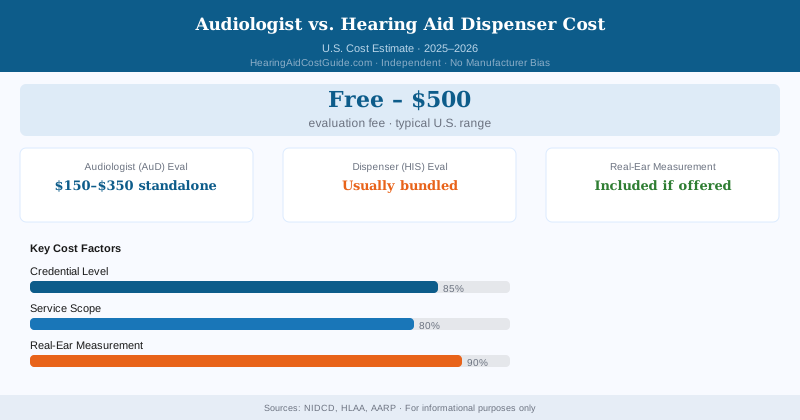
| Comprehensive hearing evaluation | $150–$350 (often billed separately) | Usually bundled into device purchase |
| Hearing aid fitting & programming | $200–$500 standalone; often bundled | Usually bundled into device price |
| Real-ear measurement verification | Standard of care, typically included | Variable — some do, many don’t |
| Follow-up adjustment visits | $50–$150 per visit, or included in bundle | Variable by provider |
| Hearing aid pricing | Comparable; often $2,000–$7,000/pair | Often similar; discount chains may be lower |
| Tinnitus evaluation | $200–$400 | Not within scope |
| Cochlear implant evaluation | AuD only | Not within scope |
The Bundled vs. Unbundled Pricing Reality
This is where cost comparisons get genuinely complicated. Most audiology practices and hearing aid dispensers bundle their professional fees into the device price. You pay $5,500 for a pair of hearing aids — and that includes the evaluation, fitting, programming, and typically 1–3 years of follow-up visits.
Unbundled pricing (where each service is billed separately) is growing, particularly among university clinics and some independent audiologists. Unbundled is typically better value if you need fewer follow-up visits; bundled is better value if you need a lot of adjustments in the first year.
According to NIDCD data, first-time hearing aid users average 3–4 follow-up adjustments in the first year. If each visit costs $75–$150 unbundled, a bundled package that includes unlimited first-year visits is clearly economical.
“Do you perform real-ear measurement verification at fitting?” Real-ear measurement (REM) is the gold standard for confirming a hearing aid is actually programmed to your audiogram at your ear canal, not just at factory target settings. Studies consistently show REM-verified fittings outperform manufacturer-only targets. It adds 20–30 minutes to the fitting appointment and requires specialized equipment. Many dispensers and some audiologists skip it. If the answer is no — ask why, or find a provider who does it.
When You Need an Audiologist vs. When a Dispenser Is Fine
Choose an audiologist when:
- You haven’t had a hearing evaluation in 2+ years — you need a baseline diagnostic audiogram, not just a screener
- You have sudden hearing loss, asymmetric loss, or loss with other symptoms (dizziness, pain, drainage) — these require medical evaluation
- You’re a cochlear implant candidate — AuD is required
- You have auditory processing disorder, tinnitus requiring clinical management, or complex balance issues
- You’re a child — pediatric audiology requires specialized AuD training
- Your hearing loss doesn’t fit the “typical” sensorineural pattern
A hearing instrument specialist may be sufficient when:
- Your hearing loss is confirmed sensorineural (nerve-based), bilateral, and moderate in degree
- You’ve had a recent audiogram and just need a new device or adjustment
- You’re repurchasing after years of successful hearing aid use
- You’re buying at a major discount retailer like Costco, where the hearing specialists are certified and trained
ASHA notes that approximately 37.5 million American adults report some degree of hearing loss. The majority have straightforward age-related sensorineural loss — a pattern well within the competence of a well-trained dispenser at a reputable practice.
Costco Hearing Centers: A Special Case
Costco employs licensed hearing instrument specialists (and in some locations, audiologists). Their pricing is significantly lower than private audiology practices — typically $1,400–$1,800 per pair for Phonak- and ReSound-based devices. They perform proper audiograms and do real-ear measurement at many locations.
The Costco model fits well for adults with uncomplicated age-related hearing loss who want significant cost savings and can accept the limitations of a retail setting (limited appointment availability, no cochlear implant pathway, no tinnitus clinical management).
Do Audiology Degrees Produce Better Outcomes?
The research is mixed. What clearly matters more than the provider’s degree is whether they perform real-ear measurement verification, take time for thorough counseling, and do proper follow-up. A skilled dispenser who does REM and patient counseling will typically produce better outcomes than an audiologist who skips REM and rushes appointments.
The degree matters most for diagnostic accuracy (did they catch the acoustic neuroma?), complex case management, and conditions beyond simple hearing loss. For uncomplicated bilateral sensorineural loss and a straightforward first or second hearing aid fitting, outcomes are comparable across provider types when practices are equivalent.
Be cautious of any hearing provider — audiologist or dispenser — who recommends the highest-tier hearing aids at your first visit without a detailed lifestyle discussion, or who won’t provide an itemized quote separating device cost from professional fees. Ethical hearing care providers welcome questions about pricing, offer trial periods, and don’t pressure. If you feel pressured, find another provider. The hearing aid market has a history of high-pressure sales tactics — they exist at both audiology clinics and dispenser chains.