Hearing aids arrived in the mail on a Tuesday. By Friday, the TV still sounded like mumbling, conversations at the dinner table were still a blur, and the whole thing got shoved in a drawer. Sound familiar? A 2021 study in the American Journal of Audiology found that patients who paired hearing aids with structured aural rehabilitation reported significantly better communication outcomes than those who got hearing aids alone. The devices restore the signal. They don’t automatically retrain your brain to interpret it again.
That’s what aural rehabilitation (AR) does — and most people have never heard of it.
What Is Aural Rehabilitation, and Do I Actually Need It?
Getting hearing aids is step one. Aural rehabilitation is what helps you use them. Most people who get fitted have spent years — sometimes decades — with untreated hearing loss. The brain adapts. It learns to fill gaps with lip-reading, context clues, and guesswork. Hearing aids restore the incoming signal, but they don’t undo those compensating habits overnight.
The American Academy of Audiology calls aural rehabilitation “an essential component” of hearing health care. It remains one of the most underutilized services in the field — partly because audiologists don’t always mention it, and partly because patients don’t think to ask.
What a Program Covers
The content varies by patient, but a comprehensive AR program typically includes:
- Auditory training: Exercises that retrain the brain to distinguish speech sounds, especially consonants that hearing loss tends to blur — s, f, th, sh
- Speechreading (lip reading): Formalizing the visual cues you already use naturally, making them deliberate and more effective
- Communication strategies: Techniques for managing difficult listening situations — restaurants, phone calls, group conversations where hearing aids alone aren’t enough
- Hearing aid orientation: Making sure you can operate, clean, and troubleshoot your devices with confidence
- Partner and family communication training: Teaching the people you talk to most how to communicate more effectively with someone who has hearing loss
Some programs are one-on-one with an audiologist or speech-language pathologist. Others are group-based — research shows group formats work just as well for the communication strategies component, and they cost less.
What It Costs
| Service Format | Cost Per Session | Typical Program Length | Total Estimated Cost |
|---|---|---|---|
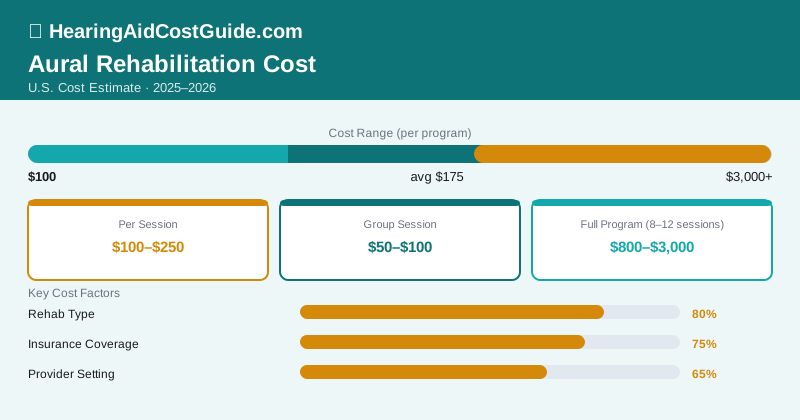
| Individual sessions (audiologist) | $100–$250 | 8–12 sessions | $800–$3,000 |
| Group sessions (clinic-based) | $50–$100 | 6–10 sessions | $300–$1,000 |
| Online self-guided programs | $0–$200 total | Variable | $0–$200 |
| Cochlear implant rehabilitation | Usually included in CI center fee | 3–12 months | Varies |
| Speech-language pathologist sessions | $150–$250 | 8–16 sessions | $1,200–$4,000 |
Free and low-cost online options exist. LACE (Listening and Communication Enhancement) is available through many audiology clinics as part of their hearing aid package. The Ida Institute offers free online resources. Veterans Administration clinics provide aural rehabilitation at no cost to eligible veterans.
Does Insurance Cover It?
Often yes — but you have to ask specifically. Aural rehabilitation is billed under CPT codes 92626 (evaluation of auditory rehabilitation status) and 92630/92633 (auditory rehabilitation, individual and group). Many commercial insurance plans cover these when billed with an appropriate hearing loss diagnosis code.
Call the member services number on your insurance card and ask:
- “Does my plan cover CPT codes 92630 or 92633?”
- “Is there a visit limit per year?”
- “Do I need a referral from my primary care physician?”
- “What’s my copay or coinsurance for this service?”
Some plans cover AR under “speech therapy” benefits, which may have a separate deductible. Get the CPT codes confirmed before you schedule anything.
Medicare Part B covers aural rehabilitation services under certain conditions — when provided by a physician or qualified audiologist as part of a treatment plan with a diagnosis code on the claim. Ask your audiologist to confirm the diagnosis code they’re using when filing.
Cochlear implant recipients typically receive aural rehabilitation as part of their CI center’s post-activation program. Activation is just the start — 3–12 months of structured listening practice is required before most recipients reach their hearing potential. This is usually factored into the CI center’s costs and covered under the cochlear implant benefit.
Who Gets the Most Out of It?
The research points clearly to these groups:
- First-time hearing aid users — especially those with long periods of untreated hearing loss before fitting
- Cochlear implant recipients — AR isn’t optional here; it’s essential for good outcomes
- People with auditory processing disorder — AR addresses the central processing component, not just the peripheral loss
- Adults with sudden or rapid hearing loss — the adjustment period is harder, and the benefit from structured training is greater
People with mild, recently identified hearing loss who adapt quickly to their hearing aids may not need a formal program. But even one or two orientation sessions adds real value.
Aural rehabilitation is separate from the hearing aid fitting and orientation your audiologist provides when dispensing new devices. A standard fitting covers device operation. It doesn’t cover auditory training. If your audiologist hasn’t mentioned AR as a distinct service, ask directly: “Do you offer aural rehabilitation, or can you refer me to someone who does?” It’s a legitimate clinical service — not an upsell.
Bottom Line
Individual aural rehab sessions cost $100–$250; a full program of 8–12 sessions runs $800–$3,000. Group programs and online tools bring that cost down significantly. Most commercial insurance covers it with the right billing codes, and Medicare covers it under appropriate conditions. If you’ve recently gotten hearing aids or had a cochlear implant activated, ask your provider about aural rehabilitation before you decide it’s not for you. The data consistently shows better outcomes for patients who engage with it.