Phone calls were the breaking point for a lot of people who finally got hearing aids. You’d press the phone hard against your ear, turn the volume all the way up, and still miss every third word. Bluetooth hearing aids changed that — calls stream directly into both ears, no speakerphone, no awkward pressing and repositioning. A 2023 MarkeTrak survey by the Hearing Industries Association found that 9 in 10 users who stream phone calls through their hearing aids rank it among the most valuable features they use daily.
But Bluetooth isn’t Bluetooth when it comes to hearing aids. The standard your phone uses, and the standard your hearing aids support, have to match — and the rules are different for iPhone users versus Android users.
MFi vs. ASHA: The Two Bluetooth Standards
Made for iPhone (MFi)
Apple worked directly with hearing aid manufacturers to create the MFi protocol — a low-power Bluetooth variant built specifically for hearing aids. It’s been the industry standard since 2014. More stable than regular Bluetooth, easier on the battery, and simple to set up: go to Settings → Accessibility → Hearing Devices and your aids appear automatically.
MFi hearing aids work with any iPhone running iOS 7 or later. You can adjust volume, switch programs, and control each ear independently from the Control Center.
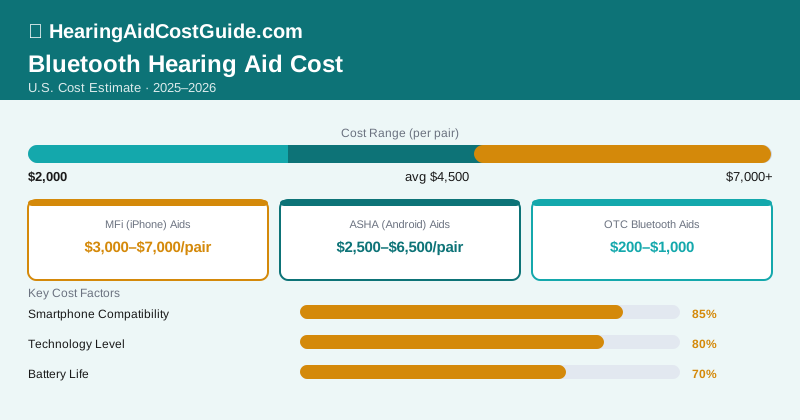
MFi hearing aid cost: $3,000–$7,000 per pair (most premium brands)
ASHA (Audio Streaming for Hearing Aids)
Google developed ASHA as the Android equivalent to MFi, introduced with Android 10. It allows direct audio streaming from compatible Android phones without a separate streaming accessory.
There’s an important catch: ASHA compatibility depends on both the hearing aid brand and the specific Android phone model. Not every Android phone supports ASHA even on Android 10 and above. Samsung Galaxy S series and Google Pixel phones have the broadest compatibility — other Android brands are hit or miss.
ASHA hearing aid cost: $2,500–$6,500 per pair
| Platform | Standard | Compatible Devices | Price Range (Pair) |
|---|---|---|---|
| iPhone (iOS 7+) | MFi | Phonak, Oticon, ReSound, Starkey, Widex, Signia | $3,000–$7,000 |
| Android (10+, select phones) | ASHA | ReSound, Starkey, Signia, select others | $2,500–$6,500 |
| Both platforms | Bluetooth 5.2+ | Phonak Audéo Lumity, Oticon Intent | $3,500–$7,000 |
| OTC (no prescription) | Standard BT | Jabra Enhance, Sony CRE, Lexie | $200–$1,000 |
Which Brands Have the Best Bluetooth?
Phonak was first to market with universal Bluetooth connectivity. Their Audéo Paradise and Lumity series connect to any Bluetooth device — not just Apple or Android — without a streaming accessory. That’s genuinely useful if you use both an iPhone and a Windows PC, or if you switch devices regularly.
Oticon Intent (2024) streams to both iPhones and select Android phones and adds a four-microphone system that tracks where you’re looking to adjust directional audio processing.
Starkey Genesis AI supports both MFi and ASHA and includes built-in fall detection and health tracking — features worth noting for older adults living alone.
ReSound has strong ASHA and MFi support with their NEXIA series and one of the better companion app ecosystems in the industry.
The most practical streaming uses for adults 55+:
- Phone calls: Calls stream into both ears — far easier to follow than pressing a phone to one ear, especially with background noise
- TV: Pair with a TV streamer accessory (sold separately, $150–$250) for direct audio from your television at whatever volume you need
- FaceTime and video calls: Works like phone calls; grandchildren’s voices come clearly into both ears
- Navigation: Turn-by-turn directions from Maps apps stream directly to your aids
- Music and podcasts: A lower priority for many in this age group, but it works well
What Bluetooth streaming doesn’t fix: understanding people in the same room, handling background noise in restaurants, or catching soft talkers. Those depend on the hearing aid’s microphone and noise-processing technology — not the Bluetooth connection.
The Battery Trade-Off
Bluetooth streaming drains battery faster than standard hearing aid use. With rechargeable aids, plan for 3–5 fewer hours of runtime on heavy streaming days versus light-use days. Most rechargeable models offer 18–24 hours of normal use; heavy streaming days might yield 14–18 hours.
Disposable battery aids (size 312 or 13) also drain faster when streaming. If you stream regularly, budget for 20–30% more frequent battery replacements.
OTC Bluetooth Hearing Aids: What $200–$1,000 Gets You
Since the FDA created the OTC hearing aid category in 2022, Bluetooth-enabled over-the-counter aids have expanded quickly. The Jabra Enhance Plus ($799 at Best Buy), Sony CRE-10 ($999), and Lexie Lumen ($799) all offer Bluetooth streaming at a fraction of prescription aid pricing.
What you give up versus prescription devices: professional fitting, real-ear measurement, programming tuned to your specific audiogram, and typically more processing channels. OTC Bluetooth aids are appropriate for mild-to-moderate hearing loss in adults 18 and older. They’re not suited for significant loss or complex audiograms. See our OTC hearing aid cost guide for a full comparison.
Don’t buy Bluetooth hearing aids based on phone streaming alone. Microphone technology, noise processing, and audiologist fitting quality determine the majority of your day-to-day satisfaction. A hearing aid with excellent Bluetooth but weak noise processing will still disappoint you in restaurants and crowded rooms — exactly when hearing matters most. Always ask to demo devices in a real-world environment before committing.
Bottom Line
MFi (iPhone) hearing aids run $3,000–$7,000 per pair; ASHA (Android) aids run $2,500–$6,500. The best universal Bluetooth option — Phonak’s Audéo series — works with any Bluetooth device without a separate accessory. OTC Bluetooth aids at $200–$1,000 are a viable starting point for mild loss but lack professional fitting. If phone call clarity is a daily frustration, Bluetooth streaming is worth the investment. Just don’t let it be the only factor in your decision.