The answer is yes — but it depends on who you are and where you look.
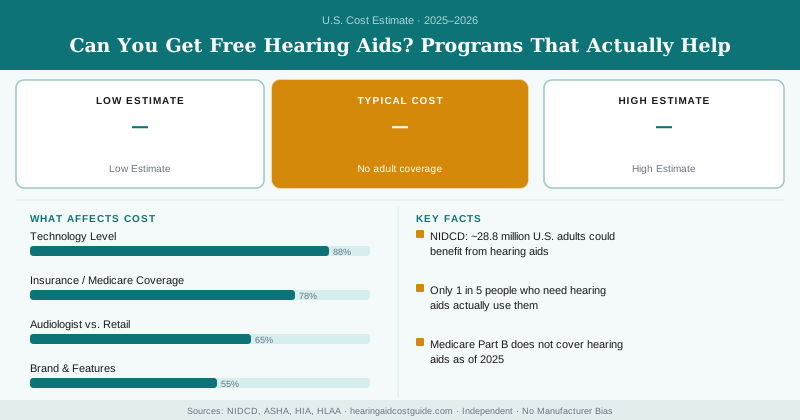
The NIDCD estimates that only about 1 in 5 adults who could benefit from hearing aids actually uses them, and cost is the most-cited reason. What most people don’t know is that several well-funded programs exist specifically to fix that gap. Here’s where the real help is.
Program 1: VA Benefits (Best Option for Veterans)
If you served in the U.S. military, the Department of Veterans Affairs (VA) provides hearing aids at no cost for eligible veterans. This is the single most generous hearing aid benefit available to any American.
Eligibility includes veterans with:
- A service-connected hearing disability (any rating)
- Non-service-connected hearing loss if you receive other VA compensation at a minimum level
- Enrollment in certain VA health care priority groups
The VA provides premium hearing aids — including the latest Phonak and Starkey models — along with batteries, accessories, and follow-up care through VA audiology clinics or contracted audiologists near you.
How to start: Call 1-800-827-1000 or visit VA.gov to establish eligibility and get an audiology referral.
The VA is the largest single purchaser of hearing aids in the United States. As of 2024, the VA provides more than 900,000 hearing aids annually to eligible veterans — free of charge, including fittings, follow-ups, batteries, and repairs.
Program 2: Medicaid
Medicaid covers hearing aids in many states, but coverage varies enormously. Some states (New York, California, Wisconsin) provide robust benefits including fitting and devices for adults. Others provide nothing for adults over 21.
| State Coverage Level | What’s Typically Included | Example States |
|---|---|---|
| Full coverage | Exam, aids, fittings, follow-ups | CA, NY, WI, MN |
| Partial coverage | One aid or limited allowance | Many mid-tier states |
| Children only | Aids for Medicaid-enrolled children | Most states cover kids |
| No adult coverage | Nothing for adults | Several states |
Check your state’s Medicaid hearing aid benefit at Medicaid.gov or call your state Medicaid office directly. Eligibility requirements vary; you’ll need a current audiologist evaluation.
Program 3: Lions Clubs International
Lions Clubs — with 46,000+ local clubs across the U.S. — have been donating hearing aids and covering exam costs for low-income individuals for decades. This isn’t a national catalog program; it’s local, and it works differently in every community.
How to apply: Contact your local Lions Club directly (lionsclubs.org has a club finder). Explain your situation. Many clubs maintain a fund specifically for hearing aid assistance and can act quickly — sometimes within weeks.
Program 4: Starkey Hear Now Program
Starkey, one of the U.S.’s major hearing aid manufacturers, operates the Hear Now assistance program for adults who don’t qualify for other benefits but can’t afford aids at retail prices.
- Income guidelines apply (generally under 200% of federal poverty level)
- $125 application fee per person (covers one or two aids)
- Provides Starkey hearing aids through participating audiologists
- Contact: hearingthefoundation.org or call 1-800-328-8602
Program 5: State Vocational Rehabilitation
Every state has a vocational rehabilitation (VR) agency that helps adults with disabilities — including hearing loss — stay employed. If hearing loss affects your ability to work, your state VR office may fund hearing aids entirely.
Eligibility: You must have a documented hearing disability that creates a work barrier. The application process takes time (weeks to months), but the benefit can be substantial — up to full cost of devices, fitting, and follow-up.
Find your state’s VR agency at careeronestop.org/LocalHelp.
Program 6: NIDCD and NIH Research Programs
The National Institute on Deafness and Other Communication Disorders (NIDCD) periodically funds clinical research studies in which participants receive free hearing evaluations and sometimes free devices as part of the trial. These are listed at clinicaltrials.gov (search “hearing aids” and filter by “Not yet recruiting” or “Recruiting”).
Program 7: Manufacturer Patient Assistance Programs
Beyond Starkey, other manufacturers offer limited direct-assistance options:
- Phonak: Works through some nonprofit channels
- Oticon: Partners with local dispensers for charitable programs
- ReSound: Occasional charitable programs through the HearStrong Foundation
Contact manufacturers directly; availability changes year to year.
Program 8: Nonprofit Hearing Aid Banks
Several national and regional nonprofits refurbish donated hearing aids and redistribute them at low or no cost:
- Gift of Hearing Foundation (giftofhearing.org)
- Hearing Charities of America (hearingcharities.org)
- Sertoma (sertoma.org) — runs “Sertoma Gift of Sound” program in many states
Refurbished hearing aids through charitable programs may be older models. They’ll still provide real benefit for many types of hearing loss — but they may lack Bluetooth streaming, rechargeable batteries, or the noise cancellation found in current-generation aids. Ask the dispensing organization what model you’d receive before committing.
Quick Reference: Free and Low-Cost Options
| Program | Who Qualifies | Cost to You | How to Apply |
|---|---|---|---|
| VA Benefits | Veterans with eligible status | $0 | VA.gov / 1-800-827-1000 |
| Medicaid | Medicaid-enrolled adults (varies by state) | $0 or minimal | State Medicaid office |
| Lions Clubs | Low-income individuals | $0 (varies) | Local Lions Club |
| Starkey Hear Now | Low-income adults | $125 application | hearingthefoundation.org |
| State Voc. Rehab | Adults w/ work-impacting hearing loss | $0–partial | careeronestop.org |
| Hearing aid banks | Low-income individuals | $0–$100 | Various nonprofits |
Bottom Line
Free hearing aids exist — you just have to know where to look. Veterans should start with the VA immediately; it’s the most comprehensive benefit in existence. Non-veterans should check Medicaid eligibility, contact their local Lions Club, and look into Starkey Hear Now. Don’t assume you have to pay full retail.