FAQ: Cochlear Implant Insurance Coverage
Here are the questions patients and families ask most at cochlear implant centers, with straight answers.
Does my insurance cover cochlear implants?
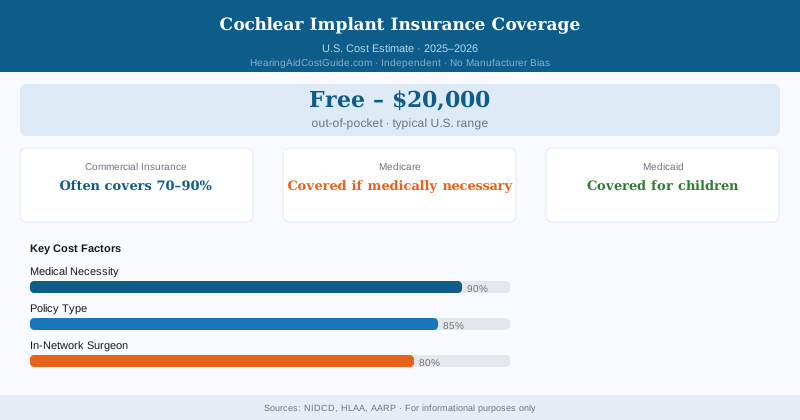
Almost certainly — if you qualify medically. Unlike hearing aids, which most insurance plans famously don’t cover, cochlear implants are treated as prosthetic devices and are covered by Medicare, Medicaid, and most private insurance plans. The HLAA (Hearing Loss Association of America) notes that this coverage distinction — hearing aids excluded, cochlear implants covered — is one of the most consequential quirks of the American insurance landscape for people with hearing loss.
What does “qualifying” mean?
You need to meet medical candidacy criteria. Without insurance, the total procedure runs $50,000–$100,000+. With insurance and proper documentation, most patients pay only their plan’s out-of-pocket maximum.
Cochlear Implant Insurance Coverage Overview
| Insurance Type | Coverage | Typical Out-of-Pocket |
|---|---|---|
| Medicare Part A + B | Yes — device + surgery + mapping | $1,600–$5,000 deductibles + 20% coinsurance |
| Medicare Advantage | Usually yes | $0–$6,700 (plan-specific) |
| Medicaid (adults) | Yes — all 50 states | $0–nominal copay |
| Medicaid (children) | Yes — all 50 states | $0 |
| Private insurance (ACA plans) | Yes — medically necessary | $0–$9,450 (OOP max) |
| TRICARE | Yes | $0–$3,500 |
| VA benefits | Yes (eligible veterans) | $0 |
| Uninsured | Full cost | $50,000–$100,000+ |
What are Medicare’s requirements?
Medicare covers cochlear implants under both Part A (hospital) and Part B (outpatient procedure and device). The 2023 NCD update expanded coverage — here’s what’s required now:
- Bilateral moderate-to-profound sensorineural hearing loss
- Limited speech recognition (typically ≤40–60% on sentence testing in the better ear with hearing aids)
- No medical contraindications to surgery
- Demonstrated motivation and appropriate expectations
- Trial of hearing aids without adequate benefit
Medicare patient costs in 2025:
- Part A deductible: $1,632 per benefit period
- Part B deductible: $240/year
- Part B coinsurance: 20% after deductible
- Total patient responsibility: typically $2,000–$6,000 for the full implant process
A Medicare Supplement (Medigap) policy can cover much of the 20% coinsurance, potentially bringing total out-of-pocket to a few hundred dollars.
What about Medicaid?
Medicaid covers cochlear implants in all 50 states for both children and adults. They’re classified as medically necessary prosthetic devices — which means states can’t simply decline to cover them. For children specifically, the EPSDT provision mandates coverage of all medically necessary care, cochlear implants included.
Insurance companies require prior authorization before cochlear implant surgery. The authorization packet typically needs:
- Audiograms showing degree of bilateral hearing loss
- Aided word recognition scores demonstrating insufficient benefit from hearing aids
- Documentation of a hearing aid trial
- Medical evaluation clearance for surgery
- Physician letter of medical necessity
Work with your cochlear implant center’s insurance coordinator — they’ve navigated this process dozens or hundreds of times and know exactly what each insurer requires.
How does private insurance work?
The ACA requires all marketplace plans to cover essential health benefits, which include cochlear implants as prosthetic devices when medically necessary. “Medically necessary” criteria vary by insurer, but common requirements are:
- Significant bilateral sensorineural hearing loss
- Poor speech understanding with optimally fitted hearing aids
- Documentation of a hearing aid trial
- Pre-authorization approval
Major carriers — Cigna, Aetna, UnitedHealthcare, BCBS — all have cochlear implant coverage policies, and most use Medicare coverage criteria as a baseline. Out-of-pocket is typically the plan’s in-network annual maximum ($3,000–$9,450 for marketplace plans in 2025).
Will insurance cover a second implant (bilateral)?
Getting a second cochlear implant covered is more complex. Some insurers cover bilateral implantation; others cover only one. Medicare covers bilateral implants in appropriate candidates. If bilateral implantation is your goal, verify explicitly with your insurer and your implant center before any surgical planning.
What about processor upgrades?
External processors cost $6,000–$10,000 to replace every 5–7 years. Medicare covers replacements when the existing processor fails or no longer functions; coverage for upgrades to newer models is variable. Private insurance coverage for upgrades is inconsistent — your specific policy language matters here.
Insurance denial doesn’t mean you don’t qualify. Cochlear implant denials are frequently due to missing or insufficient documentation rather than a genuine medical exclusion. Appeal immediately with additional documentation, a detailed letter of medical necessity from your surgeon, and peer-reviewed clinical evidence supporting implantation at your level of hearing loss. Most well-documented appeals succeed.
What does insurance NOT cover?
- Cochlear implant accessories (microphone attachments, water protection accessories, clips)
- Non-covered upgrades to newer processor models
- Travel to out-of-network surgical centers (except when no in-network option exists)
- Auditory verbal therapy (may be separately covered under a speech therapy benefit)
- Lost or damaged external processors (may require a separate insurance rider)
Financial Assistance Programs
If coverage is inadequate even after appeals:
- Cochlear Americas Patient Assistance: Manufacturer financial assistance programs
- Alexander Graham Bell Association: Grants for cochlear implant recipients
- Hearing Loss Association of America (HLAA): Financial assistance resource list
- State vocational rehabilitation: May cover implant costs for working-age adults with hearing-related disability