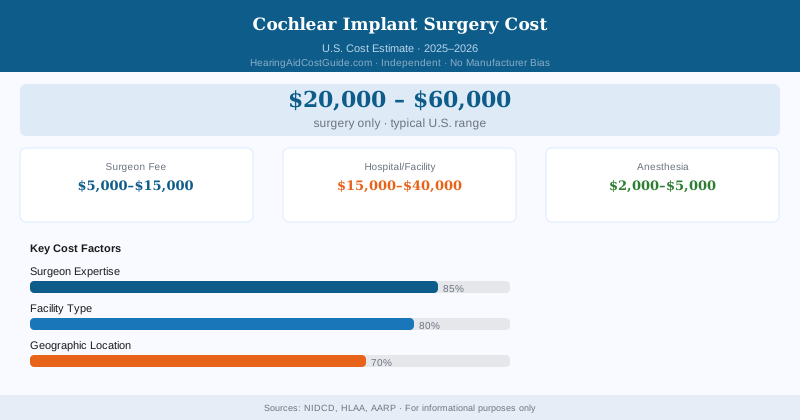
Here are the 5 cost drivers that determine what you’ll actually pay for cochlear implant surgery — and why the numbers vary so dramatically between patients.
Cochlear implant surgery is a 2–3 hour outpatient procedure performed by an otologist or neurotologist under general anesthesia. It has one of the strongest safety records in elective surgery, with outcomes that genuinely change lives. But with costs ranging from $13,000 to over $34,000 for surgery alone — before the device, before mapping, before rehab — understanding where the money goes matters.
Cochlear Implant Surgery Cost Components
| Component | Cost Range |
|---|---|
| Surgeon fee (otologist/neurotologist) | $3,000–$8,000 |
| Hospital facility fee (outpatient surgery center) | $8,000–$20,000 |
| Hospital facility fee (inpatient, if required) | $12,000–$30,000 |
| Anesthesiologist fee | $1,500–$3,500 |
| Post-op follow-up (surgical, first 30 days) | $300–$800 |
| Imaging (CT/MRI pre-surgical) | $800–$2,000 |
| Total surgery-related costs | $13,600–$34,300 |
Note: Device cost ($20,000–$40,000) is billed separately from these surgical fees.
Cost Driver #1: Outpatient vs. Inpatient Setting
Most cochlear implant surgeries happen at outpatient ambulatory surgical centers — same-day discharge, no overnight stay, facility fees in the $8,000–$20,000 range. Inpatient hospital admission pushes that up by another $8,000–$20,000, and it’s required when:
- The patient is a very young child (infants under 9 months especially)
- Adults have significant comorbidities requiring post-surgical monitoring
- Bilateral (both-ear) same-day implantation is planned
- Complications arise during or after surgery
Insurance covers inpatient admission when medically necessary — so the higher facility cost generally lands on the insurer, not the patient.
Cost Driver #2: Surgeon Specialty and Experience
Cochlear implant surgery requires a specialist — either an otologist (ear surgeon) or a neurotologist (subspecialty training in ear-brain surgery). Both are qualified for routine cases. Neurotologists tend to be preferred for complex situations: abnormal cochlear anatomy, ossified cochlea from meningitis, or prior major ear surgery.
Surgeon fees vary with:
- Geographic location: Major metro areas and academic centers charge more across the board
- Surgeon volume and reputation: High-volume implant surgeons often command higher fees
- Facility type: Academic teaching hospital vs. private practice surgical center
Some research suggests that high-volume cochlear implant centers — Johns Hopkins, UCSF, NYU, University of Miami, House Ear Institute — have marginally better outcomes and lower complication rates. Modern cochlear implant surgery has excellent outcomes broadly, but if you have a choice, volume matters at the margin.
Cost Driver #3: How the Surgery Actually Works
Knowing the procedure helps demystify what you’re paying for. The surgeon:
- Makes a small incision behind the ear (post-auricular incision)
- Creates a small bed in the mastoid bone to seat the implant body
- Drills through the mastoid and middle ear to access the round window of the cochlea
- Carefully advances the electrode array into the scala tympani of the cochlea
- Secures the internal receiver/stimulator in the bone bed
- Closes and sutures the incision
Most patients go home the same day or after one overnight stay. The device is activated (“switched on”) 2–4 weeks post-surgery, once swelling resolves. The NIDCD notes that roughly 58,000 devices have been implanted in adults in the US, and another 38,000 in children — this is not experimental surgery.
For a planned cochlear implant, confirm that the surgeon, anesthesiologist, AND hospital facility are all in-network with your insurance. A single out-of-network provider in an otherwise in-network facility can result in thousands of dollars in unexpected bills. Federal balance billing protections (the No Surprises Act) limit certain surprise bills, but verify coverage explicitly before you schedule anything. Get it in writing from your insurer.
Cost Driver #4: Insurance Approval Timing
The prior authorization process can extend your timeline — and delays in approval can occasionally affect scheduling. The typical process:
- Formal candidacy evaluation by the implant team
- Documentation submitted by the implant center (audiograms, aided word recognition scores, medical records)
- Insurance review — typically 2–4 weeks
- Approval or denial (denials can and should be appealed)
Once approved and in-network, your cost is typically your plan’s out-of-pocket maximum — usually $3,000–$9,000 for individual coverage in 2025. The insurance absorbs the vast majority of the $50,000–$100,000+ total.
Insurance denials for cochlear implants often come down to documentation gaps — not a genuine medical exclusion. Work with your implant center’s insurance coordinator to ensure all required documentation is submitted correctly on the first attempt. If you’re denied, appeal immediately with additional audiological data and physician letters of medical necessity. The HLAA recommends filing a written appeal within 30 days of any denial.
Cost Driver #5: Post-Surgery Costs
Surgery gets the device in — but what comes after is substantial.
Initial activation and mapping ($3,000–$8,000): The cochlear implant audiologist activates the device and programs each electrode individually. This involves 4–8 intensive sessions in the first 6 months, then annual updates throughout the device’s life. Typically covered as audiological services.
External processor ($6,000–$10,000): The external sound processor worn behind the ear needs to be replaced or upgraded every 5–7 years as technology advances. Coverage for upgrades varies by insurer.
Auditory rehabilitation ($2,000–$10,000 in year one): Speech therapy and auditory training help the brain adapt to the new signal. This is not optional — it’s how you go from “I can hear something” to “I can understand speech.” Partially covered by insurance in most cases.