Most people assume hearing loss means permanently damaged nerves — but conductive hearing loss is a different beast entirely. It happens when something physically blocks or disrupts sound on its way through the outer or middle ear. A plug of earwax. Fluid sitting behind the eardrum. Tiny bones that have stiffened or broken. The good news? Many of these causes are completely reversible — sometimes with nothing more than a $12 bottle of drops from the pharmacy.
The catch is knowing which cause you’re dealing with. Treatment costs swing from under $50 to well over $20,000 depending on the underlying problem.
Conductive Hearing Loss Causes and Treatment Costs
| Cause | Treatment | Cost Range |
|---|---|---|
| Earwax impaction | Professional removal | $50–$200 |
| Middle ear fluid (OME) | Observation, medication, or ear tubes | $0–$4,000 (tubes with surgery) |
| Acute otitis media (ear infection) | Antibiotics | $25–$200 (with copay) |
| Eustachian tube dysfunction | Balloon dilation (Eustachian tuboplasty) | $3,000–$8,000 |
| Eardrum perforation | Tympanoplasty (repair) | $5,000–$15,000 |
| Otosclerosis | Stapedectomy surgery | $8,000–$20,000 |
| Ossicular chain disruption | Ossiculoplasty | $6,000–$15,000 |
| Ear canal stenosis/atresia | Surgical reconstruction | $15,000–$40,000 |
Earwax Impaction: The Most Common Reversible Cause
Earwax (cerumen) impaction blocks sound transmission and can cause 10–30 dB of hearing loss. It’s the most common, cheapest, and most easily treated cause of conductive hearing loss. According to the American Academy of Otolaryngology, impacted earwax affects roughly 6% of the general population and is directly responsible for about 12 million medical visits annually in the US.
Professional earwax removal costs:
- ENT or audiologist with irrigation: $50–$150
- ENT with microsuction (preferred): $100–$200
- Primary care, if they do it: $50–$100 (specialist copay)
At-home removal:
- Debrox drops (carbamide peroxide): $6–$12
- Bulb syringe irrigation: $8–$20
- Not appropriate for: history of eardrum perforation, ear tubes, or unknown eardrum status
Never use cotton swabs, ear candles, or pointed objects to remove earwax — they push wax deeper and risk eardrum injury.
Otitis Media With Effusion (Fluid in Middle Ear)
Middle ear fluid without active infection (OME, “glue ear”) is extremely common in children and occasionally in adults with eustachian tube dysfunction. It causes mild-to-moderate conductive hearing loss that typically resolves on its own. The American Academy of Otolaryngology–Head and Neck Surgery estimates that 90% of children will experience at least one episode of OME by age 4.
Treatment cost:
- Watchful waiting (3 months): $0 beyond monitoring visits
- Decongestants/antihistamines: $10–$30/month (limited evidence of effectiveness)
- Pressure equalization (PE) tubes (surgical): $2,000–$5,000 (ambulatory surgery)
- PE tubes are generally covered by insurance when indicated
American Academy of Otolaryngology guidelines recommend consideration of tympanostomy tubes (ear tubes) for children with:
- Bilateral OME for 3+ months with documented hearing loss
- Recurrent acute otitis media (4+ episodes in 12 months)
- Hearing loss significantly affecting language development
Tube insertion is one of the most common surgical procedures in the US for children — approximately 500,000 performed annually.
Eustachian Tube Dysfunction
The eustachian tube regulates ear pressure. When it doesn’t function properly, negative pressure builds in the middle ear, causing fluid accumulation and conductive hearing loss. Adults with persistent eustachian tube dysfunction may benefit from:
Eustachian Tube Balloon Dilation (Balloon Tuboplasty):
- Cost: $3,000–$8,000 per side
- FDA-cleared since 2016
- ~80% report improvement in symptoms at 6 weeks
- Covered by most insurance when medically documented
Otosclerosis: When Surgery Is the Answer
Otosclerosis is an abnormal bone growth that fixes the stapes (one of the middle ear ossicles) in place, preventing sound transmission. It causes progressive conductive (or mixed) hearing loss, typically starting in the 20s–30s and often bilateral. About 3 million Americans are affected, according to NIDCD data.
Treatment options:
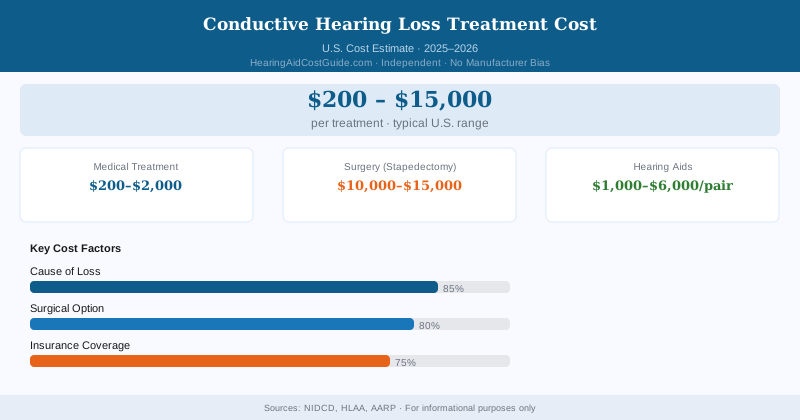
Hearing aids: Effective for mild-moderate otosclerosis. Cost: $1,500–$6,000/pair.
Stapedectomy or stapedotomy surgery: Surgical removal/replacement of the fixed stapes with a prosthesis. Highly effective — restores near-normal hearing in ~90% of cases performed by experienced surgeons.
- Surgeon fee: $3,000–$6,000
- Facility fee: $4,000–$12,000
- Anesthesia: $1,000–$2,000
- Total: $8,000–$20,000 (usually covered by medical insurance)
See our dedicated otosclerosis surgery cost guide for details.
Eardrum Perforation
A hole in the eardrum can cause mild-to-moderate conductive hearing loss. Small perforations often heal spontaneously; large or persistent perforations require surgical repair (tympanoplasty).
Tympanoplasty cost:
- Total facility + surgical: $5,000–$15,000
- Covered by medical insurance when indicated
- Usually very effective for restoring hearing to near-normal
Never let water enter an ear with a known eardrum perforation — it can cause severe, difficult-to-treat infection (otitis media). Use cotton wool with petroleum jelly in the ear canal during bathing until the perforation is repaired. Avoid swimming entirely until the perforation is closed.
When to Use Hearing Aids vs. Pursue Surgery
For conductive hearing loss, surgery often provides permanent correction. Hearing aids are a valid alternative when surgery risk is unacceptable or when the patient prefers non-surgical management.
For otosclerosis specifically:
- Surgery success rate (~90%) and duration (lifelong, in most cases) make it the preferred option for most young adults
- Older adults or those with medical comorbidities may prefer hearing aids to avoid surgical risk
- Discuss both options with an otologist
For most other conductive causes (fluid, wax, infection), treatment of the underlying cause resolves the hearing loss without hearing aids being necessary.