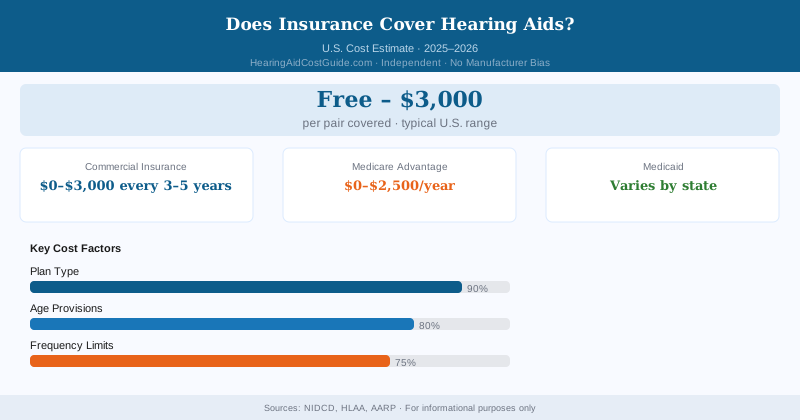
Here’s the blunt reality: original Medicare doesn’t cover hearing aids, and neither do most employer-sponsored health plans. Hearing aids remain one of the largest uncovered healthcare expenses for American adults — second only to dental care. According to NIDCD data, about 28.8 million adults who could benefit from hearing aids go without them, and cost is the primary reason cited. An AARP 2024 survey found that 68% of adults over 65 with hearing loss hadn’t seen an audiologist in the past three years — and of those, more than half pointed to cost as the deciding factor.
But the landscape is changing. More than 25 states now require private insurers to cover hearing aids for children. Several states mandate adult coverage. Medicare Advantage plans increasingly include hearing benefits. And the OTC revolution has created real options under $1,500.
Insurance Coverage Summary
| Insurance Type | Hearing Aid Coverage | Typical Benefit |
|---|---|---|
| Original Medicare (Parts A & B) | No | $0 |
| Medicare Advantage (Part C) | Often yes | $500–$2,000 per pair |
| Medicaid (children) | Yes — all states | Usually full cost |
| Medicaid (adults) | Varies by state | $0–full cost |
| Private insurance (ESI/ACA) | Varies widely | $0–$3,000 per pair |
| VA benefits | Yes (eligible veterans) | Full cost |
| TRICARE | Limited | Some plans include |
| Children (26 states) | Yes (state mandate) | $500–$3,000 per pair |
Original Medicare: The Gap That Costs Billions
Original Medicare (Parts A and B) explicitly excludes hearing aids and routine hearing examinations from coverage. This exclusion dates to the original Medicare legislation in 1965 and has never been corrected despite multiple Congressional attempts.
The Build Back Better Act (2021) included a hearing benefit; it passed the House but stalled in the Senate. As of 2025, there is no federal hearing aid benefit in original Medicare.
Medicare Advantage: Where Coverage Often Lives
Medicare Advantage (Part C) plans must cover everything original Medicare covers — but they may also offer supplemental benefits. About 76% of Medicare Advantage enrollees are in plans that include some hearing benefit as of 2024.
Typical Medicare Advantage hearing benefits:
- TruHearing network: Discounted hearing aids through TruHearing-affiliated audiologists ($699–$1,599 per pair with plan)
- UnitedHealthcare/AARP: Routine hearing exam covered plus hearing aid allowance ($500–$2,000/year)
- Humana: Varies by plan; some include hearing exams and aid allowances
- BCBS Medicare Advantage: Varies significantly by state plan
Limitations: Many Medicare Advantage hearing benefits require using network providers, have per-ear rather than per-pair maximums, and apply only to specific device tiers.
Call the member services number on your insurance card and ask:
- Does my plan include a hearing aid benefit?
- What is the per-ear or per-pair allowance?
- Is there a list of network audiologists?
- Does the benefit cover OTC hearing aids?
- How often can I use the benefit (every year, every 3 years)?
Write down the representative’s name and date of the call.
Private Insurance (Employer-Sponsored and ACA Marketplace)
Most employer-sponsored health plans don’t cover hearing aids for adults. A 2023 NIDCD survey found that only about 15% of privately insured adults had hearing aid coverage through their employer plan.
Exceptions:
- Plans with hearing riders: Some employers offer optional hearing benefit riders — ask your HR department
- BCBS FEP (Federal Employee Program): Covers hearing aids for federal employees ($3,000/ear every 3 years as of 2025)
- State employees: Many state employee benefit plans cover hearing aids
ACA marketplace plans: The ACA requires “essential health benefits” but doesn’t require hearing aids for adults specifically. Coverage varies by plan and state.
Medicaid: Comprehensive for Children, Patchy for Adults
Children under 21: Medicaid’s EPSDT benefit mandates coverage of all medically necessary services, including hearing aids. All 50 states cover hearing aids for children under Medicaid — typically the full cost of devices appropriate for the diagnosis.
Adults: Medicaid hearing aid coverage varies enormously by state. As of 2025:
- About 30 states cover hearing aids for adults under Medicaid
- Coverage limits, device type restrictions, and prior authorization requirements vary
- Many states cover one aid per ear every 3–5 years up to a dollar limit ($500–$1,400)
Check your state Medicaid plan’s benefits handbook or call member services for specifics.
State Mandates for Private Insurance
As of 2025, more than 25 states require private insurers to cover hearing aids for children (under 18). A smaller number of states require some adult coverage. States with comprehensive hearing aid mandates for adults include Arkansas, New Hampshire, and others — check your state insurance commissioner’s website for current requirements.
Even if your plan “covers hearing aids,” read the fine print carefully. Many plans use narrow networks of discount providers, limit devices to lower tiers of technology, require copayments that represent 60–80% of total cost, or offer a discount program (not true coverage) marketed as a “hearing benefit.” A $500 “benefit” toward a $5,500 device is better than nothing — but it’s not coverage.
VA Hearing Benefits: The Gold Standard
The Veterans Administration provides free hearing aids to veterans with service-connected hearing loss or tinnitus — no deductible, no copay, premium devices. The VA is the largest single purchaser of hearing aids in the world. If you served and have any hearing difficulty, contact your VA audiologist or nearest VA medical center.
HSA/FSA: Use Pre-Tax Dollars
Even without insurance coverage, HSA and FSA funds can be used for hearing aids, batteries, and related expenses — effectively reducing costs by your marginal tax rate (typically 22–32% for most adults with hearing loss). See our full guide to HSA/FSA for hearing aids for details.