Your child woke up at 2 a.m. screaming, tugging at her ear. By morning you’re at urgent care — amoxicillin prescription in hand, $40 copay paid, back home by noon. That’s how most ear infection stories end. But some don’t. For kids with recurrent infections or adults with chronic ear disease, the treatment path gets longer, more complicated, and considerably more expensive. Here’s the full cost picture.
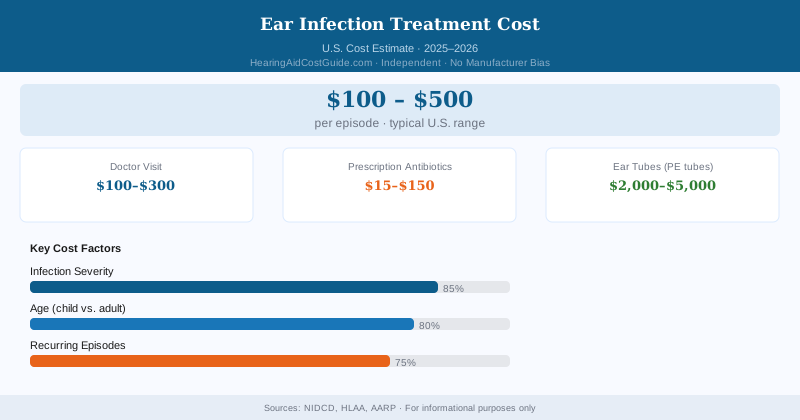
Ear infections are the most common reason children visit doctors in the US — 5 million cases per year. In adults, they’re less common but can be more serious. Costs range from a $25 copay for a simple antibiotic prescription to $5,000+ for surgical management of chronic ear disease.
Ear Infection Treatment Costs
| Type / Treatment | Cost (With Insurance) | Cost (No Insurance) |
|---|---|---|
| Urgent care / PCP visit | $25–$75 copay | $100–$250 |
| ENT specialist visit | $40–$100 copay | $200–$400 |
| Oral amoxicillin (generic) | $0–$15 | $10–$30 |
| Ear drops (antibiotic/steroid) | $20–$60 copay | $80–$250 |
| Tympanocentesis (fluid drainage) | Procedure copay | $200–$500 |
| Ear tubes (tympanostomy) | $0–$500 copay | $2,000–$5,000 |
| Chronic otitis management (surgery) | $500–$3,000 copay | $10,000–$30,000 |
Types of Ear Infections
Acute Otitis Media (AOM): Bacterial or viral infection of the middle ear space. Most common in children 6 months–2 years. Causes earache, fever, temporary hearing loss, and sometimes eardrum rupture (with drainage).
Otitis Media With Effusion (OME): Fluid in the middle ear without active infection. Often follows AOM or occurs with eustachian tube dysfunction. No pain, but causes temporary hearing loss. Very common in children 6 months–4 years.
Otitis Externa (“Swimmer’s Ear”): Infection of the outer ear canal. Caused by water exposure or trauma to the ear canal skin. Painful, especially with touching/moving the ear. Treated with antibiotic ear drops.
Chronic Suppurative Otitis Media (CSOM): Ongoing infection with persistent eardrum perforation and drainage. Requires ENT management; may need surgery.
Antibiotic Treatment: First-Line for AOM
For uncomplicated acute otitis media in most cases:
- Amoxicillin (generic): First-line antibiotic. Cost: $10–$30 for a 10-day course.
- Amoxicillin-clavulanate (Augmentin): For treatment failures or severe cases. Cost: $30–$80 generic.
- Azithromycin: Penicillin allergy alternative. Cost: $20–$40.
Watchful waiting: For mild AOM in children over 2, current AAP guidelines recommend observation for 48–72 hours before prescribing antibiotics. About 80% of uncomplicated AOM resolves without antibiotics.
Recurrent or persistent middle ear fluid (OME) causes mild-to-moderate conductive hearing loss during critical language development periods in young children. Even temporary hearing loss from chronic OME can affect speech-language development.
If your child has had 3+ ear infections in 6 months or persistent middle ear fluid for 3+ months, request audiological testing. Many pediatricians don’t automatically order audiograms with chronic ear disease — ask specifically.
Otitis Externa (Swimmer’s Ear)
Treatment: Antibiotic/steroid ear drops (Ciprodex, Cortisporin, or generic equivalents).
- Brand name (Ciprodex): $200–$300 without insurance
- Generic ofloxacin drops: $30–$60
- Acetic acid (VoSol): $30–$50
Most cases resolve in 7–10 days with drops. Keeping the ear canal dry is essential during treatment and recovery.
Prevention: Dry ears thoroughly after swimming; use ear drops containing acetic acid or isopropyl alcohol after swimming to prevent recurrence ($5–$15 bottle, OTC).
Ear Tubes (Tympanostomy): When Needed and What They Cost
Ear tubes (pressure equalization tubes, PE tubes) are small tubes surgically inserted through the eardrum to ventilate the middle ear, prevent fluid accumulation, and allow drainage. The American Academy of Otolaryngology reports approximately 500,000 ear tube procedures are performed on children in the US each year, making it one of the most common pediatric surgeries.
Indications:
- Bilateral OME with hearing loss for 3+ months in children
- Recurrent AOM (4+ episodes in 12 months)
- Chronic OME causing speech/language delay
Cost:
- Outpatient ambulatory surgery center: $2,000–$4,000 total
- Hospital outpatient: $3,000–$5,000
- Typically covered by insurance for appropriate indications
- Children’s surgeries: often covered at low/no cost under Medicaid/CHIP
Tube insertion takes about 10 minutes under brief general anesthesia in children, local anesthesia in adults. Tubes fall out on their own in 6–18 months.
Chronic Ear Disease and Cholesteatoma
Cholesteatoma is an abnormal skin growth in the middle ear, typically caused by chronic negative pressure or eardrum retraction. It’s not cancerous but destroys middle ear structures if untreated.
Treatment: Surgical removal (mastoidectomy with or without ossiculoplasty).
- Total surgical cost: $10,000–$30,000
- Covered by medical insurance as medically necessary surgery
- May require staged procedures; hearing outcomes depend on extent of disease
Any ear infection with symptoms beyond the ear — severe headache, neck stiffness, facial weakness, persistent dizziness, or vision changes — requires emergency evaluation. These symptoms may indicate spread of infection to surrounding structures (mastoiditis, meningitis, labyrinthitis, or facial nerve involvement). These are rare but serious complications that require immediate medical attention.
Hearing After Ear Infections
Most hearing loss from acute ear infections is temporary and resolves when the infection and fluid clear. For children with recurrent infections or chronic OME:
- Audiological testing after each significant episode is recommended
- If fluid persists for 3+ months, formal audiological evaluation is needed
- Some children develop permanent sensorineural hearing loss after repeated infections — monitor carefully with audiology
Adults with chronic ear disease (CSOM, cholesteatoma, repeated eardrum perforations) may develop mixed (conductive + sensorineural) hearing loss requiring hearing aids even after surgical repair.