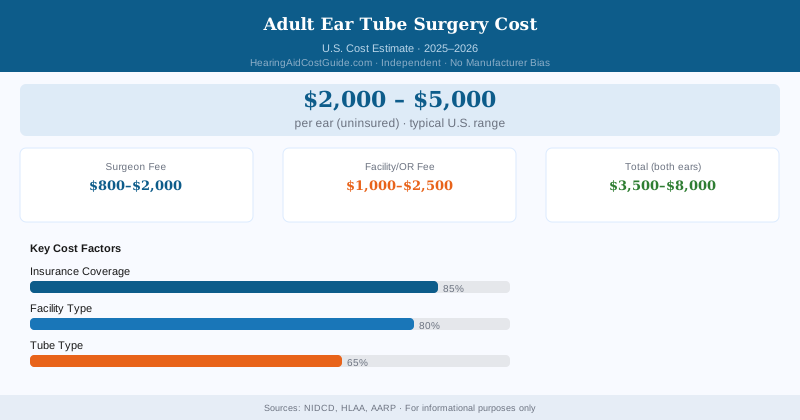
Most people think ear tubes are just for kids. They’re not. Adults get them too — and the costs are significantly higher than what parents pay for their children’s procedures. If your ENT is recommending tubes, here’s what you’re actually looking at financially.
Why Adults Need Ear Tubes
Ear tubes (formally called tympanostomy tubes) are tiny cylinders inserted into the eardrum to drain fluid and equalize pressure in the middle ear. In adults, they’re typically recommended for:
- Chronic otitis media with effusion (fluid trapped behind the eardrum)
- Recurrent ear infections that don’t respond to antibiotics
- Eustachian tube dysfunction causing persistent hearing loss or pressure
- Barotrauma from flying or diving
The procedure itself takes about 10–15 minutes under local anesthesia in adults (unlike children, who need general anesthesia). Don’t let the quick procedure time fool you — the cost structure is still surgical.
Adult Ear Tube Surgery Costs
| Cost Component | Typical Range | Notes |
|---|---|---|
| Surgeon fee | $800–$2,000 | Per ear; varies by region and surgeon |
| Facility/OR fee | $1,000–$2,500 | Outpatient surgical center vs. hospital |
| Anesthesia | $300–$800 | Local vs. light sedation |
| Pre-op hearing tests | $100–$350 | Often required before approval |
| Total (uninsured, one ear) | $2,000–$5,000 | All-in estimate |
| Total (uninsured, both ears) | $3,500–$8,000 | Facility fee often shared |
These are cash-pay estimates. With insurance, your out-of-pocket depends on your deductible, whether the facility is in-network, and your coinsurance rate.
What Insurance Typically Covers
Ear tube surgery for adults is generally considered a medically necessary procedure — which means it’s treated differently than hearing aids. Most private insurance plans cover it, subject to deductible and coinsurance. Traditional Medicare (Part B) also covers tympanostomy when medically indicated.
According to the Centers for Medicare & Medicaid Services, outpatient surgical procedures performed at ambulatory surgery centers typically reimburse at the facility’s established rate, which often runs 40–60% less than a hospital outpatient setting for the same procedure. Choosing an outpatient surgical center over a hospital can cut your out-of-pocket by $800–$1,500 in facility fees alone.
If you’re on a high-deductible health plan and haven’t met your deductible yet, expect to pay close to full price for the first procedure of the year.
- Confirm the surgeon, facility, and anesthesiologist are all in-network — surprise bills are common in ear surgeries
- Ask for the CPT code (69433 for one ear, 69436 if done under anesthesia) to verify coverage with your insurer
- Request an itemized estimate from both the surgeon’s office and the facility separately
- Ask whether pre-op audiological testing is billed separately
Tube Type Affects Cost and Follow-Up
Not all ear tubes are the same. Short-term tubes (the most common kind) fall out on their own within 6–18 months. Long-term T-tubes are designed to stay in place indefinitely — they’re often used for adults with chronic Eustachian tube dysfunction and cost slightly more to place, but eliminate repeated procedures.
The National Institute on Deafness and Other Communication Disorders (NIDCD) notes that tympanostomy is one of the most commonly performed surgical procedures in the United States. In children it’s routine, but in adults the anatomy is different — the eardrum is thicker and local anesthesia is more often used successfully — making the adult procedure slightly more complex to price out.
What Happens Without Treatment
Leaving chronic middle ear fluid untreated isn’t just uncomfortable. Persistent conductive hearing loss from fluid can range from 15–40 decibels — enough to significantly affect speech clarity, work performance, and quality of life. For adults over 55 who already have some age-related hearing loss, adding a fluid-based conductive component can make communication genuinely difficult.
The American Academy of Otolaryngology recommends surgical intervention when fluid has been present for three months or longer and is accompanied by hearing loss. If you’re at that point, the cost of surgery often compares favorably to the cumulative cost of repeated doctor visits and antibiotics.
Aftercare Costs
Plan for two to three follow-up visits in the first year — typically $75–$200 each, depending on your insurance. Your ENT will check tube position and monitor drainage.
Most surgeons also recommend water precautions: custom-molded swim earplugs run $50–$150 per set. Over-the-counter foam earplugs work in a pinch but don’t seal as reliably.
Tube extrusion (the tube falling out too soon) is more common in adults than in children. If you feel sudden drainage, pain, or a sharp change in hearing, call your ENT immediately. Early extrusion may require the procedure to be repeated — at additional cost.
Ways to Reduce Your Out-of-Pocket Cost
- Schedule at a surgery center, not a hospital — saves $800–$1,500 on facility fees
- Use your HSA or FSA — ear tube surgery is fully eligible
- Time your procedure after your annual deductible resets if you’ve already had other major medical expenses that year
- Ask about self-pay discounts — surgical centers often give 15–25% off their standard rates for uninsured patients who pay upfront
Bottom Line
Adult ear tube surgery typically runs $2,000–$5,000 per ear when paying out of pocket, but most insurance plans cover it as a medically necessary procedure. Your actual cost depends on whether you’ve met your deductible, your facility choice, and whether you need one tube or two. If your ENT is recommending them, check your insurance benefits first — then get the procedure done at an in-network outpatient surgical center to minimize your bill.