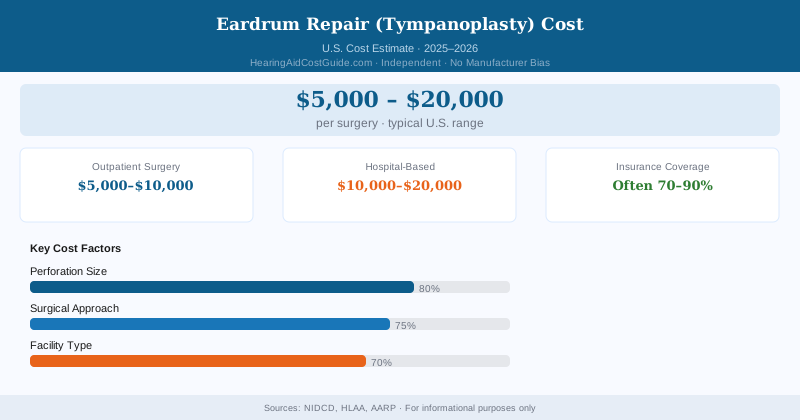
Small perforations often heal on their own. Larger ones don’t — and that gap matters a lot when it comes to cost.
An eardrum perforation — a hole in the tympanic membrane — can result from ear infections, trauma, pressure injury, or chronic ear disease. Whether you’ll need surgery depends on the size, location, and how long the hole has been there. When surgery is necessary, it’s called tympanoplasty. Here’s what it costs, what to expect, and how insurance handles it.
Tympanoplasty Cost Breakdown
| Cost Component | Estimated Cost |
|---|---|
| ENT surgeon fee | $2,500–$5,500 |
| Ambulatory surgery facility | $4,000–$10,000 |
| Anesthesiology | $1,000–$2,500 |
| Pre-op audiological evaluation | $200–$350 |
| Post-op follow-up (1–3 visits) | $300–$600 |
| Total (before insurance) | $8,000–$18,950 |
What Is Tympanoplasty?
Tympanoplasty is the surgical repair of the eardrum (tympanic membrane). The surgeon patches the perforation with a tissue graft — typically fascia (connective tissue) from the temporalis muscle behind the ear, or perichondrium from the ear cartilage. The graft is placed under the eardrum edges, which grow together over the graft over 8–12 weeks.
Types of tympanoplasty:
- Type 1 (myringoplasty): Eardrum repair only; no ossicular chain involvement
- Type 2: Eardrum repair with minor ossicular chain reconstruction
- Types 3–5: Include more extensive ossicular reconstruction
Simple Type 1 tympanoplasty (most common) takes 1–2 hours under general anesthesia and is performed as an outpatient procedure at an ambulatory surgical center.
Hearing Outcomes After Surgery
Success rates for Type 1 tympanoplasty (closure of perforation):
- Complete closure: 85–95% of cases
- Significant hearing improvement: 70–85% of cases
- Full restoration to normal hearing: 40–60% of cases
Factors affecting outcome:
- Size and location of perforation (small, central perforations do best)
- Duration of perforation (shorter = better outcomes)
- Presence of active infection at time of surgery (surgery delayed until infection-free)
- Middle ear involvement (adhesions, ossicular damage from chronic disease)
- Surgeon experience and technique
Who Needs Surgery vs. Who Can Wait
Spontaneous healing: Small traumatic perforations (from Q-tip injury, slap injury, or blast) heal spontaneously within 8–12 weeks in approximately 80–90% of cases. Keep the ear dry and follow up with ENT in 4–6 weeks.
Surgery indicated when:
- Perforation persists beyond 3–6 months
- Hearing loss is significantly affecting function
- Recurrent ear infections occur through the perforation
- The patient wants to swim without restrictions
Surgery not urgently needed: Small persistent perforations in older adults with stable hearing who aren’t troubled by chronic infections may be watched indefinitely without surgery.
Water entering a perforated eardrum can cause severe otitis media. Until the perforation is closed (surgically or spontaneously):
- Use a cotton ball with petroleum jelly in the ear canal when showering
- Avoid swimming entirely
- Avoid diving or submerging the head in water
- Cotton balls alone without petroleum jelly are NOT waterproof — wax-impregnated cotton or custom swim molds are better options for protection during hygiene activities
Insurance Coverage for Tympanoplasty
Tympanoplasty is medical surgery — not a hearing aid or elective hearing improvement procedure. It’s covered by:
- Medicare Part A/B: Covered as inpatient (if needed) or outpatient surgical procedure
- Medicaid: Covered as medically necessary surgery
- Private insurance: Covered for documented medical indication (chronic perforation, hearing loss, recurrent infection)
Pre-authorization is typically required. Submit the surgeon’s recommendation letter plus audiological documentation of hearing loss and the clinical indication for surgery.
Patient responsibility is typically the deductible + coinsurance, up to the out-of-pocket maximum. For most patients with commercial insurance, total out-of-pocket runs $1,500–$4,000.
Combined Tympanoplasty and Ossiculoplasty
If the perforation has also damaged the ossicular chain (the three bones: malleus, incus, stapes), ossiculoplasty is performed simultaneously. A partial ossicular replacement prosthesis (PORP) or total ossicular replacement prosthesis (TORP) is implanted to bridge damaged or absent ossicles.
Combined surgery adds $2,000–$5,000 to total cost but may be necessary to achieve hearing improvement when the ossicular chain is involved.
If you have a known eardrum perforation and develop fever, intense ear pain, or drainage that looks pus-like or has blood in it, seek same-day ENT evaluation. These symptoms may indicate acute otitis media developing through the perforation — which requires prompt treatment to prevent spread to the mastoid bone or worse. Chronic perforations significantly increase infection risk.
After Surgery: Recovery and Hearing Expectations
- Surgery is typically outpatient; most patients go home the same day
- Ear packing in the canal for 1–3 weeks post-op; avoid water
- Hearing improvement isn’t immediate — grafting takes 6–12 weeks to stabilize
- First audiogram at 6–8 weeks post-op to assess hearing improvement
- Full healing assessment at 3–6 months post-op
If hearing doesn’t improve to expected levels after confirmed graft closure, additional audiological assessment may reveal underlying sensorineural hearing loss or ossicular involvement that hearing aids may address.