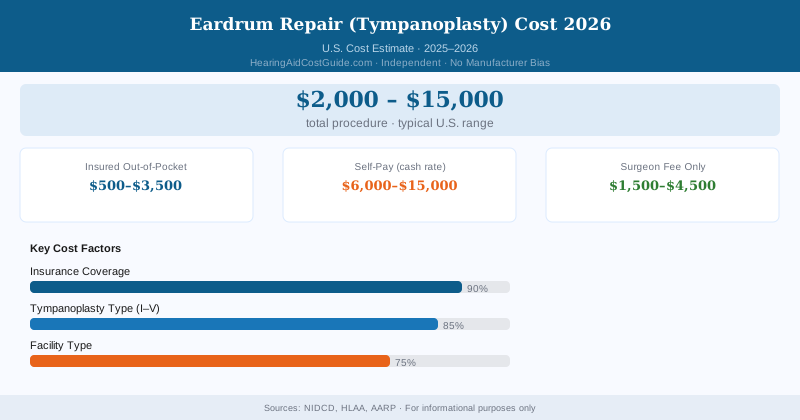
In 2010, a tympanoplasty averaged around $3,500 total for an insured patient. Today, that same procedure can run $8,000–$15,000 at an outpatient surgical center — before insurance adjustments kick in. What changed? Anesthesia billing, facility fees, and surgical supply costs have all climbed sharply over 15 years.
If you’ve been told you need eardrum repair surgery, here’s what you’re actually looking at.
What Is Tympanoplasty?
Tympanoplasty is the surgical repair of a perforated or damaged eardrum (tympanic membrane). Perforations can result from chronic ear infections, trauma, or a previous medical procedure. The surgery grafts tissue — typically from behind the ear or from cartilage — to close the perforation and restore normal hearing and ear function.
It’s almost always performed under general anesthesia as an outpatient procedure, meaning you go home the same day. Recovery takes 4–8 weeks of limited activity and water avoidance.
Tympanoplasty Cost Breakdown
| Cost Component | Typical Range |
|---|---|
| Surgeon fee | $1,500–$4,500 |
| Anesthesia fee | $800–$2,000 |
| Facility/OR fee (outpatient center) | $3,000–$8,000 |
| Pre-op audiogram and imaging | $300–$900 |
| Post-op follow-up visits (2–3) | $300–$750 |
| Total (uninsured/self-pay) | $6,000–$15,000 |
| Typical insured out-of-pocket | $500–$3,500 |
Self-pay rates are negotiable. Many outpatient surgical centers offer 30–50% discounts to uninsured patients who pay in full at time of service. Ask directly — most facilities have a financial counselor who can quote a bundled cash rate.
What Affects the Cost?
Type of tympanoplasty. The procedure is classified by type (I through V) based on complexity:
- Type I (myringoplasty): Simplest — just patching the perforation. Cost runs toward the lower end.
- Types II–V: Involve reconstruction of the middle ear ossicles (the tiny bones that transmit sound). These add surgical time and complexity, pushing cost toward the upper range.
Geographic location. Surgeon and facility fees vary dramatically by region. A Type I tympanoplasty at an ambulatory surgical center in rural Texas might run $5,500 all-in. The same procedure at a hospital outpatient center in San Francisco can top $14,000.
Hospital vs. freestanding surgical center. Hospital outpatient facility fees are consistently 40–80% higher than equivalent freestanding ambulatory surgical centers. If your surgeon has privileges at both, ask explicitly about doing the procedure at the ASC instead.
Perforation size and location. Large perforations or those near the posterior-superior quadrant of the eardrum require more graft material and surgical precision — longer OR time means higher fees.
Does Insurance Cover Tympanoplasty?
Yes — tympanoplasty is a medically necessary procedure and is covered by Medicare, Medicaid, and virtually all commercial health insurance plans when there’s a documented perforation affecting hearing or causing recurrent infection.
Coverage specifics to understand:
- Your deductible applies first. If you haven’t met your deductible, you’ll pay that amount before insurance kicks in. High-deductible plans can mean $3,000–$7,000 out-of-pocket before cost-sharing begins.
- After the deductible, you typically pay 10–30% coinsurance up to your out-of-pocket maximum.
- In-network vs. out-of-network matters enormously. An out-of-network surgeon at an in-network facility creates a billing mess. Confirm that both your surgeon AND the surgical facility AND the anesthesiologist are in-network before scheduling.
The NIDCD reports that about 16% of U.S. adults have had some degree of tympanic membrane abnormality at some point in their lives — making eardrum procedures more common than many people realize. Insurance systems are familiar with the procedure.
Call your insurance company and ask: “Is CPT code 69631 (tympanoplasty without mastoidectomy) covered under my plan, and what will my out-of-pocket cost be?” CPT 69631 is the most common code for simple tympanoplasty. For ossicular chain work, codes 69632–69637 apply. Having the right code helps your insurer give you an accurate estimate.
Medicare Coverage
Medicare Part B covers tympanoplasty when medically necessary. Typical Medicare beneficiary costs:
- Part B deductible: $257 in 2026 (if not yet met)
- Coinsurance: 20% of Medicare-approved amount after deductible
- Facility fee: Covered under Medicare’s Outpatient Prospective Payment System; your share is capped
With a Medigap (supplemental) plan, your out-of-pocket can be minimal — sometimes under $500 total. Without Medigap, expect $800–$2,500 in cost-sharing.
Hearing Results After Surgery
Success rates for Type I tympanoplasty are high — most literature reports closure of the perforation in 85–95% of cases, with meaningful hearing improvement in 70–90% of patients. The hearing improvement comes from restoring the eardrum’s ability to transmit sound vibrations properly to the ossicles.
Important: tympanoplasty doesn’t cure sensorineural hearing loss. If you have mixed hearing loss (both conductive and sensorineural components), surgery improves the conductive component. You may still benefit from a hearing aid afterward for the sensorineural portion.
Your ENT surgeon will review your audiogram with you before surgery to set realistic expectations for post-operative hearing thresholds.
Some patients are offered a tympanoplasty when a simpler office-based procedure — called a “fat graft myringoplasty” or paper patch myringoplasty — might close a small perforation at far lower cost ($300–$800 in-office). For small, uncomplicated perforations, ask your ENT whether an office-based closure attempt is appropriate before proceeding to full surgical repair.
Recovery and What to Budget For
The surgery itself is a day procedure, but recovery runs 4–8 weeks. Plan for:
- 1–2 weeks off work for physically active jobs; desk workers often return in 3–5 days
- No water in the ear for 6–8 weeks (custom waterproof ear plug: $30–$80)
- 2–3 follow-up visits with your surgeon — factor these into cost estimates if your insurer applies copays per visit
- Hearing test at 3–6 months post-op to document results: $75–$200 if not bundled in the surgical follow-up
Most patients find the procedure far less disruptive than they anticipated. Discomfort is typically mild, managed with over-the-counter pain relief, and serious complications are uncommon when performed by an experienced ENT surgeon.
If you’ve been living with a perforated eardrum and chronic hearing difficulty, tympanoplasty is usually worth the cost — especially with insurance covering the bulk of it.