No tubes. No wires. Nothing visible from the outside. That’s Eargo’s pitch — and honestly, for the right buyer, it lands. Their canal-only design is genuinely innovative. But invisibility comes with real trade-offs, and you should know them before spending $1,600.
Eargo has carved out a unique position in the OTC hearing aid market: maximum invisibility, premium technology, and optional access to audiologists — at a price point well above budget OTC devices but below prescription aids.
Eargo Model Lineup and Pricing (2025)
| Model | Price | Key Features | Battery |
|---|---|---|---|
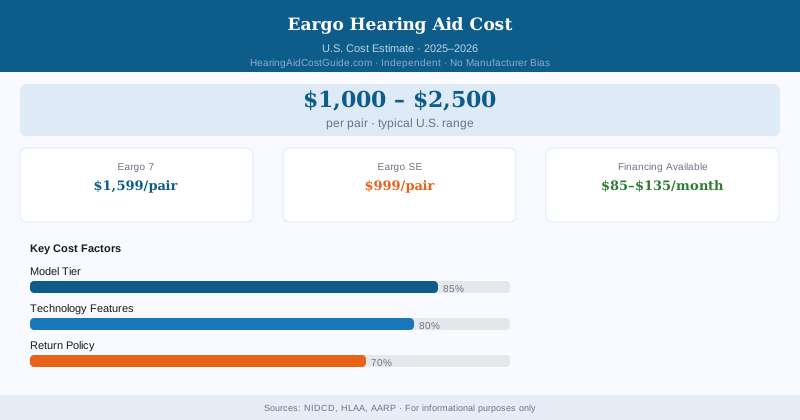
| Eargo 7 | $1,599/pair | AI sound processing, 4 programs, full app | Rechargeable |
| Eargo 6 (available) | $1,299/pair | Strong tech, slightly older generation | Rechargeable |
| Eargo 5 (available) | $999/pair | Previous generation; value pick | Rechargeable |
All Eargo models are sold per pair (both aids). Financing available at 0% APR for 24 months on approved credit through Synchrony Health.
What Makes Eargo Different
The floating bud design: Eargo’s hearing aids are held in the ear canal by soft silicone “petals” (fiber tips) rather than a custom dome or tight earmold. The design lets the aid float in the canal with natural airflow — reducing the “plugged up” occlusion feeling that bothers many hearing aid users. The aids are essentially invisible in the ear canal.
No behind-the-ear component: Unlike RIC-style OTC aids (Jabra, Lexie, Sony CRE), Eargo devices sit entirely in the ear canal — making them truly invisible. The trade-off: no behind-ear unit means smaller battery, more limited directional microphone processing, and no external antennas for Bluetooth audio streaming.
Rechargeable in a case: Eargo provides a pocket-sized charging case that holds multiple full charges. The aids charge in about 2.5 hours and provide approximately 16 hours of use per charge.
The Eargo 7 (current flagship) introduced:
- SoundAdjust+: Automatic sound scene classification — detects if you’re in quiet, conversation, or noise, and adjusts processing accordingly
- Clarity Mode: Enhanced speech in background noise setting
- Improved AI chip for faster processing
- Improved control through Eargo app (iOS and Android)
- 45-day trial (up from 30 days in prior generations)
Eargo’s Optional Audiologist Support
Eargo offers optional “Telehealth Support” — access to licensed hearing professionals via video call for setup help, troubleshooting, and sound preference adjustments. This isn’t a full audiological fitting (no real-ear measurement, no formal audiogram interpretation), but it’s a meaningful level of support beyond pure self-fitting.
Cost: Included with Eargo 7 purchase during the trial period; ongoing telehealth support pricing varies. Check eargo.com for current terms.
This hybrid model — OTC devices with optional remote professional support — is a growing trend in the industry. It’s better than pure self-fitting but less comprehensive than an in-person audiologist. According to HLAA’s 2024 consumer survey, ease of access to remote support was among the top three factors driving OTC hearing aid satisfaction scores.
Who Eargo Works Best For
Excellent choice if:
- Invisibility is your top priority
- You have mild-to-moderate high-frequency hearing loss
- You’re comfortable with app-based control
- You prefer the floating-in-canal feel over a domed or molded earmold
- You want rechargeable convenience in an invisible package
Consider alternatives if:
- You have moderate-to-severe hearing loss (Eargo can’t deliver the power needed)
- You want Bluetooth audio streaming from phone/TV (not available on current Eargo; the canal-only design doesn’t support Bluetooth audio)
- You need tinnitus masking programs
- Dexterity issues make tiny canal aids difficult to insert and remove
Eargo vs. Sony CRE: Invisible Canal Rivals
Both target buyers who want invisible hearing aids. Key differences:
Eargo 7 ($1,599) vs. Sony CRE-E10 ($1,299):
- Eargo: Floating bud design, petal tips, 45-day trial
- Sony: Closer-fitting ITE design, Sony brand trust, app-based self-fitting
- Eargo has the edge on comfort/occlusion; Sony has the edge on brand recognition and price
Return Policy and Trial
Eargo offers a 45-day trial period from delivery date with full refund. No restocking fee. The 45-day window is more generous than Best Buy’s 15 days and competitive with other OTC brands. Returns are processed through Eargo directly.
Eargo was the subject of a fraud case (2022) in which the company paid $34.37 million to resolve allegations that it submitted false reimbursement claims to federal insurance programs for hearing aids that didn’t meet patient diagnoses. The company has since restructured and continued operating. As a consumer, this history is relevant context — buy from Eargo for the right reasons (good product for mild-moderate hearing loss, good invisibility) rather than on the basis of insurance reimbursement claims.
Financing Options
Eargo offers Synchrony Health financing through their website:
- 0% APR for 12 or 24 months (on approved credit)
- $66/month for Eargo 7 on 24-month plan (at 0% APR)
- Traditional installment plans also available