Margaret, 68, had been gradually turning up the TV volume for three years. By the time her husband finally said something, it was at 72 — loud enough to hear from the kitchen with the water running. She wore hearing aids, and they helped in conversation. But from the couch, 12 feet from the television, they weren’t doing enough. The problem wasn’t her hearing aids. It was the distance.
That’s a gap assistive listening devices (ALDs) exist to fill. ASHA (American Speech-Language-Hearing Association) has documented that hearing aids alone don’t address all communication situations — distance, background noise, room acoustics, and phone call quality all create challenges that targeted devices handle better. Many of them cost under $200. One category is free by federal law.
TV Listening Systems
This is where most people start. A personal TV listening system gets the audio from your television directly to your ears — cutting out room acoustics, speaker distance, and ambient noise.
| Device Type | Cost Range |
|---|---|
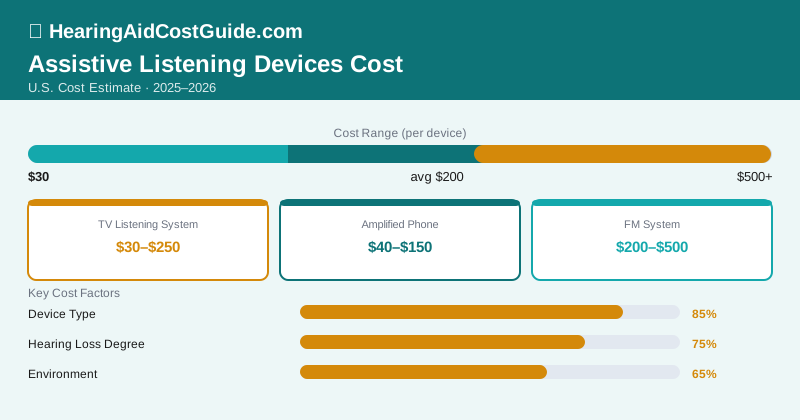
| Bluetooth TV connector (for hearing aids) | $100–$250 |
| Wireless TV headset (Sennheiser, Bellman) | $150–$300 |
| TV amplifier/speaker (tabletop, for near listening) | $50–$150 |
| Captioned TV display device | Free–$200 |
Hearing aid TV connectors (like the Phonak TV Connector, ReSound TV Streamer, or Oticon TV Adapter 3.0) transmit audio directly to your hearing aids via Bluetooth or proprietary wireless protocol. If your aids support streaming, this is the cleanest solution — $100–$250 for the transmitter. It plugs into your TV and sends audio directly to both ears.
Wireless TV headsets work independently of hearing aids. The Sennheiser RS 195 ($300) and Bellman & Symfon Mino ($250) are popular choices for adults 55+. They have independent volume controls and can be set to levels your TV speakers shouldn’t reach. Good option if you don’t wear hearing aids or if a family member also wants one.
Personal Sound Amplifiers vs. ALDs
A personal sound amplifier (PSA) — think over-the-counter devices like the Williams Sound Pocketalker — amplifies sound from your immediate environment. Cost: $50–$250. They’re not hearing aids, but they’re effective for specific situations: one-on-one conversation in a noisy restaurant, hearing a doctor or caregiver in a hospital room, or following a religious service.
The difference between a PSA and an OTC hearing aid is technical and regulatory. PSAs are for situational use; hearing aids are designed for all-day wear with more sophisticated processing. Don’t substitute a PSA for prescribed hearing aids if you have significant loss — but don’t dismiss them as inferior in every context either.
FM Systems
FM systems use radio frequency transmission to deliver audio directly from a microphone to a receiver you wear. The speaker — teacher, presenter, tour guide — wears a lapel microphone. You receive the signal in a receiver that connects to your hearing aids or headphones.
FM technology is the gold standard for classroom use (children with hearing loss), lectures, religious services, and any group situation where the speaker is more than a few feet away. ASHA research confirms that FM systems significantly improve speech understanding in noise compared to unaided hearing or hearing aids alone. Many schools provide them; adults can purchase personal systems for workplace and community use.
Personal FM systems (Williams Sound, Phonak Roger) cost $200–$1,000 depending on whether you need a transmitter (microphone worn by speaker) and receiver. Phonak’s Roger system, which is highly regarded, costs $700–$1,500 for a transmitter/receiver pair. It integrates directly with most modern hearing aids.
Induction Loop / Telecoil Systems
An induction loop generates a magnetic field that transmits audio directly to the telecoil (T-coil) in your hearing aids. Public venues — theaters, churches, airports, banks — are often required under the ADA to provide induction loops or equivalent assistive listening. When you’re in a looped venue, you switch your hearing aids to T-coil mode and receive a clean audio signal.
For home or personal use, portable loop systems cost $200–$800. They’re particularly effective for TV listening (you place a loop under your couch cushion or around your seating area) and phone calls. If your hearing aids have a T-coil — and most do — this can be an extremely cost-effective solution.
Captioned Telephones: Free for People with Hearing Loss
This is worth emphasizing. CaptionCall and CapTel phones display real-time captions on a screen as the other person speaks — similar to subtitles, generated by a relay service. They look like regular cordless phones but have a screen showing the conversation.
They’re free. The FCC’s TRS fund subsidizes this equipment and service for people with documented hearing loss. Your audiologist certifies your need; the phone is shipped at no charge. Monthly captioning service is also free. CapTel and CaptionCall are the two major providers.
You don’t need to prove severe hearing loss to qualify for a captioned phone. If hearing on the phone is difficult enough that you’d benefit from captions, you likely qualify. Ask your audiologist to complete the certification — it takes about 5 minutes and costs you nothing.
Alerting Devices
If you sleep without hearing aids or can’t hear a doorbell from another room, alerting systems fill critical safety gaps.
| Device | Cost Range |
|---|---|
| Visual/vibrating alarm clock | $25–$80 |
| Strobe doorbell (connects to existing chime) | $40–$120 |
| Smoke/CO detector with bed shaker and strobe | $80–$200 |
| Phone ring amplifier/flasher | $25–$75 |
| Whole-home alerting system (bundle) | $300–$800 |
The Sonic Alert and Clarity brands make reliable alerting products. A whole-home system — where all alerts (doorbell, phone, smoke alarm, baby monitor) trigger visual and vibrating signals — runs $300–$800 for a full setup. Individual components are much less.
Bluetooth Streaming From Hearing Aids
If you have modern hearing aids (2019 or newer), you may already have direct Bluetooth streaming built in. iPhone pairs directly to most hearing aids without an intermediate device. Android compatibility varies by manufacturer. This means phone calls, streaming audio, and navigation directions all come directly to your hearing aids — functionally an ALD built into the device.
Before purchasing separate ALD equipment, check what your current hearing aids already support. The Phonak myPhonak app, Oticon ON app, and ReSound Smart 3D app all provide access to streaming and remote microphone features.
The Practical Bottom Line
Start with the problem, not the product. TV too quiet? A $200 TV streamer or direct hearing aid connector solves it cleanly. Can’t hear on the phone? A free captioned phone may be all you need. Struggling in group settings? An FM system or Roger microphone is probably the right tool. Not every hearing problem requires a $5,000 hearing aid. Sometimes it requires a $75 device — or no money at all.
Frequently Asked Questions
No — but they do things hearing aids can't. Hearing aids improve your ability to hear in conversation, particularly one-on-one. ALDs solve specific situational problems: the TV across the room, a phone call with background noise, a church service with poor acoustics. Most people with hearing loss benefit from both. ALDs are also the right tool when someone isn't ready for hearing aids, can't afford them, or has hearing loss too mild to warrant prescription aids.
Yes, for people with hearing loss. The Federal Communications Commission (FCC) funds the Telecommunications Relay Services program, which subsidizes captioned telephone services and equipment. CaptionCall and CapTel phones — which display real-time captions of what the other person says — are provided at no cost to people with documented hearing loss. Your audiologist can certify your eligibility, or you can self-certify in most states. There's no income requirement.
The most effective TV solutions are direct audio streaming (Bluetooth streamer or TV connector that sends audio directly to your hearing aids) or a personal TV listening system like the Sennheiser RS 195 or Bellman & Symfon Mino. The key is getting the sound closer — ideally directly into your ears rather than bouncing off walls. TV captions are also free and highly effective; their quality has improved significantly on streaming platforms.