What’s the actual difference between the person who tested your hearing at Costco and the doctor your insurance calls an “audiologist”? It’s not just a title — it’s years of additional education, and it changes both what they’re legally allowed to do and roughly what you’ll pay.
Cost and Scope Comparison
| Category | Audiologist (AuD) | Hearing Instrument Specialist (HIS) |
|---|---|---|
| Education required | Doctor of Audiology (AuD), 4-year doctoral program | Varies by state; often a certificate program + apprenticeship |
| Comprehensive hearing evaluation | $150–$400 | Not typically licensed to bill this as a diagnostic exam |
| Hearing screening + fitting | $50–$250 | $50–$250 |
| Can diagnose medical ear conditions | Yes (within scope; refers to ENT for treatment) | No — must refer out for any suspected medical issue |
| Can fit and program hearing aids | Yes | Yes, in all 50 states |
| Typical setting | Hospital, university clinic, private audiology practice | Costco, retail hearing centers, some private practices |
What Each Credential Actually Requires
An audiologist holds a Doctor of Audiology (AuD) degree, a four-year doctoral program following a bachelor’s degree, plus supervised clinical hours and, in most states, a licensing exam. Their training covers not just hearing aid fitting but diagnostic audiology broadly — auditory processing disorders, vestibular (balance) testing, tinnitus management, pediatric audiology, and more.
A hearing instrument specialist (HIS), sometimes called a hearing aid dispenser, is licensed in all 50 states to test hearing for the purpose of fitting hearing aids and to dispense the devices. Requirements vary significantly by state but typically involve a shorter certificate program, an apprenticeship period, and a licensing exam focused specifically on hearing aid dispensing rather than broader audiological diagnosis.
Does the Cost Difference Reflect a Real Quality Difference?
For straightforward, typical age-related hearing loss — by far the most common case audiologists and HIS professionals both see — a well-trained hearing instrument specialist can deliver a perfectly appropriate fitting at a lower cost than a full audiologist evaluation. The real difference shows up in edge cases: an HIS is not trained or licensed to diagnose medical conditions, interpret complex or unusual audiogram patterns, or manage conditions like sudden hearing loss, vestibular disorders, or suspected tumors.
Choose an audiologist over a hearing instrument specialist if you have:
- Sudden or rapidly progressing hearing loss
- Asymmetric hearing loss (one ear notably worse than the other)
- Tinnitus alongside hearing loss that needs management, not just masking
- Dizziness or balance issues alongside hearing symptoms
- A complicated medical history involving prior ear surgery or radiation
- A child needing evaluation (pediatric audiology requires specialized training most HIS professionals don’t have)
Where You’ll Encounter Each Professional
Audiologists are more commonly found in hospital systems, university medical centers, ENT practices, and dedicated private audiology clinics. Hearing instrument specialists staff a significant share of retail hearing centers, including most Costco Hearing Aid Centers and many standalone hearing aid retail chains — settings built around efficient, lower-cost device dispensing rather than comprehensive diagnostic services.
Neither setting is inherently “better” — they’re built for different needs. A retail HIS setting optimizes for cost and convenience on straightforward cases; an audiology clinic optimizes for diagnostic depth on complex ones.
Insurance Billing Differences
Because audiologists hold a recognized doctoral credential, their diagnostic evaluations can often be billed to insurance using medical diagnostic CPT codes, similar to how you’d bill any specialist physician visit. Hearing instrument specialist visits are more often billed as part of the hearing aid purchase itself rather than as a separately reimbursable diagnostic service, since their scope of practice is centered on dispensing rather than diagnosis.
Don’t skip an audiologist visit entirely just to save money if you have any symptoms beyond typical gradual hearing loss — sudden hearing changes, ringing, dizziness, ear pain, or drainage all warrant a proper diagnostic evaluation, not just a hearing-aid-focused screening. A hearing instrument specialist is legally required to refer you out for these symptoms, but catching them earlier with an audiologist saves a step and potentially valuable time.
If your hearing loss is straightforward and gradual, either professional can likely serve you well — let cost and convenience guide that decision. If anything about your situation feels atypical, start with an audiologist.
Frequently Asked Questions
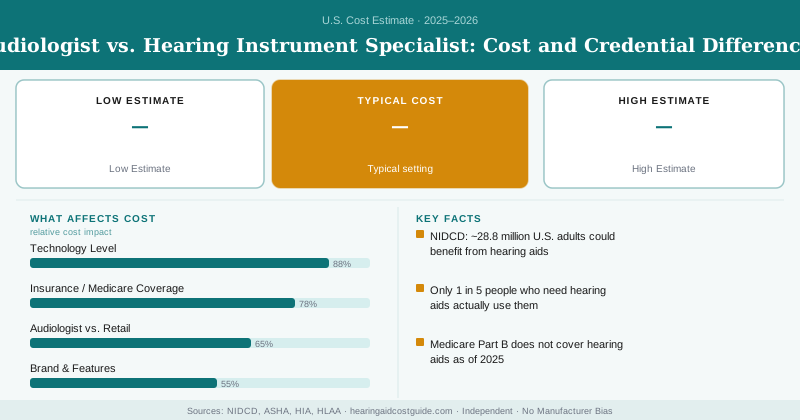
A comprehensive audiologist evaluation typically costs $150–$400, while a hearing instrument specialist visit for a hearing screening and fitting often costs $50–$250, reflecting the difference in required education, licensing, and scope of practice between the two professions.
Yes, hearing instrument specialists are licensed in all 50 states specifically to test hearing and fit hearing aids, though their training (often a specialized certificate or apprenticeship program) is less extensive than an audiologist's doctoral-level education, and they cannot diagnose medical ear conditions.
See an audiologist if you have complex hearing loss, tinnitus, dizziness, sudden hearing changes, or want comprehensive diagnostic testing. A hearing instrument specialist is often sufficient and more cost-effective for straightforward age-related hearing loss and routine hearing aid fitting.