There’s the hearing test you get at the school nurse’s office — and then there’s a diagnostic audiology evaluation. They’re not the same thing. A screening tells you whether you passed or failed. A diagnostic evaluation tells you why you’re failing and what can be done about it. That distinction matters enormously when you’re deciding whether to spend $3,000–$7,000 on hearing aids.
The NIDCD reports that approximately 37.5 million American adults report some trouble hearing, but fewer than one in three who need audiological care actually receive a comprehensive diagnostic evaluation. Most go straight from “I can’t hear well” to “here’s a hearing aid prescription” without the middle step that informs the best treatment path.
Diagnostic Audiology Evaluation Costs
| Test / Component | Cost Range | Insurance Coverage |
|---|---|---|
| Pure-tone audiometry (air + bone) | $50–$150 | Usually covered with referral |
| Speech reception threshold (SRT) | $30–$80 | Usually covered |
| Word recognition / speech discrimination | $40–$100 | Usually covered |
| Tympanometry + acoustic reflexes | $30–$80 | Usually covered |
| Full diagnostic battery (all above) | $150–$300 | Partially covered |
| OAE (otoacoustic emissions) | $50–$120 | Varies; covered for children |
| ABR / BAER (auditory brainstem response) | $200–$600 | Covered when medically indicated |
| Real-ear measurement (REM) | $50–$150 | Rarely covered separately |
| Full evaluation + consultation | $200–$400 | Partial; check EOB carefully |
What a Comprehensive Evaluation Includes
A basic hearing test (pure-tone audiometry) measures how faint a tone needs to be before you can just barely detect it, across frequencies from 250Hz to 8,000Hz. It generates the audiogram — the familiar graph of your hearing thresholds that gets used to program hearing aids.
A diagnostic evaluation adds layers that the basic test doesn’t include:
Bone conduction testing determines whether your hearing loss is in the outer/middle ear (conductive) or the inner ear/auditory nerve (sensorineural). That difference affects treatment completely. Conductive loss is often medically or surgically treatable. Sensorineural loss typically requires hearing aids. Getting aids without bone conduction testing means possibly treating the wrong thing.
Speech discrimination testing measures how clearly you understand words, not just how loudly you need to hear them. Two people with identical audiograms can have dramatically different speech clarity. If your word recognition score is low (below 70%), standard hearing aids may give limited benefit — this test guides appropriate expectations and device selection.
Tympanometry checks middle ear pressure and eardrum mobility. It detects fluid behind the eardrum, Eustachian tube problems, and other middle ear conditions that affect hearing aid candidacy and comfort.
Acoustic reflex testing assesses the stapedius muscle response, which helps localize where in the auditory system the problem lies.
OAE testing (otoacoustic emissions) checks outer hair cell function in the cochlea. Particularly important for suspected noise-induced hearing loss, ototoxicity (drug-related hearing damage), and pediatric evaluations.
Hearing screenings at pharmacies, hearing aid retailers, or online apps don’t provide enough information to prescribe hearing aids correctly. You need a diagnostic evaluation if: you have asymmetric hearing loss (different in each ear), sudden hearing loss, dizziness with hearing loss, ear fullness or tinnitus, or you’re a candidate for cochlear implant evaluation. You also need it before a hearing aid dispensed by someone other than your audiologist is programmed for your specific loss.
Who Performs Diagnostic Evaluations
Audiologists (AuD) are the gold standard for comprehensive diagnostic evaluations. They hold a doctoral degree in audiology and are trained in the full battery of diagnostic tests. They can diagnose the type and degree of hearing loss and recommend treatment.
Hearing instrument specialists (HIS) hold a state license to dispense hearing aids but are typically not trained in the full diagnostic battery. Many hearing aid retailers employ HIS professionals who conduct basic hearing tests adequate for fitting aids in uncomplicated cases. For complex presentations (asymmetric loss, suspected acoustic neuroma, tinnitus with hearing loss), an AuD evaluation is necessary.
ENT physicians and their audiology staff offer diagnostic evaluation in a medical setting. This is the right setting when hearing loss may be caused by infection, structural problems, or neurological conditions.
Insurance Coverage Realities
Most private insurance plans cover diagnostic audiological evaluations when ordered with a physician referral. Medicare Part B covers one diagnostic hearing evaluation per year when medically necessary (i.e., when an ENT or PCP has identified a medical reason for the evaluation). Routine hearing screenings are not covered under Original Medicare.
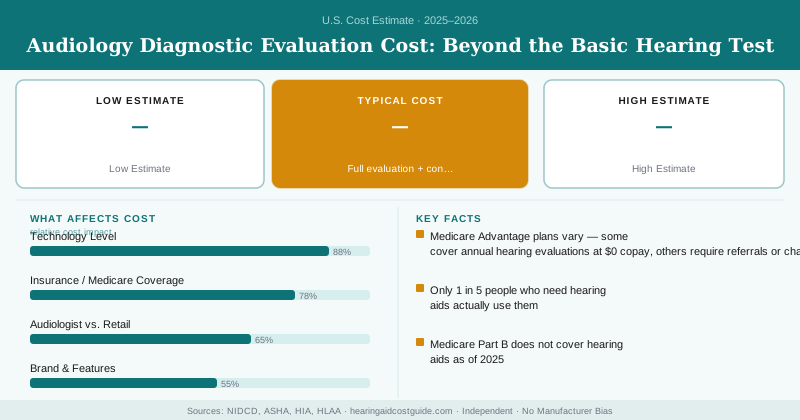
Medicare Advantage plans vary — some cover annual hearing evaluations at $0 copay, others require referrals or charge copays of $20–$50.
The maddening gap: Medicare covers the diagnostic evaluation but not the hearing aids it recommends. You’ll pay $0–$50 to learn you need hearing aids, then $3,000–$7,000 for the aids themselves.
Evaluations at Hearing Aid Retailers
Many hearing aid chains and retailers offer “free hearing tests.” These are typically basic screenings — pure-tone audiometry in a quiet booth — designed to identify candidates for hearing aid sales. They’re useful for knowing whether you have significant hearing loss, but they’re not the same as a diagnostic evaluation and shouldn’t be used as the basis for a complex or significant hearing loss treatment decision.
If the free test shows a problem, follow up with a full diagnostic evaluation at an independent audiology practice or hospital audiology department before committing to a specific treatment path. The ASHA recommends a full diagnostic evaluation by an audiologist as the standard of care before hearing aid fitting — a recommendation that retail screening-to-sales models don’t always follow.
Frequently Asked Questions
A full diagnostic audiology evaluation typically costs between $150 and $400, depending on the audiologist's location, credentials, and the specific tests performed. This is significantly less than a hearing aid fitting ($3,000–$7,000) but more thorough than a basic screening, which often costs $0–$50.
Many insurance plans, including Medicare and major commercial insurers, cover diagnostic audiology evaluations when ordered by a physician for medical reasons, often with little to no out-of-pocket cost after meeting your deductible. However, coverage varies by plan and insurer, so you should contact your provider before your appointment to confirm your specific benefits and any required copay.
A comprehensive diagnostic evaluation typically takes 60–90 minutes and includes tests beyond the basic pure-tone audiogram, such as speech discrimination testing, tympanometry, and acoustic reflex testing to pinpoint the type and cause of hearing loss. You'll receive detailed results and recommendations during the same visit, helping you make informed decisions about treatment options like hearing aids or medical referrals.