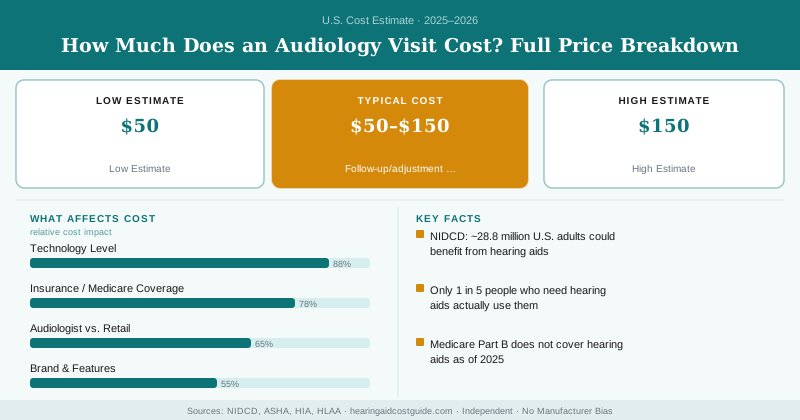
What does it actually cost to walk into an audiologist’s office and find out what’s going on with your hearing? The honest answer: it depends enormously on whether you’re getting a full diagnostic workup or a five-minute screening — and those two things get confused constantly.
Audiology Visit Costs by Type
| Visit Type | Typical Cost (Uninsured) | With Insurance (After Deductible) |
|---|---|---|
| Free retail hearing screening | $0 | $0 |
| Basic pure-tone hearing test | $50–$150 | $0–$50 copay |
| Comprehensive diagnostic evaluation | $150–$400 | $0–$75 copay/coinsurance |
| Tympanometry (middle ear function) | $50–$100 | Usually bundled with eval |
| Speech-in-noise testing | $75–$150 | Usually bundled with eval |
| Hearing aid evaluation/consultation | $100–$250 | Often free if purchasing aids |
| Follow-up/adjustment visit | $50–$150 | Often included in aid purchase |
Why “Free Hearing Test” Offers Aren’t the Full Story
Retail hearing aid stores frequently advertise free hearing screenings, and that’s not a scam — it’s a legitimate quick test. But it’s designed to answer one question: do you likely have hearing loss significant enough to warrant a hearing aid? It’s not a full diagnostic workup, and it won’t identify medical causes of hearing loss that need a physician’s attention, like a treatable ear infection, fluid buildup, or something more serious like an acoustic neuroma.
A comprehensive diagnostic evaluation, performed by a licensed audiologist, includes pure-tone testing across a full frequency range, speech understanding scores, and often tympanometry to check middle ear function. This is the visit that actually generates a diagnosis, not just a “you might benefit from hearing aids” recommendation.
When Insurance Actually Pays
Insurance coverage for audiology hinges almost entirely on medical necessity and physician referral. According to the American Speech-Language-Hearing Association (ASHA), audiology services ordered by a physician to evaluate a specific complaint — sudden hearing change, tinnitus, dizziness, ear pain — are typically billed as diagnostic medical services and covered similarly to other specialist visits.
Routine hearing screenings without a medical complaint, especially those done at a hearing aid retailer as part of a sales process, are usually not billable to insurance at all — which is part of why they’re offered free.
Ask your primary care doctor for a referral to an audiologist citing a specific symptom — even something as simple as “difficulty understanding speech in noisy environments” — rather than scheduling directly with a hearing aid retailer. A physician-referred diagnostic visit is far more likely to be covered by insurance than a self-scheduled screening at a retail location, and you’ll get a more thorough workup either way.
Medicare Coverage Specifics
Medicare Part B covers audiology diagnostic testing when ordered by a physician to evaluate a medical condition, generally covering 80% after the annual deductible is met. What Medicare does not cover: routine hearing screenings without a medical indication, and hearing aids themselves (a separate and much larger expense entirely).
What Drives Price Differences Between Clinics
Three factors explain most of the variation you’ll see calling around:
- Hospital-affiliated vs. independent practice — hospital-based audiology departments often bill higher facility fees than independent private practices
- ENT-affiliated vs. standalone audiology clinic — visits bundled with an ENT physician visit sometimes carry an additional office visit charge on top of the audiology testing fee
- Retail vs. clinical setting — hearing aid retailers often offer free or reduced-cost evaluations as a loss leader tied to device sales, while independent audiology clinics charge the full diagnostic fee regardless of whether you buy anything
If you get a “free” hearing evaluation at a retail hearing aid store, ask directly whether it’s a full diagnostic test or a screening. Some retail screenings are calibrated to make hearing loss appear more urgent than it is, since the business model depends on device sales. A truly comprehensive, unbiased evaluation from an independent audiologist costs money — but it’s worth paying for if you want an objective read on your hearing before deciding on treatment.
Frequently Asked Questions
A comprehensive audiology evaluation, including pure-tone testing, speech testing, and tympanometry, typically costs $150 to $400 without insurance. Basic screening-only visits at retail hearing aid centers are often free, but they aren't equivalent to a full diagnostic evaluation.
Most insurance plans, including Medicare Part B, cover diagnostic audiology visits when ordered by a physician for a specific medical complaint like sudden hearing loss, tinnitus, or dizziness, typically covering 80% after the deductible. Routine hearing screenings without a medical referral are often not covered.
A free screening, usually offered at hearing aid retail locations, is a quick pass/fail test designed to identify possible hearing loss and encourage a hearing aid purchase. A comprehensive audiology evaluation, which costs $150–$400, includes detailed diagnostic testing across multiple frequencies, speech understanding scores, and middle ear function testing performed by a licensed audiologist.