42% of children diagnosed with permanent hearing loss have auditory neuropathy spectrum disorder — not a problem with the outer or middle ear, but a disruption in how the auditory nerve transmits signals to the brain. NIDCD estimates that ANSD affects roughly 1 in 10 people with hearing loss of any age, making it far more common than most people realize. Yet it’s routinely missed on standard newborn hearing screenings.
Here’s what diagnosis and treatment cost, and why ANSD care is different from typical hearing loss care.
What Makes ANSD Different (and More Complex)
Standard hearing loss happens when the tiny hair cells in the cochlea are damaged. ANSD is different: the hair cells may function normally, but the auditory nerve — which carries signals from the cochlea to the brain — doesn’t transmit them reliably. Sound reaches the ear; the brain just doesn’t receive it clearly or consistently.
The practical result: patients can often detect that sound is present, but speech intelligibility is poor, especially in noise. A person with ANSD might score surprisingly well on a pure-tone audiogram (the standard beep-based hearing test) while struggling significantly in conversation. This mismatch is a diagnostic red flag.
Diagnosis Costs
ANSD requires a specific battery of tests. A routine audiogram alone is not sufficient.
| Test | Typical Cost |
|---|---|
| Comprehensive audiological evaluation | $250–$500 |
| Auditory brainstem response (ABR) testing | $300–$700 |
| Otoacoustic emissions (OAEs) testing | $100–$300 |
| Acoustic reflexes and tympanometry | $100–$250 |
| Full diagnostic battery (all above) | $800–$1,800 |
| Pediatric audiology evaluation (children) | $400–$1,200 |
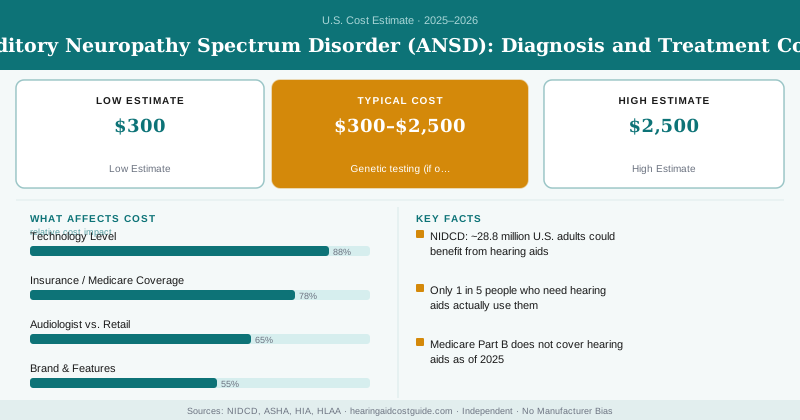
| Genetic testing (if ordered) | $300–$2,500 |
The defining ANSD pattern on testing: absent or severely abnormal ABR, but present OAEs. That combination tells the audiologist that the cochlear hair cells are working but the neural transmission is impaired.
Insurance typically covers diagnostic audiology under major medical, especially if ordered by a physician. Check whether your plan requires a referral from an ENT or primary care doctor first.
Treatment Costs
ANSD treatment is individualized because the disorder varies enormously in severity and presentation. Some patients fluctuate — hearing better on some days than others. Others have stable, severe impairment.
| Treatment Option | Cost Range |
|---|---|
| Hearing aids (mild-moderate ANSD) | $1,500–$6,000 (pair) |
| FM system / remote microphone | $150–$750 |
| Cochlear implant evaluation | $500–$2,000 |
| Cochlear implant surgery + device | $30,000–$100,000 |
| Post-implant auditory/speech therapy | $3,000–$15,000 first year |
| Annual follow-up audiological care | $200–$600/year |
Hearing Aids for ANSD
Conventional hearing aids help some patients with ANSD — particularly those with mild-to-moderate severity and relatively stable nerve function. But many ANSD patients don’t benefit much from amplification alone, because the problem isn’t the loudness of sound; it’s the neural clarity.
FM systems and remote microphone technology can improve speech understanding in noise significantly, because they reduce the signal-to-noise problem at the source.
Cochlear Implants for ANSD
For many patients with moderate-to-severe ANSD — particularly children — cochlear implants produce dramatically better outcomes than hearing aids. Rather than amplifying sound to trigger damaged hair cells, a cochlear implant bypasses the cochlea entirely and directly stimulates the auditory nerve with electrical signals. In ANSD, this often achieves more consistent neural stimulation than conventional acoustic hearing.
NIDCD data shows that children with ANSD who receive cochlear implants and early auditory/speech therapy develop speech and language outcomes comparable to children with typical hearing, when implanted early. This makes early, accurate diagnosis critical.
Cochlear implants are FDA-approved medical devices, and cochlear implant surgery is covered by most major insurance plans including Medicare and Medicaid for patients who meet audiological criteria. The evaluation determines candidacy. Out-of-pocket costs depend on your specific plan’s deductible and coinsurance structure — not on whether the procedure is covered in principle. Get prior authorization in writing before scheduling surgery.
Finding the Right Care Team
ANSD diagnosis and management should involve a multidisciplinary team:
- Audiologist — for testing, device fitting, and ongoing monitoring
- ENT/otolaryngologist — to rule out structural causes and evaluate cochlear implant candidacy
- Speech-language pathologist — especially for children who need language development support
- Neurologist — if a systemic neuropathy (neonatal jaundice, hypoxia, or a genetic condition like NAND) is suspected
University hospitals and children’s hospitals with dedicated hearing centers are the strongest setting for ANSD care. Community audiologists without ANSD experience may miss the diagnosis or underestimate severity.
ANSD is frequently misdiagnosed or diagnosed late, because standard newborn screening programs using OAEs alone may actually pass infants who have ANSD — the OAEs are present, so the screening looks normal. The American Academy of Audiology recommends ABR testing in addition to OAEs for comprehensive newborn hearing screening. If your child passed newborn screening but shows speech delays at 12–18 months, request a full diagnostic audiological evaluation that includes ABR.
Long-Term Cost Expectations
ANSD isn’t a condition you treat once and move on from. Expect ongoing costs:
- Annual audiological monitoring to track changes over time
- Device maintenance for hearing aids or cochlear implant processors (typically $300–$600/year)
- Speech therapy, particularly in the first few years following cochlear implant activation
- Potential processor upgrades every 5–10 years ($5,000–$15,000 per processor)
For families navigating ANSD in children, early investment in diagnosis and treatment pays dividends in language development and educational outcomes that are difficult to quantify but substantial.
Frequently Asked Questions
ANSD diagnosis typically costs $800–$2,500 depending on the battery of tests required, which may include auditory brainstem response (ABR), otoacoustic emissions (OAE), and electrocochleography (ECoG). Without insurance, you may pay the full amount; with coverage, your out-of-pocket cost depends on your deductible and coinsurance, usually ranging from $200–$750 after insurance applies.
Most major health insurance plans cover medically necessary ANSD testing and treatment, including hearing aids and cochlear implants, though coverage varies by plan. However, many plans require prior authorization, and you may face a deductible ($500–$2,000) plus 10–20% coinsurance on treatment costs; some plans also cap annual hearing aid benefits at $500–$2,000, leaving you responsible for the remainder.
A complete ANSD diagnostic workup typically takes 2–4 hours for all testing and may require multiple appointments over 1–2 weeks. Standard newborn screenings often miss ANSD because they detect only outer/middle ear problems, which is why follow-up comprehensive testing with specialized audiologists is critical if your child passes newborn screening but shows speech or language delays.