BTE hearing aids aren’t the big, beige, ear-covering devices of the 1980s. Today’s RIC/RITE styles are smaller than a AAA battery, nearly invisible from the front, and account for more than 70% of all hearing aids sold in the US, according to Hearing Industries Association (HIA) market data. If you’ve been avoiding behind-the-ear aids because of how they look, you’re working from an outdated picture.
Looking for overall hearing aid pricing? Our complete hearing aid cost guide covers all styles, OTC vs. prescription pricing, insurance coverage, and how to pay less. This page focuses specifically on the BTE style family.
But “behind-the-ear” is actually a family of two quite different styles — and choosing wrong can mean the difference between hearing aids that work well for years and ones that get dropped in a drawer within six months.
BTE vs. RIC: The Key Difference
Both styles share the same basic idea: the main electronics module sits behind your ear. The difference is where the speaker is located.
Traditional BTE (Behind-the-Ear): A tube runs from the processor behind your ear, over the top of your ear, and into a custom earmold that fits in your ear canal. The speaker is inside the processor unit behind your ear. Sound travels through the tube as amplified audio.
RIC/RITE (Receiver-in-Canal / Receiver-in-the-Ear): A thin wire runs from the processor to a small receiver (speaker) that sits directly inside or just at the opening of your ear canal. The speaker is at the end of the wire, not in the unit behind your ear. This allows the unit behind your ear to be dramatically smaller.
The practical impact: RIC aids are more discreet, produce less of the “plugged up” occlusion sensation (because they typically use a small open dome rather than a full earmold), and are better for mild-to-moderate hearing loss. Traditional BTE aids are more durable, easier to clean, less susceptible to moisture damage in the ear canal, and can deliver more amplification power.
Cost by Style and Technology Tier
Both BTE and RIC aids span a wide range, mostly based on processing technology rather than physical size.
| Style & Tier | Cost Per Aid | Best For |
|---|---|---|
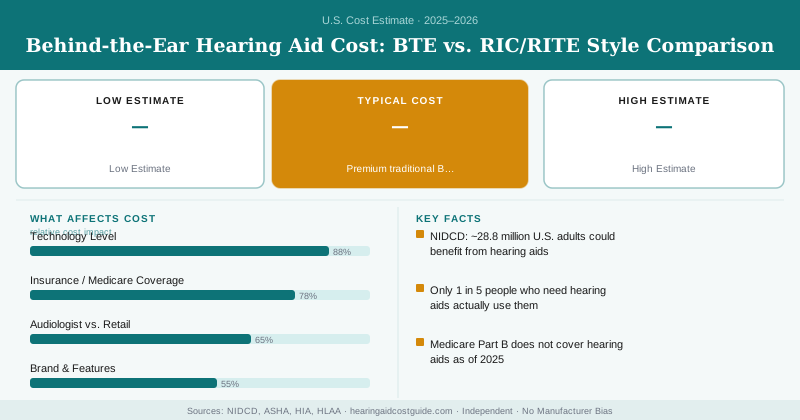
| Economy RIC (basic processing) | $1,000–$1,800 | Mild-moderate loss, quiet environments |
| Mid-range RIC (directional mics, Bluetooth) | $1,800–$2,800 | Moderate loss, active lifestyle |
| Premium RIC (AI processing, rechargeability) | $2,800–$4,000 | Moderate-severe, complex listening |
| Economy traditional BTE | $1,000–$2,000 | Severe loss, budget-focused |
| Mid-range traditional BTE | $2,000–$3,000 | Severe loss, good features |
| Premium traditional BTE | $3,000–$4,000 | Severe-profound, full feature set |
One important note: don’t compare prices without confirming you’re comparing the same style and technology tier. An “economy BTE” from Clinic A and a “premium RIC” from Clinic B are completely different products at different price points — the comparison tells you nothing useful.
The Advantages of RIC
RIC aids dominate the market for good reason. Here’s what you’re getting:
Smaller size. Moving the receiver out of the main processor unit allows the behind-the-ear portion to shrink dramatically. Most modern RIC aids are barely visible from the front — a small curved piece tucked behind the ear with a nearly invisible wire running to the canal.
Open fit option. Most RIC aids can be fit with a small silicone dome rather than a custom earmold. The dome allows air and some low-frequency sound to pass through naturally, reducing the plugged-ear sensation (occlusion) many hearing aid wearers complain about. It’s particularly useful for people with normal low-frequency hearing who only have high-frequency loss.
Less feedback. Separating the microphone (behind the ear) from the speaker (in the canal) reduces feedback potential compared to in-ear styles.
Rechargeable options. Most premium RIC aids now offer rechargeable batteries — a significant quality-of-life improvement for anyone who doesn’t want to handle tiny zinc-air batteries.
The Case for Traditional BTE
For all the RIC advantages, there are situations where traditional BTE is the clearly superior choice.
Severe-to-profound hearing loss. HIA data shows that traditional BTE remains the dominant style for severe-to-profound loss. The receiver in a RIC aid can only produce so much amplification before feedback becomes unmanageable. A traditional BTE, connected to a well-sealed custom earmold, can deliver significantly more gain. If your audiogram shows losses consistently above 70–80 dB HL, traditional BTE is worth a serious look.
Durability and maintenance. Traditional BTE keeps all the electronics behind your ear, where they’re protected from ear canal moisture and wax. There’s no receiver in the ear canal to degrade. For people who sweat heavily, live in humid climates, or have ears that produce a lot of wax, traditional BTE often means fewer repairs.
Manual dexterity. The larger size of traditional BTE aids makes them easier to handle. If arthritis or tremor is a factor, fumbling with the tiny wire or dome of a RIC aid gets frustrating fast. Traditional BTE aids are also easier to insert and remove earmolds from.
When you’re getting quotes from multiple clinics, ask each one to specify: (1) BTE or RIC, (2) technology tier, (3) manufacturer and model, (4) what’s included in the price — bundled services or device only. You can’t meaningfully compare a $2,200 bundled price at one clinic to a $1,800 device-only price at another without knowing what services each includes.
The Moisture Problem with RIC Aids
RIC aids’ biggest weakness is moisture. The receiver — a small electronic speaker — sits inside your ear canal, exposed to earwax, sweat, and humidity. Receivers fail more often than any other component in RIC aids.
Receiver replacement typically costs $150 to $250 when out of warranty. Many premium aids come with a 3-year warranty that covers receiver replacements, which is worth asking about specifically.
The simplest preventive step: a drying kit. A basic desiccant drying container costs about $10–$15. An electronic hearing aid dryer (with UV sanitizing) runs $25–$50. Using one nightly extends receiver life significantly. Ask your audiologist about a dryer when you pick up your aids — many include one with the fitting or sell them at cost.
Trial Period: Non-Negotiable for Either Style
Whether you choose BTE or RIC, make sure you’re getting a meaningful trial period — 45 to 90 days is standard. Hearing aids need real-world testing across different environments: restaurants, family gatherings, TV watching, phone calls, outdoor settings. The acoustic experience of an open-dome RIC is genuinely different from a traditional BTE with a full earmold, and you won’t know which suits you until you’ve lived with both or spent real time with one.
If a clinic offers only a 30-day trial or charges a large non-refundable fitting fee, keep shopping. Reputable audiologists typically provide 45–60 day trials with a full refund policy (minus a restocking or fitting fee) because they know satisfied patients come back for servicing. A practice with a poor trial policy is signaling that they’re less confident in their fittings.
What the Fitting Process Looks Like
With either BTE or RIC, the fitting process includes the same key steps:
- Earmold or dome selection — for traditional BTE, a silicone ear impression is taken and a custom earmold fabricated (takes 1–2 weeks); for RIC with open domes, you often leave the same day
- Programming to your audiogram — the audiologist programs amplification targets based on your hearing test results
- Real-ear measurement — the audiologist inserts a thin probe microphone into your ear canal to verify the hearing aid is actually achieving the prescribed targets in your ear (not all clinics do this, but you should ask)
- Counseling and orientation — how to insert, remove, clean, and store the aids
Real-ear measurement is the quality check that distinguishes an evidence-based fitting from a generic one. Ask your audiologist if they perform real-ear measures as part of the fitting — it’s the standard of care per the American Academy of Audiology (AAA) Best Practice Guidelines.
Frequently Asked Questions
Both styles sit behind the ear, but they route sound differently. A traditional BTE sends amplified sound through a tube into an earmold that sits in your ear canal. A RIC (receiver-in-canal) runs a thin wire behind the ear to a tiny speaker (receiver) that sits in or just inside your ear canal. RIC aids are smaller, often more discreet, and produce less occlusion (plugged-up sensation) because they use a small open dome rather than a full earmold. Traditional BTE aids are bulkier but more durable and better suited for severe-to-profound hearing loss.
Traditional BTE with a full earmold is typically the better choice for severe-to-profound hearing loss. The speaker (receiver) in RIC aids has power limits — at very high amplification levels, RIC aids are more prone to feedback. A traditional BTE routes amplified sound through a tube to a snug, custom earmold that seals the canal, allowing for much more gain without feedback. Most audiologists recommend traditional BTE for losses beyond about 80 dB HL.
RIC aids do have one notable weak point: the receiver (speaker) sits inside your ear canal, exposed to moisture and earwax. Receivers are the most commonly replaced component in RIC aids and typically cost $150–$250 to replace when not under warranty. Traditional BTE aids keep their electronics behind the ear, away from the ear canal environment. Using a daily drying kit ($25–$50) dramatically extends RIC receiver life. Many warranties cover receiver replacement — ask before you buy.