Most cochlear implant recipients still have residual hearing in the non-implanted ear. A lot of them don’t realize that continuing to use a hearing aid in that ear — alongside the cochlear implant — produces measurably better outcomes in noise, music appreciation, and spatial hearing. This combination is called bimodal hearing.
It sounds straightforward. In practice, it adds cost, complexity, and coordination that most patients weren’t briefed on before their implant. Here’s what the bimodal setup actually runs.
Bimodal Hearing: What You’re Combining
| Component | Cost Range | Who Pays |
|---|---|---|
| Cochlear implant (device + surgery) | $30,000–$100,000 | Medicare/insurance in most cases |
| CI sound processor | Included in implant package | Covered |
| Hearing aid (contralateral ear, premium tier) | $2,500–$4,500 per ear | Varies — often out-of-pocket |
| Bimodal-specific fitting and coordination | $300–$800 (professional fees) | Self-pay or specialist copay |
| Hearing aid fitting for bimodal (requires experienced fitter) | $150–$400 | Self-pay or included in HA purchase |
| CI + HA synchronization accessories | $100–$400 | Self-pay |
| Annual audiology follow-up (bimodal management) | $200–$600/year | Insurance or self-pay |
Why Bimodal Hearing Works — and Why It Matters
A cochlear implant provides excellent high-frequency hearing through electrical stimulation. A hearing aid provides acoustic amplification, particularly for low frequencies where many CI ears retain usable residual hearing. The two together give the auditory system complementary information from both ears.
The clinical evidence is compelling. A 2021 study in the Journal of the American Academy of Audiology found that bimodal listeners outperformed unilateral CI users in noisy listening environments and showed improved music enjoyment. The NIDCD estimates that approximately 750,000 people worldwide have been implanted with cochlear implants — a population for whom bimodal is often relevant but frequently underutilized.
ASHA’s cochlear implant position statement includes bimodal hearing as a recognized intervention option for appropriate candidates. The challenge is that the two devices (from different manufacturers) weren’t historically designed to work together, and the fitting requires specialized knowledge not all audiologists have.
Who’s a Bimodal Candidate
You’re likely a bimodal candidate if:
- You have a cochlear implant in one ear
- The non-implanted ear has residual hearing — any usable hearing, even in lower frequencies
- An audiological evaluation confirms that a hearing aid in that ear provides measurable benefit
- You’re experiencing difficulty in noise or unsatisfied with localization ability
You’re less likely to benefit if:
- The non-implanted ear has profound-to-total loss with no functional thresholds
- You’re an excellent unilateral CI user in quiet environments and don’t notice bilateral benefit
- Your non-implanted ear’s word recognition is so poor that amplification doesn’t help
Not all hearing aids perform equally in bimodal configurations. Several manufacturers have developed hearing aids specifically optimized for bimodal use. Phonak’s BiCROS and Roger system integrates with Cochlear Corporation processors. Cochlear’s Kanso 2 paired with Phonak hearing aids is a common combination. Oticon’s Xceed UP and ReSound’s Enzo Q work well for those using MED-EL implants. Ask your cochlear implant center specifically whether your CI’s processor is compatible with the hearing aid you’re considering — wireless coordination varies by manufacturer pairing.
The Fitting Process: Why It’s More Complex Than a Standard Hearing Aid Fitting
Fitting a hearing aid in the bimodal context isn’t the same as fitting a hearing aid for someone without a CI. The acoustic hearing aid needs to complement — not compete with — the electrical hearing from the implant. Specific challenges:
Low-frequency emphasis: The CI handles high frequencies well. The hearing aid should be programmed to emphasize low frequencies (bass) where residual acoustic hearing remains strongest. Standard prescription formulas (NAL-NL2) don’t account for this automatically.
Volume and loudness matching: The processed electrical signal from a CI sounds different from acoustic amplification. The two need to be matched so loudness feels balanced, not distracting or disorienting.
Coordination with the CI mapping: As the CI map changes (especially in the first two years post-implantation), the hearing aid programming needs corresponding adjustments.
This is specialized work. Not every audiologist has the training and equipment to handle bimodal fitting well. You may need a CI center with an audiologist who has specific bimodal experience — and that may not be the same person who’s managing your CI maps.
Cost Realities: The Insurance Gap
Insurance coverage for bimodal setups has a significant gap. The cochlear implant is typically covered. The hearing aid for the non-implanted ear often isn’t — because hearing aids are separately excluded by many commercial plans and by Medicare.
| Scenario | Likely Coverage |
|---|---|
| CI device and surgery | Medicare Part B (80%) / commercial insurance |
| CI sound processor replacement | Medicare covers periodically; commercial varies |
| Hearing aid (contralateral ear) | Usually excluded from Medicare; commercial varies |
| Bimodal audiology visits | May be covered as audiology specialist visits |
| Wireless accessories for bimodal coordination | Typically excluded |
Some commercial plans cover hearing aids up to a benefit cap ($500–$2,500 typically) regardless of bimodal status. VA benefits cover hearing aids for eligible veterans without charge — including in a bimodal context. Medicaid hearing aid coverage varies by state.
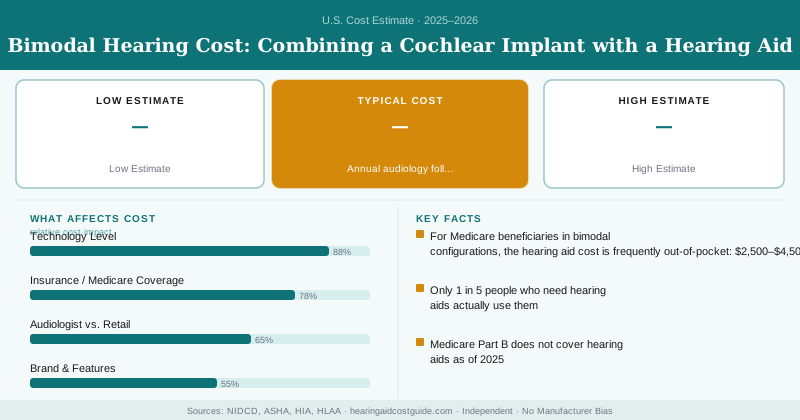
For Medicare beneficiaries in bimodal configurations, the hearing aid cost is frequently out-of-pocket: $2,500–$4,500 per device. That’s significant, and it’s why many CI recipients who would benefit from bimodal fitting go without.
Insurance Advocacy for Bimodal Fittings
It’s worth requesting a letter of medical necessity from your cochlear implant audiologist documenting the bimodal candidacy rationale. Some commercial insurers, when presented with clinical evidence of functional benefit and a letter of necessity, will approve hearing aid coverage as part of cochlear implant rehabilitation.
This is not guaranteed — but the appeal route exists and the documentation from your clinical team can make a difference.
If you have a cochlear implant and residual hearing in the other ear, ask your CI audiologist specifically: “Am I a bimodal candidate and what would the benefit be?” This question often doesn’t get raised unless you ask. Bimodal hearing isn’t appropriate for everyone, but for candidates who skip it, the performance gap in noisy environments is real and persistent.
The Bottom Line
Bimodal hearing — CI plus contralateral hearing aid — costs an additional $2,500–$5,500 beyond the implant system itself, primarily for the hearing aid and specialized fitting. Insurance coverage is inconsistent for the hearing aid component. The functional benefit in noise and music is well-documented and the fitting requires an audiologist experienced in bimodal configuration. If you’re a CI user with any residual hearing in the non-implanted ear, it’s worth the conversation.
Frequently Asked Questions
A hearing aid fitted for bimodal use typically costs $1,500–$6,000, which may be higher than a standard hearing aid due to special programming and coordination with your implant settings. The total cost depends on the hearing aid brand, features, and whether you need follow-up fittings to optimize both devices together.
Coverage varies by plan; Medicare typically covers cochlear implants but often excludes hearing aids entirely, leaving you to pay out-of-pocket for the bimodal hearing aid side. Private insurance may cover a portion of hearing aid costs if auditory evidence supports medical necessity, but you should verify your specific plan's hearing aid exclusions before proceeding.
You can typically begin bimodal fitting 4–6 weeks after cochlear implant surgery, once the implanted ear has healed and been activated. Your audiologist will program both devices together to ensure they work in harmony, which may require multiple adjustment appointments over 2–3 months to achieve optimal sound balance and spatial hearing.