Sarah, 41, had chronic ear infections since childhood that left her with permanent conductive hearing loss. Regular hearing aids never worked well for her — the ear canal damage made a comfortable fit almost impossible. Her ENT recommended a bone-anchored hearing system instead. The quote: $11,400, and she’d never heard of the technology before that appointment.
Bone-anchored hearing systems (BAHA, Osia, and similar devices) work differently than conventional hearing aids. Instead of amplifying sound through the ear canal, they transmit sound vibrations directly through the skull bone to the inner ear, bypassing damaged or blocked outer and middle ear structures entirely. That’s why they’re often the answer for people with chronic ear infections, congenital ear canal abnormalities, or single-sided deafness.
Bone-Anchored Hearing System Costs
| Component | Typical Cost |
|---|---|
| Surgical implant placement | $3,000–$8,000 |
| Sound processor (external) | $3,000–$5,000 |
| Total system (surgery + processor) | $8,000–$15,000 |
| Processor-only replacement (no new surgery) | $3,000–$5,000 |
| Softband/non-surgical trial device | $1,500–$2,500 |
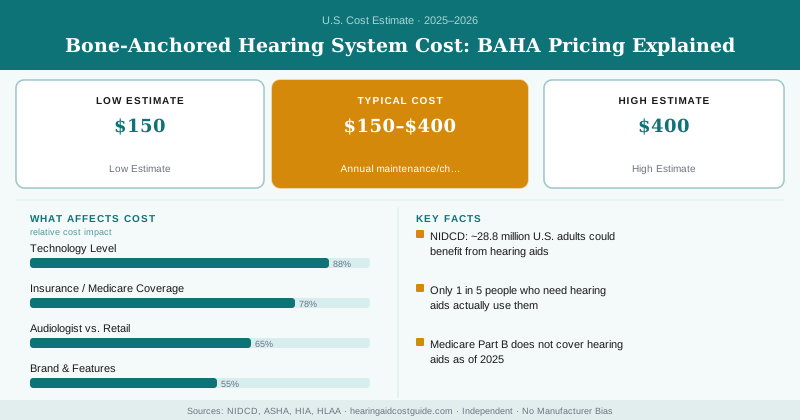
| Annual maintenance/checkups | $150–$400 |
Why the Two-Part Cost Structure Matters
Unlike hearing aids, which are a single upfront purchase, a bone-anchored system has two separate cost events: the surgery (a one-time expense, assuming no complications or revisions) and the processor (which gets replaced every 5 to 7 years as the external hardware ages out, similar to a cochlear implant processor). This matters for long-term budgeting — after the initial surgical cost, your recurring expense is closer to a hearing aid replacement cycle than a one-and-done medical device.
Who Qualifies, and Why That Affects Coverage
Bone-anchored systems are typically indicated for:
- Chronic ear infections or conductive hearing loss where conventional aids don’t fit well or aren’t effective
- Congenital ear canal atresia (missing or malformed ear canal)
- Single-sided deafness, where sound is routed from the deaf ear to the hearing ear
- Mixed hearing loss where the middle ear component can’t be corrected surgically
Because these are almost always clear medical indications (not simply age-related hearing decline), insurance coverage tends to be significantly better than for standard hearing aids. Most major insurers, including Medicare, classify BAHA systems as prosthetic devices rather than hearing aids for coverage purposes — a distinction that often means the difference between $0 and $10,000 out of pocket.
Most surgeons will have you trial a bone-anchored system non-surgically first, using a soft headband that holds the processor against your skull without any implant. This trial typically runs $1,500–$2,500 (often applied toward your eventual surgery cost if you proceed) and lets you confirm you actually hear a meaningful benefit before committing to surgery. Ask your audiologist specifically about a trial period — some clinics don’t offer it unless you request it.
Medicare and Private Insurance Coverage
Because bone-anchored systems are classified as prosthetics under most coverage policies, Medicare Part B typically covers 80% of the approved amount after the deductible, similar to how it covers cochlear implants. Private insurance coverage varies more, but medical necessity documentation — audiograms showing conductive or mixed loss, and often a documented trial period showing benefit — is almost always required for approval.
Insurance may cover the surgical implant fully as a prosthetic device but only partially cover processor replacement down the line, since processors are sometimes coded differently than the implant itself. Confirm with your insurer, in writing, exactly how future processor replacements will be billed — don’t assume ongoing coverage matches your initial surgical approval.
Financing the Gap
If your out-of-pocket responsibility lands in the $3,000–$8,000 range even with insurance, most ENT surgical practices offer payment plans through the hospital or a third-party medical lender like CareCredit. Ask specifically whether the surgical facility and the processor purchase can be billed on the same payment plan — some patients end up managing two separate financing arrangements unnecessarily when one consolidated plan would have worked.
Frequently Asked Questions
A bone-anchored hearing system, including the surgical implant and the external sound processor, typically costs $8,000 to $15,000 total in the U.S. The processor alone, if replaced later without new surgery, costs $3,000 to $5,000.
Most major insurers and Medicare cover bone-anchored hearing systems when a patient has documented conductive or mixed hearing loss, or single-sided deafness, that meets medical necessity criteria — typically covering the surgical implant fully and the processor partially or fully depending on the plan.
A BAHA involves a one-time surgical cost ($3,000–$8,000 for surgery and implant) plus a processor cost ($3,000–$5,000), whereas traditional hearing aids have no surgical cost but require full out-of-pocket replacement every 4–6 years since they're rarely covered by standard insurance.