Bone conduction headphones sit on your cheekbones and send sound vibrations through your skull directly to your cochlea — bypassing the outer and middle ear entirely. For most people, they’re a novelty for running or swimming. For people with single-sided deafness, conductive hearing loss, or outer ear abnormalities, they can be a genuine solution to a problem that conventional headphones don’t solve.
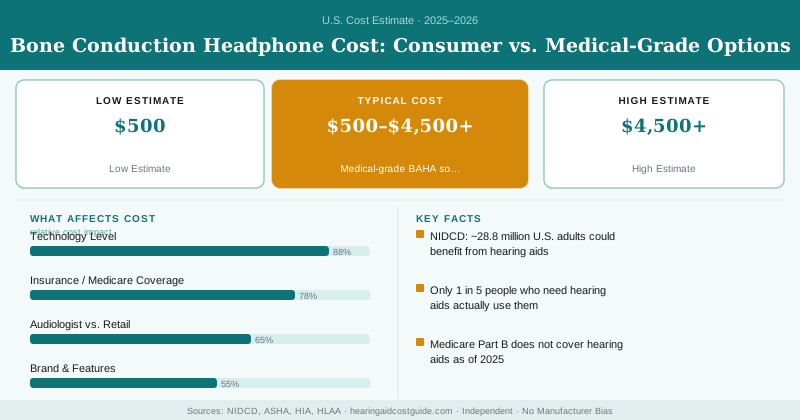
The price range is enormous: $30 to $4,500. Here’s why, and which tier actually makes sense for your situation.
Bone Conduction Headphone Cost by Category
| Device Type | Price Range | Who It’s For |
|---|---|---|
| Budget consumer (AfterShokz Aeropex-tier knockoffs) | $30–$80 | Casual use, situational awareness during exercise |
| Mid-range consumer (Shokz OpenRun, Shokz OpenMove) | $100–$180 | Regular users, decent audio quality |
| Premium consumer (Shokz OpenRun Pro, Philips) | $180–$250 | Athletes, audiophiles wanting bone conduction |
| High-end consumer (Shokz OpenSwim, waterproof) | $150–$250 | Swimmers, open water athletes |
| OTC hearing-adjacent (BHearing, Olive Smart Ear) | $200–$400 | Mild hearing loss, not FDA-cleared as hearing aids |
| Medical-grade BAHA sound processors (Oticon Ponto, Cochlear Baha) | $500–$4,500+ | Conductive/mixed loss, single-sided deafness — used with implant or softband |
Consumer Bone Conduction: What You’re Getting
The dominant brand in consumer bone conduction is Shokz (formerly AfterShokz). Their lineup runs $80–$250 retail. They’re well-made, genuinely useful for outdoor exercise where situational awareness matters, and completely water-resistant in the swim-specific models.
But here’s what they can’t do: they’re not hearing aids. They don’t amplify. They don’t compensate for frequency-specific hearing loss. Someone with moderate-to-severe sensorineural hearing loss doesn’t benefit more from a Shokz headphone than from a conventional speaker. The bone conduction pathway still delivers sound to a cochlea that may not process it well.
Consumer bone conduction headphones are worth the $100–$250 for:
- Runners, cyclists, and swimmers who want music without blocking ambient sound
- People with external ear issues (chronic drainage, pinnas that can’t support conventional earphones) who want to listen to audio
- Mild conductive hearing loss where the cochlea is healthy but sound transmission through the outer/middle ear is impaired
The NIDCD reports that approximately 2–3 in 1,000 children are born with detectable hearing loss, and conductive hearing loss — the type bone conduction most directly addresses — accounts for a meaningful share of adult-onset hearing problems too. For this population, even a consumer-grade device can provide genuine functional benefit.
Consumer headphones: vibrate against your skull and let your cochlea receive the signal. Medical BAHA processors: work on the same principle, but they’re calibrated and programmed to your audiogram, and the best outcomes come from implanted titanium posts that conduct vibration more efficiently than skin contact alone. The consumer version is always skin-contact only — a real but meaningful limitation on efficiency.
Medical-Grade Bone Anchored Devices: A Different Category
Bone-anchored hearing aids (BAHAs) — devices like the Cochlear Baha system and Oticon Ponto — are FDA-cleared medical devices prescribed and fitted by audiologists. These are covered elsewhere on this site in detail. The short version: the sound processor component of these systems runs $2,500–$4,500 for the external unit alone, and surgery to place the titanium implant adds $5,000–$15,000. Insurance (including Medicare) covers a meaningful portion of that cost when you meet candidacy criteria.
Don’t confuse a consumer Shokz headphone with a BAHA. They share a physical principle — bone conduction — but they’re completely different products for completely different use cases.
OTC “Hearing-Adjacent” Bone Conduction Devices
A middle category has emerged: bone conduction devices marketed as hearing enhancement tools rather than pure audio products. Brands like BHearing market devices in the $200–$400 range for people with mild hearing issues who want something between a consumer headphone and a medical device.
These aren’t FDA-cleared hearing aids. They may help people with very mild, primarily conductive hearing loss. They’re unlikely to meaningfully help anyone with moderate-to-severe sensorineural loss. The Hearing Industries Association (HIA) reported that 4.4 million hearing aids were sold in the U.S. in 2023 — the real market remains in properly fitted devices for those who need amplification, not conduction alternatives.
| Brand/Model | Price | Waterproof | Medical Use |
|---|---|---|---|
| Shokz OpenMove | $80 | IP55 | No |
| Shokz OpenRun | $130 | IP67 | No |
| Shokz OpenRun Pro | $180 | IP55 | No |
| Shokz OpenSwim | $155 | IP68 | No |
| BHearing | $350–$400 | Varies | No (not FDA-cleared HA) |
| Cochlear Baha 6 Max Processor | $3,500–$4,500 | Yes (with accessories) | Yes — Rx only |
| Oticon Ponto 5 | $2,500–$3,500 | Yes | Yes — Rx only |
Who Should Talk to an Audiologist First
If you’re considering bone conduction as a hearing solution — not just an audio gadget — an audiological evaluation is worth doing first. Specifically, your audiologist can tell you:
- Whether your hearing loss is conductive, sensorineural, or mixed
- Whether bone conduction thresholds are better than air-conduction thresholds (the key indicator that bone conduction devices will help)
- Whether you’re a candidate for a medical-grade BAHA or softband device with insurance coverage
- Whether an OTC bone conduction device is worth trying or whether you need something more
Don’t spend $200–$400 on an OTC bone conduction device for significant hearing loss before getting an audiogram. If your bone conduction thresholds are normal but air conduction is reduced — a classic conductive loss pattern — you may qualify for a medically covered BAHA system that performs far better than any consumer device.
The Bottom Line
Consumer bone conduction headphones cost $80–$250 and are genuinely useful for athletes and people with outer ear issues who want audio without canal occlusion. For meaningful hearing loss, a medical evaluation comes first — the device that’s right for you may be covered by insurance and far more effective than anything sold at a running store.
Frequently Asked Questions
Consumer bone conduction headphones range from $30 to $400, making them affordable for casual users who want the technology for sports or swimming. Medical-grade bone conduction devices, which are often prescribed for hearing loss conditions, cost $500 to $4,500 depending on the brand, features, and level of customization.
Insurance coverage depends on whether the device is classified as a medical device versus a consumer product. Medical-grade bone conduction devices prescribed for conductive hearing loss, single-sided deafness, or outer ear abnormalities may be partially covered by Medicare or private insurance, though many plans require a 20–50% out-of-pocket cost after meeting your deductible. Consumer headphones are almost never covered by insurance.
Bone conduction headphones work best for people with conductive hearing loss, single-sided deafness, or outer ear abnormalities who cannot use traditional hearing aids or earbuds. An audiologist must first test your bone conduction thresholds to confirm you have adequate bone conduction hearing; if you have sensorineural hearing loss affecting the inner ear, bone conduction won't help.