About half of U.S. states legally require insurers to cover hearing aids for children — and half don’t. That single fact, which most parents discover only after a denial letter arrives, decides whether your family pays nothing or $8,000 out of pocket. So before you fight with your insurer, figure out which side of that line you’re on.
This guide breaks down how child hearing aid insurance works, the state mandates that change everything, and what you’ll actually pay.
The Cost at Stake
A child’s hearing aids run $1,500 to $4,000 per device, and most kids with bilateral loss need two. That’s the gap insurance either fills or leaves you holding.
| Coverage Scenario | Your Out-of-Pocket (per aid) |
|---|---|
| State mandate + good plan | $0–$500 |
| Partial benefit (capped) | $500–$1,500 |
| No mandate, no benefit | $1,500–$4,000 |
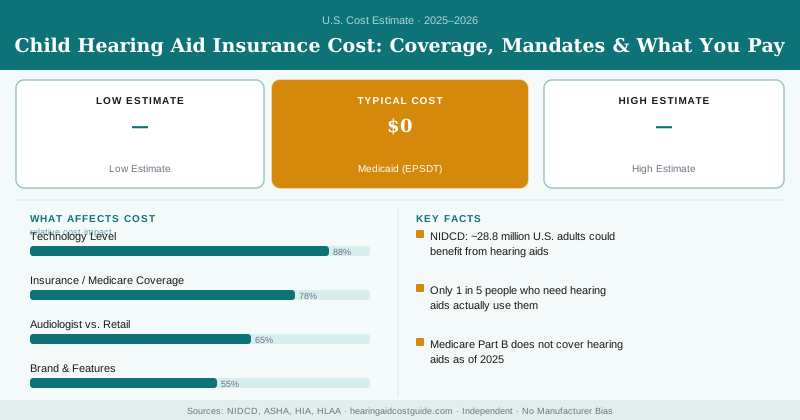
| Medicaid (EPSDT) | Usually $0 |
The State Mandate Lottery
Here’s the thing that makes child hearing aid coverage so unpredictable: roughly two dozen states have laws requiring insurers to cover hearing aids for children, often with a set dollar amount every few years. The exact count shifts as legislatures add mandates, but the pattern holds — your zip code matters as much as your plan.
Even in mandate states, there’s a loophole: the laws usually apply only to state-regulated plans. Self-funded employer plans (governed by federal ERISA law) are often exempt, which catches many families off guard.
Two questions decide your coverage: Does your state mandate pediatric hearing aid coverage? And is your plan state-regulated or a self-funded employer plan? If you’re in a mandate state with a state-regulated plan, you’re in good shape. If not, Medicaid is often the better path.
Medicaid: The Reliable Backstop
If private insurance falls short, Medicaid is the dependable option. Under the federal EPSDT (Early and Periodic Screening, Diagnostic, and Treatment) mandate, state Medicaid programs must cover medically necessary hearing aids for children under 21. The NIDCD notes that 2 to 3 of every 1,000 children are born with detectable hearing loss, and EPSDT exists precisely so those kids aren’t left without devices.
Our Medicaid hearing aid coverage guide explains how to access it, and the children’s hearing aids cost breakdown covers the full device picture.
A denial isn’t always final. Many initial private-insurance denials are reversed on appeal when you submit a letter of medical necessity from the audiologist. Don’t accept the first “no” — request the denial reason in writing and appeal it.
How to Find Out What You Actually Have
The CDC reports that the vast majority of newborns are now screened for hearing loss at birth, so most families learn of a diagnosis early — which gives you time to investigate coverage before buying anything.
Call your insurer and ask specifically: Is there a pediatric hearing aid benefit? What’s the dollar cap and replacement interval? Is my plan self-funded? Get the answers in writing.
For the bigger picture on whether any insurance covers these devices, see our does insurance cover hearing aids guide, and for the device costs themselves, the pediatric hearing aid cost guide.
Money-Saving Strategy
- Check your state’s mandate status before purchasing.
- Ask whether your employer plan is self-funded — if so, the state mandate may not apply.
- If private coverage is thin, apply for Medicaid; children often qualify on a separate income threshold.
- Always get a medical-necessity letter; it’s the key to both approvals and appeals.
Bottom Line
Child hearing aid insurance can save you $3,000–$8,000 a pair — or leave you paying every penny — depending entirely on your state and plan type. Confirm your mandate status, check whether your plan is self-funded, and keep Medicaid’s EPSDT benefit in your back pocket as a reliable fallback.
Frequently Asked Questions
Pediatric hearing aids typically cost $4,000–$8,000 per pair without insurance coverage. In states with insurance mandates, families save $1,500–$4,000 per aid through covered benefits, while families in non-mandate states pay the full out-of-pocket cost.
Only 24 U.S. states legally require insurers to cover hearing aids for children, meaning coverage depends entirely on where you live. Families in mandate states often pay little to nothing out-of-pocket, while families in non-mandate states typically receive no insurance coverage and must pay the full retail price.
The typical timeline from initial evaluation to receiving fitted hearing aids is 2–4 weeks, though this varies by clinic availability and whether insurance pre-authorization is required. In states with insurance mandates, authorization delays can add 1–2 weeks, while out-of-pocket purchases may be faster since no approval process is needed.