Most patients assume cholesteatoma can’t be serious — it’s just a cyst, right? Audiologists and ENTs disagree sharply. Left untreated, a cholesteatoma can destroy the tiny bones of the middle ear, erode into the mastoid, and in severe cases reach the inner ear or the brain. The word “cyst” badly undersells it.
A cholesteatoma is an abnormal, skin-lined sac in the middle ear that grows slowly and destroys surrounding bone. Treatment is always surgical — there’s no medication or ear drop that removes it. The cost of that surgery depends heavily on how advanced the growth is, whether you need one procedure or two staged surgeries, and how well your insurance covers ear procedures.
Cholesteatoma Surgery Cost Breakdown
| Procedure | Low | Typical | High |
|---|---|---|---|
| Initial tympanomastoidectomy (surgeon fee) | $3,500 | $6,000 | $12,000 |
| Facility fee (ASC or hospital) | $3,000 | $6,000 | $10,000 |
| Anesthesia | $800 | $1,500 | $2,500 |
| Staging surgery (2nd procedure, if needed) | $4,000 | $8,000 | $15,000 |
| Post-op audiometry and imaging | $400 | $800 | $1,800 |
| Total (single-stage, uninsured) | $8,000 | $14,000 | $25,000 |
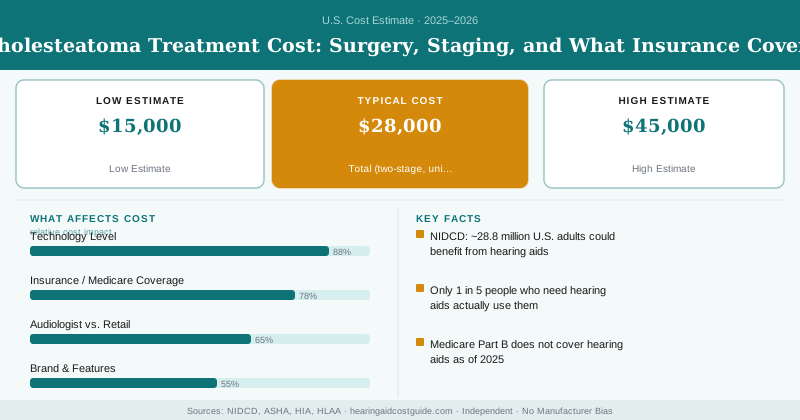
| Total (two-stage, uninsured) | $15,000 | $28,000 | $45,000+ |
Two-stage surgery is common. The first operation removes the cholesteatoma and clears infected tissue. A second procedure — performed 6–18 months later — checks for recurrence and, if the ear is disease-free, reconstructs the hearing mechanism. Not every patient needs both stages, but it’s the standard of care for larger or more complex lesions.
Is Cholesteatoma Surgery Covered by Insurance?
Yes — universally. This is medically necessary surgery for a progressive, destructive disease. No legitimate insurance plan categorizes cholesteatoma treatment as elective. CPT codes commonly used include:
- 69641 — Tympanoplasty with mastoidectomy (one stage)
- 69643 — Tympanoplasty with mastoidectomy and ossicular chain reconstruction
- 69646 — Revision mastoidectomy
- 69661 — Ossiculoplasty
Your out-of-pocket costs depend on your plan’s deductible, coinsurance, and out-of-pocket maximum. For most patients with employer-sponsored insurance, the total out-of-pocket runs $2,000–$6,000 per surgery after deductibles.
Medicare coverage: Part A covers inpatient hospitalization; Part B or outpatient ASC covers ambulatory surgery. The Part A deductible ($1,632 in 2024 per benefit period) applies if you’re admitted. Many cholesteatoma surgeries are done at ambulatory surgery centers, putting them under Part B’s 80% coverage after the annual deductible.
Before scheduling cholesteatoma surgery:
- Get preauthorization — submit operative diagnosis (H71.xx ICD-10 codes) and imaging
- Confirm which facility is in-network; ASC vs. hospital outpatient makes a significant cost difference
- If staging is planned, verify your insurance will cover both surgeries
- Ask whether your ENT’s assistant surgeon (if used) is also in-network
The NIDCD and Prevalence
According to the National Institute on Deafness and Other Communication Disorders (NIDCD), acquired cholesteatoma most commonly develops when repeated ear infections cause the eardrum to retract, pulling a pocket of skin into the middle ear space. The condition is more common than many patients realize — and significantly underdiagnosed in adults who dismiss recurring ear infections as “just another infection.”
Early-stage cholesteatoma confined to the middle ear is far less costly to treat than advanced disease eroding into the mastoid. A small cholesteatoma treated in one surgical session might total $10,000–$14,000. Disease requiring canal wall-down mastoidectomy and staged reconstruction can reach $30,000–$45,000 in surgical costs alone.
Canal Wall Up vs. Canal Wall Down: What It Costs
Your surgeon will recommend one of two basic approaches:
Canal wall up (CWU): The posterior ear canal wall is preserved. Hearing reconstruction is easier, but the cholesteatoma recurrence rate is higher — requiring second-look surgery more often. This approach typically costs less in the first surgery but may result in a second procedure for more patients.
Canal wall down (CWD): The canal wall is removed, creating a larger open cavity. Recurrence is lower, but the patient needs lifelong annual ear cleanings (mastoid bowl cleanings at $75–$200 per visit) and may need a hearing aid because reconstruction is harder.
The right choice depends on how extensive the disease is and your ENT’s expertise. There’s no universally cheaper approach — ask your surgeon which they recommend and why.
Ossicular Chain Reconstruction: An Added Cost
Many cholesteatomas destroy some or all of the ossicles — the three tiny hearing bones (malleus, incus, stapes). If yours have been damaged, reconstruction (ossiculoplasty) is often performed during the second-stage surgery. Ossiculoplasty adds $1,500–$4,000 to total surgical costs and is covered by insurance as part of the same claim.
After successful reconstruction, some patients achieve near-normal hearing. Others are left with a mild-to-moderate conductive hearing loss that’s best addressed with a hearing aid. Budget for audiological evaluation 3–6 months post-surgery to determine if amplification is needed.
If you’re experiencing a draining ear that hasn’t responded to antibiotics, or persistent hearing loss in one ear, see an ENT immediately — don’t wait. Cholesteatoma caught early is less destructive, less costly to treat, and carries a lower risk of complications including facial nerve involvement and meningitis.
What to Expect During Recovery
Recovery from tympanomastoidectomy takes 4–8 weeks for most patients. Plan for:
- 1–2 nights in the hospital or same-day surgery followed by recovery at home
- Ear packing that stays in place 2–4 weeks
- No swimming, heavy lifting, or nose blowing for 6–8 weeks
- Follow-up hearing test at 6–8 weeks to assess baseline hearing post-surgery
- If staged surgery is planned, the second procedure is typically 9–18 months later
Hidden costs include time off work (1–3 weeks for office work, 4–6 weeks for physical jobs), prescription medications ($50–$150), and transportation to follow-up visits.
Pediatric Cholesteatoma: Extra Considerations
Children develop cholesteatoma too — often at higher rates than adults because of more frequent ear infections and Eustachian tube dysfunction. The surgical costs are similar, but pediatric cases often require general anesthesia under a pediatric anesthesiologist, which can add $500–$1,000 to anesthesia fees. Pediatric otologists or pediatric ENTs are the appropriate specialists.
Most families with private insurance find pediatric cholesteatoma surgery fully covered as a medical necessity. Verify your child’s insurance before scheduling and confirm the surgical facility is credentialed for pediatric outpatient surgery.
Frequently Asked Questions
Cholesteatoma surgery (tympanomastoidectomy) typically costs $8,000–$25,000 without insurance, depending on complexity and whether staging is required. Single-stage procedures fall toward the lower end, while two-stage surgeries with a planned second operation can exceed $20,000 when both procedures are included.
Yes, Medicare covers medically necessary cholesteatoma surgery, typically paying 80% of approved charges after you meet your Part B deductible, leaving you responsible for coinsurance (usually 20%) and any deductible amounts. Coverage applies to both single-stage and staged procedures when deemed clinically appropriate by your ENT surgeon.
Staged surgery (two procedures 6–12 months apart) is sometimes recommended to reduce the risk of recurrence, especially in children or when the cholesteatoma is large or has eroded bone extensively. Your surgeon may recommend a second-look surgery to remove any remaining disease and confirm complete eradication before closing the mastoid bone permanently.