Barbara, 67, had been wearing hearing aids for eleven years. She’d tried three different pairs, two different brands, and still couldn’t follow conversations in restaurants or hear her grandchildren clearly on the phone. Her audiologist finally said: “You may be a cochlear implant candidate. Let’s find out.” Barbara had no idea what that process involved — or what it would cost. That evaluation question is exactly what this guide answers.
What a Cochlear Implant Candidacy Evaluation Costs
| Component | Without Insurance | With Medicare/Private Ins. |
|---|---|---|
| Audiological testing battery | $800–$2,500 | $0–$500 copay |
| Otolaryngology (ENT) medical evaluation | $300–$800 | $20–$150 copay |
| CT scan or MRI (cochlea imaging) | $500–$2,500 | $50–$400 after deductible |
| Speech perception testing (word recognition) | $150–$400 | Usually included in audiology battery |
| Psychological or counseling evaluation (some programs) | $200–$600 | $20–$150 copay |
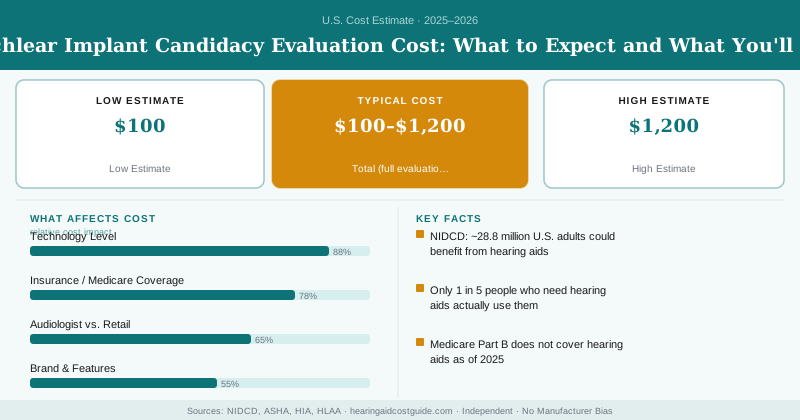
| Total (full evaluation, no insurance) | $1,500–$5,000 | $100–$1,200 out-of-pocket |
The wide range reflects real variation: academic medical centers at major universities typically charge more than community hospitals for the same tests, and the imaging component can vary significantly depending on whether MRI or CT scan is used (or both).
Who Qualifies for a Cochlear Implant
Cochlear implants aren’t for everyone with hearing loss — they’re for adults and children with severe-to-profound sensorineural hearing loss who aren’t getting adequate benefit from well-fitted hearing aids. The FDA-approved adult candidacy criteria include:
- Moderate-to-profound sensorineural hearing loss in both ears
- Word recognition scores of 50% or less in the ear to be implanted (60% in the better-aided ear) under best-aided conditions
- Limited benefit from appropriately fitted hearing aids
- No medical contraindications to surgery
The National Institute on Deafness and Other Communication Disorders (NIDCD) reports that approximately 90,000 Americans currently use cochlear implants, and about 736,900 devices have been implanted worldwide. Despite this, the NIDCD also notes that only 1 in 10 eligible adults with severe-to-profound hearing loss actually receives a cochlear implant — with cost and lack of awareness cited as primary barriers.
What Happens During the Evaluation
The candidacy evaluation isn’t a single appointment — it’s a multi-step process typically spread over 1–3 clinic visits:
Step 1: Comprehensive audiological assessment This includes a full audiogram (pure-tone thresholds), speech audiometry (word recognition in quiet and noise), and aided testing while wearing your current hearing aids. This is where the core candidacy criteria are assessed.
Step 2: Medical evaluation by an otolaryngologist (ENT) An ENT physician reviews your medical history, examines your ear canal and eardrum, and assesses whether there are any medical reasons that would make cochlear implant surgery inadvisable. Conditions like active ear infection, uncontrolled diabetes, or certain medications may need to be addressed before surgery.
Step 3: Imaging studies (CT scan and/or MRI) A CT scan of the temporal bone shows the anatomy of the cochlea and confirms the surgical approach. An MRI may also be used to assess cochlear nerve integrity. If you already have a cochlear implant in one ear or have had ear surgery, the imaging component is especially important.
Step 4: Counseling and expectations assessment Most implant centers include a session with an audiologist or counselor to discuss realistic expectations. Cochlear implant outcomes vary — patients with recent-onset hearing loss typically achieve better word recognition than those with decades of severe loss. This session ensures you’re going into the process with accurate expectations, not TV-commercial expectations.
Cochlear implant candidacy evaluations should be done at a cochlear implant center — either a hospital-based program, an academic medical center audiology department, or a specialized ENT practice with cochlear implant surgical team. Not every audiology clinic can perform the full evaluation. The major cochlear implant manufacturers (Cochlear Americas, Advanced Bionics, MED-EL) all maintain provider locators on their websites that list certified implant centers.
Insurance Coverage for the Evaluation
Here’s the genuinely good news: cochlear implant candidacy evaluations are almost universally covered by major insurance. Medicare, Medicare Advantage, Medicaid (in most states), and virtually all private insurance plans cover cochlear implant evaluations and surgery as medically necessary procedures — unlike hearing aids, which most plans exclude.
Medicare coverage: Medicare Part B covers the audiological evaluation. Medicare Part A covers the inpatient surgery if it requires hospitalization. Many programs are done as outpatient procedures, covered under Part B.
Private insurance: Most plans cover cochlear implant candidacy evaluation under diagnostic audiology and ENT benefits. Expect standard cost-sharing (copays, coinsurance, deductible).
What you’ll actually pay: With Medicare or typical private insurance, most patients pay $100–$1,200 out-of-pocket for the full evaluation, depending on their deductible status.
The American Academy of Audiology (AAA) published data showing that patients with bilateral severe-profound hearing loss who were cochlear implant candidates waited an average of 5 years from identification to implantation — often because neither they nor their primary care doctor knew that cochlear implants were covered by insurance and that they might qualify. If your word recognition is 50% or below with aids, ask your audiologist specifically about implant candidacy. Don’t wait.
Evaluation vs. Surgery: Two Separate Cost Events
The candidacy evaluation is separate from the cochlear implant surgery itself, which is a significantly larger cost. For reference:
- Cochlear implant surgery: $30,000–$100,000 total (device, surgical fees, anesthesia, facility) — covered by Medicare and most insurers with appropriate candidacy
- Post-surgery auditory mapping/programming: $200–$500 per session, multiple sessions in the first year
- Candidacy evaluation: $1,500–$5,000 (mostly covered by insurance)
The evaluation is the gateway to the rest of the process. Even if you’re uncertain whether you want the surgery, getting evaluated is low-cost relative to total cochlear implant expenses and gives you concrete information about whether it’s a medically appropriate option.
What Happens if You’re Not a Candidate
Being told you don’t meet current candidacy criteria isn’t a dead end. Candidacy criteria have expanded significantly since cochlear implants were first approved — people who were told “no” ten years ago often qualify today. If your hearing loss continues to progress, re-evaluation in 12–24 months makes sense.
Additionally, audiologists may use the evaluation to identify whether better hearing aid fitting, different hearing aid technology, or a bone-anchored hearing aid (BAHA) would provide more benefit than your current aids.
Bottom Line
The cochlear implant candidacy evaluation is one of the most valuable assessments in hearing care — and one of the most covered by insurance. If you have severe-to-profound hearing loss and aren’t getting adequate benefit from hearing aids, the evaluation process typically costs you far less than you’d expect out-of-pocket, and it provides a definitive answer about whether implantation is appropriate for your specific anatomy and hearing profile. Don’t let cost uncertainty be the reason you delay finding out.
Frequently Asked Questions
A cochlear implant candidacy evaluation typically costs between $1,500 and $5,000 without insurance in 2025. The final cost depends on the number of tests performed, the facility location, and whether additional imaging like an MRI or CT scan is included in the evaluation.
Most major health insurance plans, including Medicare and Medicaid, cover cochlear implant candidacy evaluations when medically necessary and ordered by an audiologist or ENT specialist. However, you may have out-of-pocket costs ranging from $0 to $500 depending on your plan's deductible, copay structure, and whether you've met your annual deductible.
A complete candidacy evaluation typically takes 3 to 5 hours and includes comprehensive hearing tests, balance assessments, imaging studies (CT or MRI scan), and consultations with both an audiologist and otolaryngologist. The evaluation determines whether you have sufficient hearing loss, appropriate anatomy for implantation, and realistic expectations for outcomes.