Getting a cochlear implant is only half the process. The other half — the part most patients don’t anticipate — is programming. Called “mapping,” it’s the process of fine-tuning the electrical stimulation levels for each of the implant’s electrodes to match your specific auditory nerve response.
Miss a mapping appointment and your implant sounds wrong. Stay on schedule and your hearing improves consistently over the first 12 months. Here’s what it costs.
Cochlear Implant Mapping Cost Breakdown
| Service | Typical Cost | Notes |
|---|---|---|
| Initial activation (first map) | $300–$600 | Usually at cochlear implant center |
| Follow-up mapping session (year 1) | $150–$400 | Every 1–3 months initially |
| Annual mapping session (years 2+) | $100–$300 | Once or twice per year long-term |
| Remote mapping session | $100–$250 | Via manufacturer app; fewer practices offer it |
| Full audiological evaluation at mapping | $150–$400 | May be bundled with session |
| Pediatric cochlear implant mapping | $200–$500/session | More complex; may require sedation |
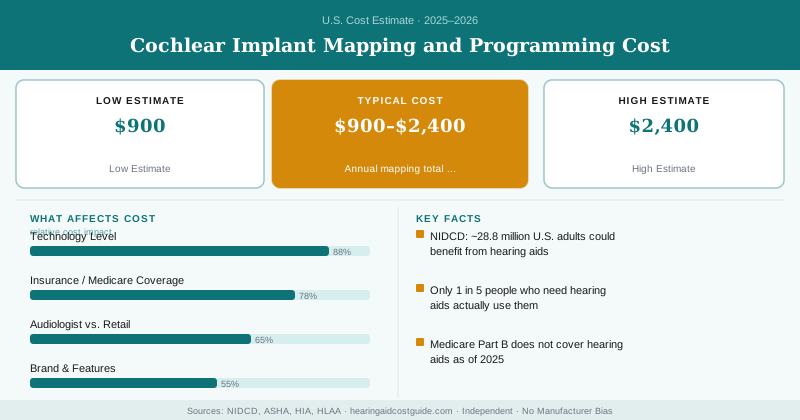
| Annual mapping total (year 1, ~6 sessions) | $900–$2,400 | Before insurance |
Why Mapping Happens So Often in Year One
Your auditory nerve is re-learning to interpret electrical signals. In the first weeks after activation, what sounds comfortable and clear changes rapidly as the brain adapts. The typical first-year mapping schedule:
- 1 week post-activation: First follow-up
- 1 month: Adjust for initial adaptation
- 3 months: Meaningful adjustment as processing improves
- 6 months: Fine-tuning for specific environments
- 12 months: Annual comprehensive evaluation
Adults who have been deaf longer may need more adjustments. Children almost always need more frequent mapping as their auditory development proceeds.
According to the National Institute on Deafness and Other Communication Disorders (NIDCD), cochlear implants have been used in over 736,900 people worldwide as of 2019, with numbers growing significantly since. Most implant recipients continue mapping for life — though frequency decreases after year one.
What Does a Mapping Session Actually Involve?
At a mapping appointment, an audiologist (typically one trained as a cochlear implant specialist) uses manufacturer software to:
- Measure the threshold (T-level) and comfort (C-level) for each electrode
- Balance loudness across all active electrodes
- Adjust programs for different listening environments (quiet, noise, music, phone)
- Run speech perception tests to verify improvement
A typical session runs 60–90 minutes. Year 2 and beyond, sessions may be shorter.
Many cochlear implant users skip mapping sessions because their implant “sounds fine.” This is a mistake. Without objective testing, suboptimal electrode settings can persist for months, limiting speech understanding gains. Annual mapping with speech perception testing catches underperformance early. Your cochlear implant center will typically remind you — but follow through.
Does Insurance Cover Cochlear Implant Mapping?
In most cases, yes. Cochlear implant programming is a covered service under:
- Medicare Part B: Covered at 80% after deductible; cochlear implant programming is specifically recognized
- Most commercial insurance: Covered as part of cochlear implant rehabilitation
- Medicaid: Coverage varies by state; many states cover full implant rehabilitation
The implant itself is typically covered as a major surgical procedure. Programming and follow-up are usually covered as audiological services or durable medical equipment follow-up care.
Key insurance question to ask: Does your plan require mapping at a designated cochlear implant center? Going out-of-network can mean 40–60% cost-sharing rather than standard copays.
Remote Mapping: An Emerging Option
Major cochlear implant manufacturers — Cochlear Americas, Advanced Bionics, and MED-EL — now offer remote mapping capabilities through dedicated apps and audiologist software. Patients can have their programs adjusted from home via video appointment.
Remote mapping isn’t universally available — not every audiology center is equipped — but it’s growing. Where available, it often costs less than in-office visits and reduces travel burden, particularly important for patients in rural areas.
Remote mapping is suitable for routine adjustments, not for initial activation or when significant hearing changes have occurred. If your hearing has changed noticeably or you’re experiencing pain/discomfort from your implant, always attend an in-person appointment.
Long-Term Mapping Costs: What to Budget
After year one, most cochlear implant users need 1–2 mapping sessions per year at $100–$300 each. Over 10 years, budget $1,000–$6,000 in ongoing mapping costs — largely covered by insurance with standard copays.
Plan for higher costs if you switch insurance plans (prior authorization often required) or if you move to a different city and need to establish with a new cochlear implant center.
The Bottom Line
Cochlear implant mapping is an ongoing cost of implant ownership. Year one is the most intensive and expensive period — expect 4–8 sessions at $100–$400 each, mostly covered by insurance. After that, 1–2 sessions per year. Don’t skip appointments and always confirm insurance coverage before each session.
Frequently Asked Questions
Each mapping session costs between $100 and $400, depending on your audiologist and location. Most patients require 4–8 mapping appointments in the first year alone, with additional sessions needed annually for adjustments and maintenance.
Most major insurance plans, including Medicare and Medicaid, cover cochlear implant mapping as part of post-implant care when performed by an in-network provider. However, you may owe a copay of $20–$75 per session, and out-of-network mapping can cost $300–$400 out-of-pocket.
During the first year after implant activation, most patients need 4–8 mapping sessions spaced weeks apart to optimize hearing performance. After the first year, you typically need 1–2 annual appointments for maintenance and adjustments, though frequency may increase if you experience changes in hearing or implant function.