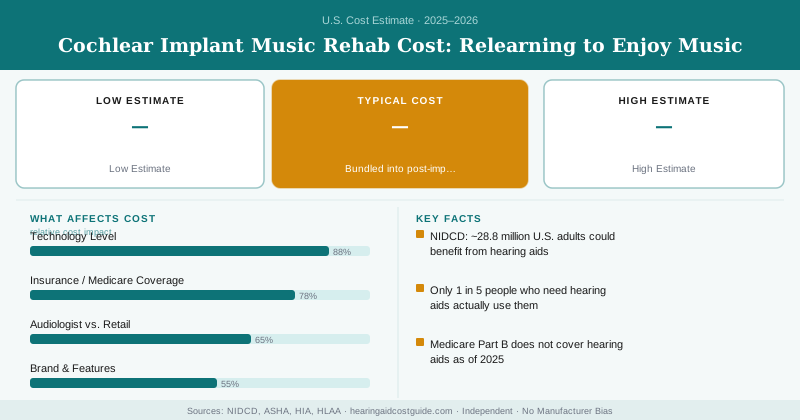
Here’s something most people don’t hear before surgery: a cochlear implant can restore speech understanding beautifully and still make your favorite song sound flat, tinny, or just wrong. Music is genuinely hard for implants to reproduce, because pitch and melody are far more complex signals than speech. The good news is that targeted music rehab helps — and it ranges from free apps to roughly $2,000 for structured programs. Let’s look at the costs.
Cochlear Implant Music Rehab Costs
| Option | Cost |
|---|---|
| Free music training apps / online tools | $0 |
| Subscription music rehab platforms | $10–$25/month |
| Self-guided programs (one-time purchase) | $50–$300 |
| Music-focused auditory therapy (per session) | $100–$250 |
| Structured music rehab program | $800–$2,000 |
| Bundled into post-implant rehab | Often included |
A lot of this can be done at home for little or nothing. The pricier clinician-led music therapy is reserved for people who want guided, structured work or who are struggling to make progress on their own.
Why Music Is the Hard Part
A cochlear implant prioritizes speech, and it does that job well. The NIDCD notes that more than one million people worldwide have received cochlear implants, and speech outcomes are often excellent. Music, though, leans on fine pitch resolution and timbre — exactly what the implant compresses. So melodies can sound off and instruments hard to tell apart, even when conversation is crystal clear.
Music rehab works by retraining your brain to interpret these new signals: practicing pitch discrimination, rhythm, melody recognition, and instrument identification, usually in graduated steps.
Cochlear implant music rehab runs $0–$2,000. Free and low-cost apps cover most of what motivated users need; clinician-led music therapy ($100–$250/session) is for those who want structure or are stuck. Be patient — music appreciation often improves gradually over months of practice.
Start Cheap, Escalate If Needed
The smart play is to begin with free or low-cost tools. Many implant users make real progress with apps that drill pitch and melody, plus deliberate listening practice — picking one familiar song and replaying it repeatedly while following the lyrics. That costs nothing but time.
If after consistent practice music still frustrates you, a music-focused therapist can tailor exercises and troubleshoot your processor’s music settings, which sometimes makes a surprising difference.
Don’t expect overnight results, and don’t assume something’s wrong with your implant if music sounds poor at first. That’s normal and expected. Give rehab months, not days, before deciding it isn’t working — and ask your audiologist about music-specific processor programs.
How It Fits Post-Implant Care
Music rehab is one slice of the broader recovery journey. The full cochlear implant cost picture includes surgery, the device, and rehabilitation, and music work usually sits alongside speech-focused aural rehabilitation cost. If you’re early in the process, a coordinating audiologist visit can fold music goals into your overall rehab plan.
Saving Money
- Use free apps first. Many implant centers recommend specific no-cost tools — ask yours.
- Practice with music you already know. Familiar songs are the best (and free) training material.
- Ask about processor settings. A music-optimized program from your audiologist costs nothing and can help instantly.
- Bundle therapy. If you’re already in post-implant rehab, music goals may be included at no extra charge.
The Bottom Line
Music after a cochlear implant takes work, but it’s far from hopeless. You can do most of the rehab for free or close to it, reserving paid music therapy for tough cases. Budget anywhere from $0 to $2,000, lead with patience, and lean on the free tools and processor tweaks before paying for sessions.
Frequently Asked Questions
Music rehab costs typically range from $0 to $2,000 depending on the format you choose. Free options include music training apps, while structured therapy programs and specialized music rehabilitation courses usually cost between $500–$2,000 for a complete program.
Most insurance plans, including Medicare and private insurers, do not cover music rehabilitation specifically because it is considered an optional enhancement rather than medically necessary treatment. You will likely pay out-of-pocket for music therapy and training programs, though some audiology clinics may bundle basic music training into post-implant care at no extra cost.
Music rehabilitation typically begins 2–6 weeks after implant activation, once your auditory system has adjusted to basic speech understanding. Most audiologists recommend starting with free or low-cost apps before investing in structured programs, allowing 3–6 months for your brain to adapt before committing to paid therapy.