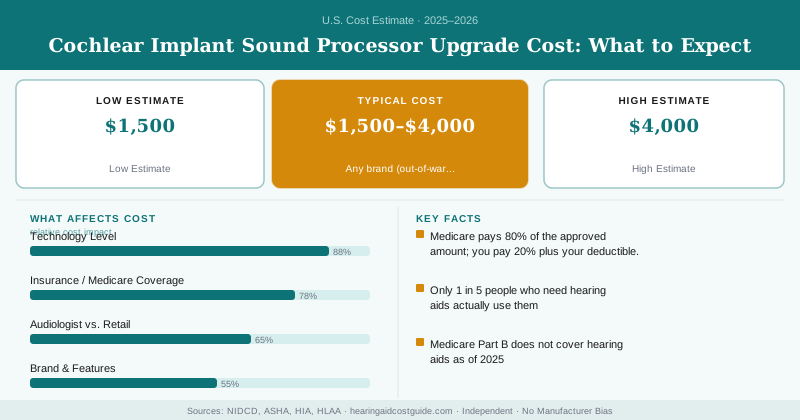
Here’s something your cochlear implant surgeon probably didn’t emphasize at the initial consultation: the internal implant lasts a lifetime, but the external sound processor you wear every day has a lifespan of roughly 5–10 years — and when it’s time to upgrade, you’re looking at a $8,000–$15,000 bill that insurance handles very differently than the original surgery.
If you or a family member is approaching a processor upgrade, understanding the cost structure before you call your audiologist will save you time, money, and frustration.
Why Sound Processors Need Replacing
The internal implant (the electrode array and receiver/stimulator) is designed to last decades. The external sound processor — the device worn behind the ear or on the body — is consumer electronics. Batteries degrade, processing chips become obsolete, and manufacturers eventually discontinue software support and spare parts for older models.
The National Institute on Deafness and Other Communication Disorders (NIDCD) notes that as of 2019, approximately 736,900 people worldwide had received cochlear implants. Most of those devices are well past their first processor and many are on their second or third upgrade cycle. This is a major cost that the CI community manages on an ongoing basis.
Sound Processor Upgrade Costs by Manufacturer
| Manufacturer | Current Processor | Retail Price |
|---|---|---|
| Cochlear Americas | Nucleus 8 | $9,500–$12,500 |
| Advanced Bionics | Sky CI / Naída CI M90 | $9,000–$13,000 |
| MED-EL | SONNET 2 / RONDO 3 | $8,500–$12,000 |
| Oticon Medical | Neuro 2 | $8,000–$11,000 |
| Any brand (out-of-warranty repair) | Refurbished/backup unit | $1,500–$4,000 |
These are cash prices. What you actually pay depends heavily on your insurance situation and upgrade timing.
Insurance Coverage for Upgrades — The Critical Variables
Insurance coverage for sound processor upgrades varies more than almost any other hearing-related expense. Here’s the landscape:
Medicare: Medicare covers processor upgrades under Part B as a durable medical equipment (DME) benefit — but with caveats. Medicare typically requires 5 years between upgrades and considers upgrades medically necessary only when the old processor is damaged beyond repair or significantly outdated. Medicare pays 80% of the approved amount; you pay 20% plus your deductible.
Medicaid: Coverage varies by state. Some state Medicaid programs cover upgrades on a 5-year cycle; others require prior authorization with documentation of functional decline.
Commercial insurance: Many commercial plans follow similar 5-year upgrade cycles. Some plans fully cover upgrades with standard prior authorization; others require appeal and documentation. The American Speech-Language-Hearing Association (ASHA) recommends getting your audiologist to write a letter documenting that your current processor is no longer supported or is impacting your speech understanding before submitting for prior authorization.
What’s often NOT covered:
- Upgrading purely for new features (Bluetooth streaming, rechargeable batteries) when the old processor still functions
- The second processor for bimodal users
- Accessories bundled with upgrade packages (extra batteries, cases, coils)
Document that your current processor is discontinued (check the manufacturer’s website), that replacement parts are unavailable or on back order, and that the old firmware lacks compatibility with current mapping software. These three elements — discontinuation, parts availability, and software incompatibility — are the strongest medical necessity arguments for insurers.
The Manufacturer Upgrade Programs
All three major CI manufacturers run formal upgrade programs that can significantly reduce costs:
Cochlear Americas Sound for Life Fund: Provides financial assistance for upgrades to patients who are uninsured or face high out-of-pocket costs. Grants typically range $1,000–$5,000.
Advanced Bionics A-B Care: Offers upgrade assistance and flexible payment plans. Patients enrolled in the AB Platinum Service Plan ($399/year) receive loaner processors and reduced upgrade pricing.
MED-EL BRIDGE Warranty Program: Includes a loss-and-damage protection option and upgrade pricing for enrolled patients.
Contact the manufacturer’s patient services team before your audiologist orders the upgrade — manufacturer programs often provide better pricing than going through insurance directly.
What’s Included in a Sound Processor Upgrade
A full upgrade package from your audiologist typically includes:
- The new sound processor unit
- 2–3 coil cables and magnets
- Battery options (rechargeable + disposables)
- A waterproof cover or swim kit (sometimes)
- 2–3 re-mapping/programming sessions to optimize settings
- A 3-year manufacturer warranty
What’s usually NOT included:
- The initial audiologist fitting fee ($200–$500)
- Extended warranty beyond the standard 3 years
- Dry-kit, dehumidifier, and accessories
Planning Ahead: The Upgrade Timeline
Don’t wait until your current processor fails completely. Here’s the smart timeline:
- 12 months before expected need: Check manufacturer discontinuation status for your current processor.
- 6 months out: Contact your insurance to confirm your upgrade benefit, cycle requirements, and pre-authorization process.
- 3 months out: Get a letter from your audiologist documenting upgrade medical necessity. Submit prior authorization.
- Upgrade day: Schedule a re-mapping appointment within 2–4 weeks of receiving the new processor.
If your processor is lost or damaged and you’re waiting on insurance approval, ask your audiologist or manufacturer about loaner processors. Most manufacturers have loaner programs — going weeks without sound is both harmful and unnecessary. Always have a backup plan documented in your care file.
Out-of-Pocket After Insurance
For most people with Medicare or commercial insurance:
- With insurance (approved upgrade): $500–$3,000 out of pocket (deductible + 20% coinsurance)
- With insurance (upgrade denied, appealed successfully): $1,000–$5,000 after appeal costs
- Without insurance: $8,000–$15,000 retail, $5,000–$10,000 through manufacturer programs
Bottom Line
Sound processor upgrades are the ongoing cost of cochlear implant ownership that most people don’t plan for. The hardware runs $8,000–$15,000, but insurance covers a substantial portion when you meet the 5-year cycle requirement and document medical necessity properly. Start the insurance paperwork 3–6 months early, contact your manufacturer about upgrade programs before assuming retail pricing, and always keep your audiologist looped in — a well-documented letter of medical necessity is often the difference between a $500 co-pay and a $12,000 bill.
Frequently Asked Questions
A sound processor upgrade typically costs $8,000–$15,000 out of pocket, though this varies by manufacturer and processor features. This is significantly higher than the cost of routine hearing aid replacements, which usually fall in the $2,000–$6,000 range.
Most insurance plans, including Medicare, cover processor upgrades after 5 years of use, though you may have a copay of $500–$2,500 depending on your plan. Private insurance coverage varies widely—some plans cover upgrades every 3–5 years, while others require you to meet a deductible first.
Sound processors typically last 5–10 years before degrading battery performance or becoming incompatible with newer implant technology, so most audiologists recommend planning an upgrade around the 5-year mark. Checking your insurance coverage 6–12 months before this timeline helps you understand your costs and explore manufacturer programs that may reduce out-of-pocket expenses.