The National Institute on Deafness and Other Communication Disorders (NIDCD) estimates that as of recent counts, more than 118,000 adults and 65,000 children in the U.S. have received cochlear implants. What most of those families didn’t know going in is that the sticker price runs $30,000 to $50,000 per ear — and that number rarely matches what you actually end up owing.
Cochlear implants aren’t hearing aids. They’re surgically implanted devices that bypass damaged parts of the inner ear entirely, and the cost structure reflects that: this is major medical care, billed like surgery, not like a retail product.
Cochlear Implant Cost Breakdown
| Cost Component | Typical Range |
|---|---|
| Internal device (implant) | $20,000–$30,000 |
| External sound processor | $6,000–$10,000 |
| Surgeon and anesthesia fees | $3,000–$8,000 |
| Hospital/facility fees | $5,000–$15,000 |
| Pre-surgical audiological testing | $500–$1,500 |
| Post-surgical mapping/activation (per session) | $150–$400 |
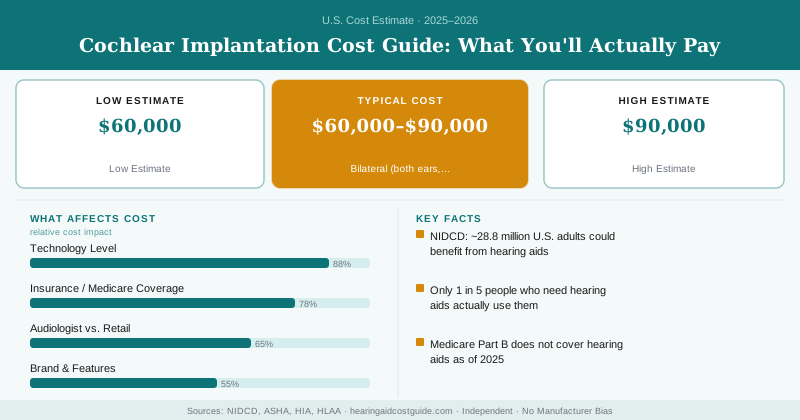
| Bilateral (both ears, same surgery) | $60,000–$90,000 total |
Why the Price Varies So Much
Three things drive most of the variation you’ll see between quotes: which manufacturer’s device your surgeon uses (Cochlear, Advanced Bionics, and MED-EL price similarly but negotiate differently with each insurer), whether the hospital is in-network, and whether you’re doing one ear or two. Bilateral implantation in a single surgery is more cost-efficient than two separate procedures because you only pay one facility fee and one anesthesia fee — a detail surgeons don’t always volunteer unless you ask.
What Insurance Actually Covers
Cochlear implants are considered medically necessary when a patient meets audiological candidacy — generally severe to profound hearing loss with limited benefit from hearing aids, confirmed through structured testing. Because of that medical designation, coverage looks completely different from hearing aid coverage.
- Medicare: Covers implants under Part B as durable medical equipment plus surgical benefits, typically 80% after deductible
- Private insurance: Most major plans cover implants when candidacy criteria are documented, though prior authorization is almost always required
- Medicaid: Covers implants for both children and adults in most states, often with fuller coverage than Medicare
Insurers require documented evidence that hearing aids provide limited benefit before approving implant surgery. This usually means a formal aided speech-in-noise test showing your hearing aids aren’t getting you above a certain benchmark score. Skipping this step — or using an audiologist who doesn’t document it properly — is the single most common reason implant claims get denied on the first pass.
The Costs Nobody Mentions Upfront
Getting the implant is just the entry cost. Ongoing expenses include:
- Mapping appointments — 4 to 6 visits in year one to program the processor, each billed separately unless bundled into a global surgical fee
- Processor upgrades — external processors typically get replaced every 5 to 7 years as technology improves, running $3,000–$8,000 if your insurance doesn’t cover an upgrade
- Batteries or rechargeable equipment — $50–$150 annually
- Loss and damage coverage — extended warranties for accidental damage or loss run $200–$500 per year and are worth it given replacement processor costs
Prior authorization denials are common even for medically qualified candidates. If your insurer denies coverage, request the specific denial reason in writing and have your audiologist’s office file an appeal with the aided speech-in-noise test results attached. Most denials get overturned on appeal when documentation is complete — but the appeal window is often only 60–90 days, so don’t sit on it.
Financing When Insurance Falls Short
For the coinsurance portion, or for patients without adequate coverage, most implant centers work with medical financing companies like CareCredit, and some hospital systems have charity care programs specifically for major medical device implantation. Ask the hospital’s financial counselor — not just the surgeon’s office — about hardship programs before assuming you have to pay the coinsurance balance in one lump sum. Many academic medical centers will set up 12- to 24-month interest-free payment plans for the patient responsibility portion once insurance has paid its share.
Frequently Asked Questions
A single cochlear implant, including the device, surgery, hospital fees, and initial mapping sessions, typically runs $30,000 to $50,000 in the U.S. Bilateral (both ears) implantation can push total costs past $80,000 when done in the same surgical window.
Yes. Medicare Part B covers cochlear implants as durable medical equipment and surgical care when a patient meets audiological candidacy criteria, typically covering 80% of approved costs after the deductible, leaving the patient responsible for the remaining 20% coinsurance.
Ongoing costs after implantation include disposable batteries or rechargeable battery replacements ($50–$150 per year), external processor upgrades every 5–7 years ($3,000–$8,000 if not covered by insurance), and repair or loss coverage that ranges from $0 with a warranty to $1,500–$3,000 out of pocket.