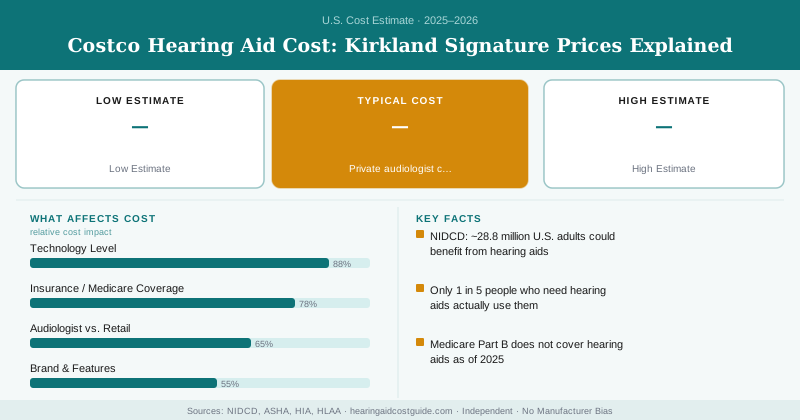
Most people assume a $1,899 pair of hearing aids must be inferior to a $5,500 pair sold down the street. That assumption is wrong more often than it’s right — and understanding why requires knowing exactly what you’re paying for in each case.
Costco’s Kirkland Signature hearing aids are, in most cases, rebadged versions of the same core technology sold by major manufacturers like Phonak, Resound, and Signia under their own name — with the components and firmware Costco negotiates directly, cutting out several layers of retail markup that a traditional practice bakes into its pricing.
Costco Hearing Aid Pricing
| Item | Cost | Notes |
|---|---|---|
| Costco membership (required) | $65/year (Gold Star) | One-time annual fee, not per purchase |
| Kirkland Signature 10.0 (current line) | $1,499–$1,899/pair | Rebadged premium-tier components |
| Kirkland Signature 9.0 (prior line, if in stock) | $1,299–$1,599/pair | Still solid mid-to-premium tech |
| Hearing test at Costco Hearing Aid Center | Free with purchase intent | Standalone test may run $20–$50 |
| Follow-up adjustments (included period) | $0 for typically 1 year | Varies by location |
| Private audiologist comparable device | $3,500–$7,000/pair | Same underlying manufacturer tech, higher markup |
Why Costco Can Charge So Much Less
The math isn’t complicated once you see it laid out. Traditional audiology practices typically bundle a device’s cost with years of unlimited follow-up visits, in-office repairs, and higher per-unit margins to support smaller patient volumes. Costco operates at massive scale — its hearing aid centers serve enormous membership bases per location — and negotiates direct manufacturer contracts for private-label devices, cutting out the traditional independent-practice markup structure almost entirely.
The tradeoff: Costco’s included follow-up period is typically shorter (often one year vs. lifetime at some private practices), and you may see a hearing instrument specialist rather than a licensed audiologist, depending on your state’s regulations and that location’s staffing.
What’s Actually Included in the Price
- On-site hearing test and evaluation
- Device fitting and initial programming
- A defined trial period (typically 90 days, per Costco’s return policy)
- A set number of follow-up visits for adjustments (commonly 12 months)
- Basic supplies (domes, wax guards) for an initial period
What’s usually NOT included, and worth asking about directly:
- Extended loss and damage coverage beyond the manufacturer warranty period
- Repairs after the included follow-up window closes
- Custom earmold impressions (may carry a separate fee)
Kirkland Signature devices are manufactured in partnership with major hearing aid brands and frequently share the same core digital signal processing chip as that manufacturer’s retail line sold elsewhere — just without the brand name on the case and without the multi-tier retail distribution markup. The performance difference between a Kirkland Signature device and its full-price counterpart from the same manufacturer is often minimal to nonexistent for the average user.
Who Should Skip Costco and Go Elsewhere
Costco makes sense for a large share of people with typical age-related hearing loss and no complicating factors. It’s a worse fit if:
- You need highly customized programming for complex or asymmetric hearing loss
- You want a specific manufacturer’s flagship model not offered under Costco’s private label
- Your insurance plan has negotiated rates only with in-network private audiology practices
- You need ongoing, frequent in-person adjustments beyond the included follow-up window
Membership Cost Math
The $65 annual Gold Star membership fee is required to purchase, but it’s a rounding error against the $1,500–$4,000 you’ll save compared to private-practice pricing for comparable technology. Even factoring in the membership cost purely for the hearing aid purchase, the math still favors Costco for most straightforward cases.
Not every Costco location has an audiologist on staff — many use licensed hearing instrument specialists instead, and state-by-state licensing rules for who can dispense hearing aids vary. If you have complex hearing loss, ask specifically about the credentials of the person fitting your device before you commit, not after the sale.
Bring a copy of any existing audiogram to your Costco appointment — it saves a redundant test and gives the specialist a documented baseline to program against on day one.
Frequently Asked Questions
Costco's Kirkland Signature hearing aids cost $1,499–$2,199 per pair, which includes the hearing test, fitting, and a set number of follow-up adjustment visits. A Costco membership ($65/year) is required to purchase.
Yes, typically. Private audiology practices charge $3,500–$7,000 per pair for comparable prescription-grade technology, while Costco's Kirkland Signature line uses the same manufacturer components (often rebadged from Phonak, Resound, or Signia) at a lower retail markup.
No referral is required. Costco's in-house hearing aid specialists or audiologists perform the hearing test on-site and can fit and sell hearing aids directly, though anyone with a doctor's prescription can bring it in as well.