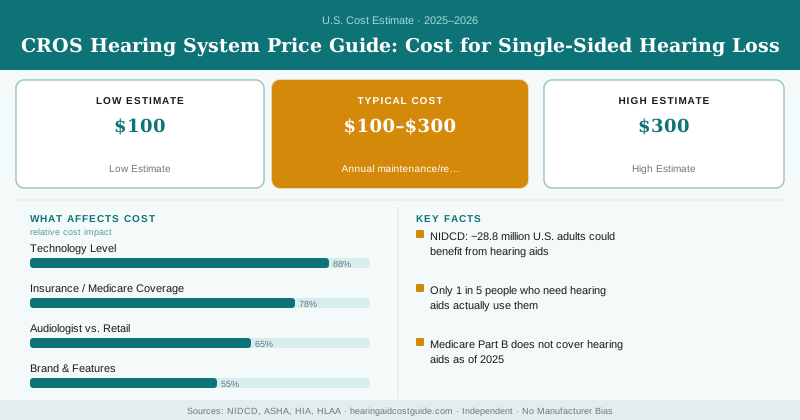
In 2015, a basic CROS (contralateral routing of signal) system cost roughly the same as an entry-level pair of standard hearing aids — a transmitter and a receiver, simple wireless routing, not much else. Today’s CROS systems run $2,000 to $5,500 and do considerably more: better wireless range, Bluetooth streaming to phones, automatic environment adjustment, and rechargeable batteries that didn’t exist in earlier models.
CROS System Costs
| Technology Tier | Typical Cost (Pair) |
|---|---|
| Basic CROS system | $2,000–$2,800 |
| Mid-tier CROS system | $2,800–$4,000 |
| Premium CROS system | $4,000–$5,500 |
| BiCROS system (mixed hearing loss) | $2,500–$5,800 |
| Replacement transmitter or receiver only | $800–$1,800 |
| Annual maintenance/reprogramming | $100–$300 |
How CROS Systems Work
A CROS system consists of two components: a transmitter, worn on the ear with no usable hearing (single-sided deafness), and a receiver, worn on the normal-hearing ear. The transmitter picks up sound on the deaf side and wirelessly sends it to the receiver, which delivers it to the functioning ear. It doesn’t restore hearing in the deaf ear — there’s no way to do that with this technology — but it eliminates the “head shadow” problem, where sound from the deaf side is effectively lost because you have no way to perceive it.
A BiCROS system works similarly but is for patients who have some hearing loss in both ears rather than total deafness on one side — it routes sound from the worse ear to a hearing aid on the better ear, which amplifies for both the transmitted and naturally received sound.
Why CROS Systems Aren’t Just “Hearing Aids”
Because a CROS system serves a specific medical function — routing sound from an ear with no usable hearing — some insurers and Medicare Advantage plans classify it differently than standard hearing aids, closer to how they treat other assistive medical devices for a diagnosed condition. This distinction matters for coverage: single-sided deafness is often a documented medical diagnosis with a clear cause (sudden sensorineural hearing loss, acoustic neuroma removal, congenital causes), which can support a stronger insurance appeal than typical age-related hearing loss.
If you’re pursuing insurance coverage for a CROS system, make sure your audiologist’s documentation clearly states “single-sided deafness” or “unilateral profound hearing loss” with the specific underlying cause, rather than general language about hearing loss. Clear, specific diagnostic documentation significantly improves the odds of an insurance appeal succeeding, since it distinguishes your case from routine bilateral age-related hearing loss that most policies exclude.
Trial Periods Matter More for CROS Systems
CROS systems have a steeper adjustment curve than standard hearing aids — your brain has to learn to interpret sound arriving from an unfamiliar direction and location. Because of this, a genuine trial period (2 to 4 weeks minimum) before committing to a purchase is especially important. Some patients find CROS systems transformative; others find the rerouted sound disorienting and prefer alternatives like a bone-anchored hearing system instead.
Don’t commit to a full CROS system purchase without a real-world trial period of at least two weeks in your actual daily environment — work, driving, restaurants, not just the quiet audiology office. Adjustment to rerouted sound varies significantly between individuals, and a short in-office demo isn’t long enough to know if it’s the right solution for you.
Alternatives Worth Comparing
Before committing to a CROS system, ask your audiologist to compare it against a bone-anchored hearing system, which routes sound through bone conduction rather than wireless transmission and works well for some single-sided deafness cases. Both approaches solve the same underlying problem differently, and cost, comfort, and effectiveness can vary meaningfully between the two depending on your specific anatomy and cause of hearing loss.
Frequently Asked Questions
A CROS hearing system, which includes a transmitter worn on the deaf ear and a receiver worn on the hearing ear, typically costs $2,000 to $5,500 for the pair depending on the technology tier and features included.
Coverage varies. Some insurance plans and Medicare Advantage hearing benefits cover CROS systems since they address a specific diagnosed condition (single-sided deafness), while others classify them under standard hearing aid exclusions with limited or no coverage.
A CROS system is for patients with normal hearing in one ear and no usable hearing in the other, routing sound from the deaf side to the normal ear. A BiCROS system is for patients who have some hearing loss in both ears, routing sound from the worse ear to a hearing aid worn on the better ear, which also amplifies sound for that ear.