Zinc-air batteries dominated hearing aid tech for decades. Then rechargeable arrived and changed the market. The same kind of disruption is happening in hearing protection — generic foam plugs dominated workplaces and music venues for generations, but custom-molded protection has quietly become affordable enough that most people who actually need consistent protection can justify the upgrade. The question is what type, what level of attenuation, and how much you should pay.
Noise-induced hearing loss (NIHL) is the second most common form of acquired hearing loss in the United States. The CDC estimates that approximately 22 million American workers are exposed to potentially damaging noise levels at work each year — and that exposure to dangerous noise levels outside of work is increasing as well, driven by earbuds at high volumes, loud concerts, and recreational activities like motorcycling and motorsports.
Custom Hearing Protection Costs by Type
| Protection Type | Low | Typical | High |
|---|---|---|---|
| Custom solid earplugs (sleep, swimming) | $50 | $100 | $200 |
| Custom industrial/occupational earplugs | $80 | $150 | $300 |
| Musician earplugs with flat-response filters | $100 | $200 | $400 |
| Musician plugs with multiple filter sets | $150 | $250 | $500 |
| Custom electronic earplugs (level-dependent) | $300 | $500 | $900 |
| Custom noise-canceling earplugs (Bluetooth) | $400 | $600 | $1,200 |
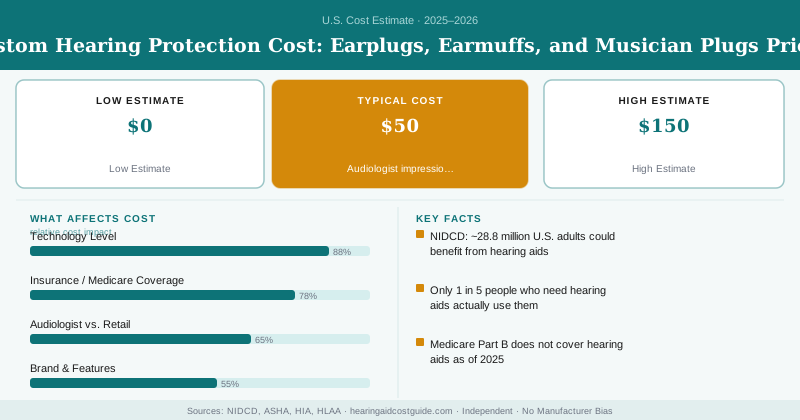
| Audiologist impression fee (per ear) | $0 | $50 | $150 |
Many audiology clinics include impression-taking in the product price. When they don’t, ear impressions typically cost $25–$75 per ear. The impressions are mailed to a manufacturer who creates the finished plugs.
Custom vs. Foam Disposable: Is It Worth It?
Foam earplugs have Noise Reduction Ratings (NRR) of 29–33 dB — the highest of any plug type when fitted correctly. The catch is “fitted correctly.” Studies consistently show that real-world attenuation from foam plugs is 50–70% lower than lab-tested NRR ratings because most people don’t insert them properly.
Custom-molded solid plugs seal against the unique contours of your ear canal, delivering consistent attenuation every time you insert them. Their NRR is typically 25–29 dB — slightly lower on paper, but often higher in real-world use because the fit is reliable.
For someone who works in a noisy environment every workday, the math changes quickly. A box of disposable foam plugs runs $10–$20 for 50 pairs — about $50–$100 per year for daily use. Custom plugs at $150–$200 pay for themselves in 2–4 years and consistently outperform disposables on noise reduction, comfort for full-day wear, and ease of insertion.
Musician Earplugs: Why They’re Different
Standard earplugs block high frequencies more than low, which makes music sound muffled and speech sound hollow. That’s fine for jackhammer operators. It’s not fine for musicians, music teachers, concert attendees, or anyone who needs to hear clearly while protecting against loud noise.
Musician earplugs use a specialized acoustic filter — typically a small port with a precisely tuned damper — to reduce all frequencies by roughly equal amounts. The result is attenuation of 9, 15, or 25 dB (depending on which filter you insert) while preserving the frequency balance of sound. Music sounds quieter but natural.
The ER-series filter system (originally developed by Etymotic Research) is the clinical standard. Musicians’ earplugs with flat-response filters run $150–$350 with custom impressions included. Many sets come with two filter strengths so you can choose lighter attenuation at rehearsal and stronger protection at loud venues.
Consider musician earplugs if you:
- Play in a band, orchestra, or any live music setting
- Attend 4+ concerts per year
- Teach music or work in a music venue
- DJ, run sound equipment, or work in broadcast audio
- Experience ringing or muffling after loud events (early sign of damage)
The American Academy of Audiology recommends custom musician earplugs for all professional musicians and strongly encourages them for serious amateur players.
Industrial and Occupational Protection
If you work in manufacturing, construction, HVAC, aviation, agriculture, or any other OSHA-regulated noisy environment, your employer is required by law to provide hearing protection free of charge when noise exposure exceeds OSHA’s permissible limits (90 dB TWA, or 85 dB under OSHA’s Action Level). That protection is typically foam disposable plugs or passive earmuffs.
Custom protection is an upgrade — not a replacement for employer-provided equipment. However, many workers pay for custom plugs out of pocket because they:
- Find foam plugs uncomfortable after 8–10 hours
- Have ear canals that don’t seal properly with standard foam
- Need to hear speech clearly while still being protected
- Use over-ear headsets that fit better over custom in-ear protection
Custom industrial plugs with NRR 25–28 dB cost $100–$300. Electronic level-dependent plugs — which amplify ambient sound up to a threshold and then block loud impacts (gunshots, pneumatic tools) — run $400–$900 and are particularly popular in manufacturing, law enforcement, and military contexts.
Fit and Impressions: What to Expect
Custom earplugs start with ear impressions — a mold-making process performed by an audiologist or hearing aid dispenser. The audiologist places a foam dam in your ear canal to protect the eardrum, then injects a soft silicone impression material. It sets in about 10 minutes and is painless.
The finished impressions are mailed to the manufacturer (companies like Westone, Sensaphonics, ACS, Starkey Custom, or Widex Custom). Turnaround is typically 2–4 weeks. You’ll receive the finished plugs by mail, with instructions for insertion and care.
Fit adjustment may be needed — most reputable manufacturers offer a free refit within the first 30 days. After that, custom plugs have a lifespan of 3–5 years before the silicone material loses flexibility.
Can Employer Health Plans or HSA/FSA Cover Custom Protection?
In occupational hearing conservation programs, employers sometimes cover or subsidize custom protection as part of OSHA compliance. Ask your occupational health office or safety coordinator.
Custom earplugs are eligible for purchase with HSA and FSA funds when prescribed or recommended by a licensed healthcare provider. Some audiologists provide a letter of medical necessity; others include it automatically. If you’re paying out of pocket, paying through your HSA can effectively discount the cost by your marginal tax rate — often 20–30%.
Custom earplugs will not protect against hearing loss if not worn consistently. No amount of NRR rating helps if you take them out “just for a few minutes” during the loudest part of the event or workday. Research shows that removing protection for even brief loud exposures dramatically reduces total protection for that session.
Where to Get Custom Earplugs
Audiologists and hearing aid dispensers are the most reliable source for ear impressions and custom protection. ENTs often can refer you to an audiologist in their practice. Some dedicated hearing protection retailers accept mail-in impressions (done by any audiologist and mailed directly to the lab).
Avoid unverified online “DIY impression kits” — improperly taken impressions can damage the ear canal or tympanic membrane, and they typically produce poor-fitting finished products.
When shopping, compare:
- The NRR or attenuation values at different frequencies
- Whether musician-style flat filters are available
- Whether the fitting impression is included or billed separately
- The manufacturer’s refit or replacement policy
The best hearing protection is the kind you’ll actually wear. If comfort is what’s standing between you and consistent use, custom protection is the most cost-effective investment you can make for your long-term hearing health.
Frequently Asked Questions
Custom hearing protection typically ranges from $50 to $800 depending on the type and complexity. Basic custom earplugs for sleep or swimming cost $50–$200 per pair, while musician plugs with variable attenuation run $300–$600, and industrial-grade custom earmuffs can exceed $800. Generic foam alternatives cost just a few dollars but require frequent replacement and don't offer the same durability or fit.
Most health insurance plans do not cover custom hearing protection as it is considered preventive rather than medically necessary, though some workers compensation policies may cover industrial hearing protection if job-related hearing loss is a concern. Out-of-pocket costs are typically the full price listed by the audiologist or manufacturer, ranging from $50–$800. A few flexible spending accounts (FSAs) or health savings accounts (HSAs) may allow reimbursement if you submit documentation, so check your plan details.
The fitting and molding process usually takes 20–30 minutes during an initial appointment with an audiologist or hearing specialist. You will receive your finished custom earplugs or earmuffs within 1–2 weeks after the mold is sent to the lab for fabrication. Most custom hearing protection is ready to use immediately upon pickup and requires no recovery time.