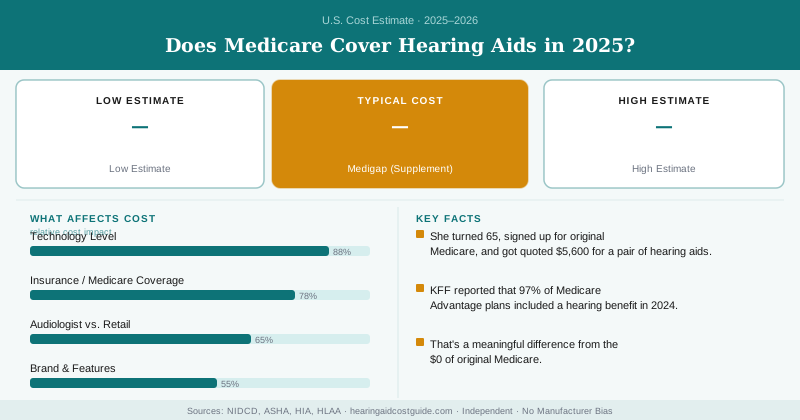
A retired nurse in Florida paid Medicare taxes for 41 years. She turned 65, signed up for original Medicare, and got quoted $5,600 for a pair of hearing aids. Medicare’s share of that bill? Zero dollars.
That surprises almost everyone. So let’s clear it up: in 2025, original Medicare does not cover hearing aids — but that’s not the end of the story. Several routes can still cut your cost dramatically.
What Medicare Covers by Plan Type
| Medicare Type | Hearing Aids? | Hearing Tests? |
|---|---|---|
| Part A (hospital) | No | Inpatient diagnostic only |
| Part B (medical) | No | Yes — when medically ordered |
| Original Medicare (A+B) | No | Limited diagnostic only |
| Medicare Advantage (Part C) | Often yes ($500–$2,500) | Yes, as a routine benefit |
| Medigap (Supplement) | No | No |
Original Medicare: The Hard Truth
Section 1862(a)(7) of the Social Security Act flatly excludes hearing aids from coverage. It’s been that way since the program launched in 1965, and it’s a statutory exclusion — meaning the Centers for Medicare & Medicaid Services can’t waive it. Only Congress can.
What Part B does cover for your ears:
- Diagnostic hearing tests ordered by a physician to chase down a medical symptom, paid at 80% after the $257 deductible (2025)
- Cochlear implants and the surgery, covered as prosthetic devices
- Bone-anchored hearing aids (BAHA), also covered as prosthetics
What it doesn’t cover: routine hearing tests, hearing aids of any style, the fitting and programming, or OTC devices.
Medicare Advantage: Where the Real Help Is
Here’s the good news. Medicare Advantage (Part C) plans are private plans that must cover everything original Medicare does — and most layer hearing benefits on top. KFF reported that 97% of Medicare Advantage plans included a hearing benefit in 2024. That’s a meaningful difference from the $0 of original Medicare.
Typical Medicare Advantage hearing benefits:
- Annual routine hearing exam covered in full
- Hearing aid allowance of $500–$2,500 per pair
- Network delivery through TruHearing, NationsHearing, or similar
- Follow-up visits and a battery supply often bundled in
Many Medicare Advantage plans deliver their hearing benefit through TruHearing. You pay a set copay per device — often $0 to $699 each — for mid-tier models from Signia, ReSound, Phonak, or Oticon. Three follow-up visits and a battery supply are usually included. It’s genuine value when the copay is low, but you’re limited to network providers and mid-tier technology.
Maximizing Your Coverage
- Compare hearing benefits at enrollment. Two plans in the same ZIP code can differ by $1,500 in hearing coverage.
- Stay in-network. Out-of-network aids often aren’t covered at all.
- Use the benefit before December 31. Most don’t roll over to the next year.
- Switch during open enrollment (Oct 15–Dec 7) if your current plan’s hearing benefit is weak.
Be cautious with plans that advertise “hearing benefits” in big letters. A plan might pay only $500 per pair once every three years. Always read the Evidence of Coverage for the exact allowance, network rules, and which device tiers qualify before you enroll.
If You Have No Medicare Advantage Benefit
You still have options that don’t depend on insurance at all. FDA-regulated OTC hearing aids — legal since the 2022 rule — run $200–$1,600 a pair for mild-to-moderate loss. Costco fits prescription-grade pairs for $1,400–$2,500. And if you’re dual-eligible for Medicaid, your state program may cover aids entirely.
Frequently Asked Questions
Does original Medicare pay anything toward hearing aids in 2025? No. Parts A and B cover $0 of the device cost. Part B covers a doctor-ordered diagnostic hearing test at 80% after the deductible, but not the aids.
Will Medicare Advantage cover my hearing aids? Usually some of it. Most plans offer a $500–$2,500 allowance, delivered through a network, with copays per device. Read the fine print on device tiers and provider restrictions.
Is there any movement to change the law? Yes. The NIDCD notes that nearly half of adults over 75 have disabling hearing loss, and groups like AARP and HLAA keep lobbying Congress. But no federal hearing aid benefit has passed as of 2025.
What about cochlear implants? Those are covered — under Part B as prosthetic devices, including surgery and programming, subject to your 20% coinsurance.
The Florida nurse eventually switched to a Medicare Advantage plan with a $2,000 hearing benefit during open enrollment. It didn’t cover everything, but it cut her out-of-pocket cost roughly in half. That kind of planning starts with knowing exactly which type of Medicare you carry.
Frequently Asked Questions
No. Original Medicare (Parts A and B) pays $0 toward hearing aids and routine hearing exams. This is a statutory exclusion written into Section 1862(a)(7) of the Social Security Act back in 1965, so only Congress can change it. Part B does cover diagnostic hearing tests when a doctor orders them to investigate a medical problem — paid at 80% after the $257 Part B deductible (2025) — but the aids themselves are not covered.
Often, yes. According to KFF, 97% of Medicare Advantage plans offered a hearing benefit in 2024. Most provide an allowance of $500–$2,500 per pair, usually delivered through a network like TruHearing or NationsHearing. The catch: you typically must use in-network providers and the benefit may only cover mid-tier devices. Read the plan's Evidence of Coverage before assuming a number.
The exclusion dates to 1965, when hearing aids were considered routine 'comfort' items rather than medical devices. The law was never updated. The NIDCD reports that about one-third of Americans aged 65–74 — and nearly half of those over 75 — have disabling hearing loss, yet the federal benefit hasn't caught up. Advocacy groups like HLAA and AARP continue pushing bills to add coverage, but as of 2025 none has passed.
Yes. Cochlear implants are covered under Medicare Part B as prosthetic devices, including the surgery, the device, and follow-up programming, because they're classified differently than hearing aids. Bone-anchored hearing systems (BAHA) are also covered as prosthetics. You'll still owe the 20% coinsurance after your deductible unless you have Medigap or other secondary coverage.
If you have funds in a Health Savings Account or Flexible Spending Account, yes — hearing aids and batteries are IRS-qualified medical expenses. Most people on Medicare can no longer contribute to an HSA, but existing balances can still be spent tax-free. This effectively gives you a 15%–30% discount depending on your tax bracket.
Three realistic paths: switch to a Medicare Advantage plan with a strong hearing benefit during open enrollment (Oct 15–Dec 7), buy FDA-regulated OTC hearing aids for $200–$1,600 a pair if your loss is mild-to-moderate, or shop a low-overhead retailer like Costco where pairs run $1,400–$2,500 with fitting included. Assistance programs and state Medicaid (for dual-eligible folks) can also close the gap.