In 2010, most people who got “airplane ear” just waited it out and never saw a doctor. Today the picture’s the same for mild cases — but more travelers and divers are getting checked, and that changes the bill. Ear barotrauma happens when the pressure inside your middle ear can’t equalize with the pressure outside it, usually during a flight descent, a scuba dive, or a fast elevator ride.
The pain is real. The cost, thankfully, is usually small.
Mild vs. Severe: A Huge Cost Gap
The vast majority of barotrauma is mild — fullness, muffled hearing, maybe a popping sensation that clears in hours or days. That costs you a few dollars in over-the-counter decongestants, if anything.
Severe barotrauma is a different animal. Repeated or extreme pressure injury can cause fluid or blood behind the eardrum, a perforation, or in divers, inner-ear damage. That’s when costs jump. The American Academy of Otolaryngology lists barotrauma among the most common ear complaints linked to air travel and diving.
Treatment Cost Breakdown
| Treatment | Cost (No Insurance) |
|---|---|
| OTC decongestant / antihistamine | $10–$30 |
| Prescription nasal steroid spray | $20–$90 |
| Primary care or urgent care visit | $120–$300 |
| ENT specialist evaluation | $200–$450 |
| Myringotomy (small drainage incision) | $1,500–$4,000 |
| Pressure equalization tube placement | $2,000–$5,000 |
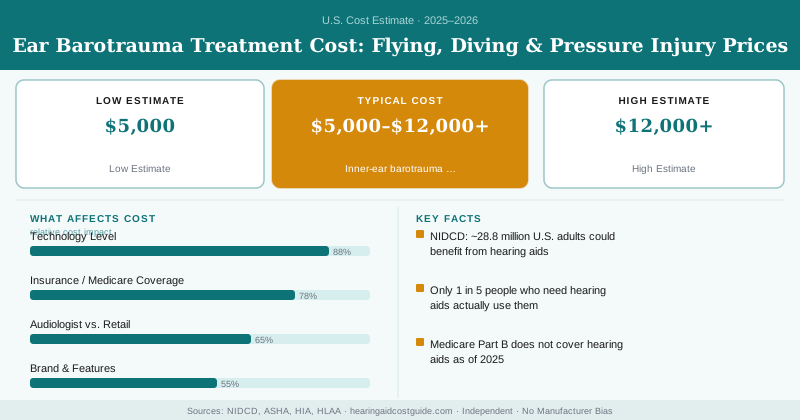
| Inner-ear barotrauma (diving) surgical repair | $5,000–$12,000+ |
Notice the cliff between conservative care and any procedure. A decongestant and time handle most cases. Once an ENT has to drain fluid or place a tube, you’ve crossed from tens of dollars into thousands.
Mild ear barotrauma usually costs under $30 and clears on its own. Plan a $200–$450 ENT visit if symptoms last more than a few days or hearing drops. Surgical drainage or tubes run $1,500–$5,000 — reserved for cases that won’t resolve.
When Divers Need to Worry
Scuba-related inner-ear barotrauma is the expensive scenario. It can cause vertigo, ringing, and lasting hearing loss, and it sometimes gets confused with decompression sickness. If you surface with spinning dizziness or sudden one-sided hearing loss, that’s an emergency — not a wait-and-see. Sudden hearing loss has a narrow treatment window, which is covered in our guide on sudden hearing loss treatment cost. Acting fast can mean the difference between full recovery and permanent loss.
Does Insurance Help?
Yes. Barotrauma is a diagnosed medical injury, so standard health insurance applies. A specialist visit lands at your plan’s copay — usually $40–$150 — and any procedure is subject to your deductible and coinsurance. Travel insurance may also reimburse urgent care if you’re injured on a trip; keep every receipt.
If your ENT runs a hearing test to check for damage, that’s billed separately at $50–$300 and is typically covered when it’s diagnostic rather than a routine screening.
Don’t fly or dive with a head cold or congestion. A blocked Eustachian tube can’t equalize pressure, and that’s exactly when barotrauma turns severe. Pushing through congestion at altitude is the single most common reason a cheap, self-limiting problem becomes a surgical one.
How to Avoid the Expensive Version
- Equalize early and often. Swallow, yawn, or do a gentle Valsalva (pinch nose, softly blow) every few minutes on descent — don’t wait until it hurts.
- Use a decongestant before the trip. A $10 OTC tablet taken before descent prevents far more than it costs.
- Try filtered earplugs. Pressure-regulating flight earplugs cost $10–$15 and slow the pressure change on descent.
- See an ENT, not just urgent care, for lasting symptoms. If you’re already worried about your hearing, an audiologist evaluation at the same practice can confirm whether the pressure left any mark.
Bottom Line
For most travelers and casual divers, ear barotrauma is a temporary nuisance you treat for less than the price of lunch. The cost only balloons in severe cases that need an ENT to drain fluid, place a tube, or repair inner-ear damage. Equalize pressure carefully, never fly congested, and you’ll almost certainly stay in the cheap column. If symptoms drag on or hearing drops, get checked early — waiting is the costliest mistake.
Frequently Asked Questions
Mild ear barotrauma treatment typically costs $30-$200 for over-the-counter decongestants and nasal sprays you can manage at home. If you need a doctor visit, expect $150-$500 for an urgent care or primary care appointment; severe cases requiring an ENT specialist or surgical intervention (myringotomy or tympanostomy tubes) can reach $2,000-$5,000+.
Most health insurance plans cover medically necessary ear barotrauma treatment, including doctor visits and surgery, though you'll typically pay your standard copay ($20-$50) or coinsurance (10-40%) depending on your plan. Many plans cover decongestants and nasal sprays, but some may require you to pay out-of-pocket for over-the-counter options unless prescribed by a doctor.
Mild pressure-related ear pain usually resolves within 24-48 hours with home remedies like decongestants, yawning, or the Valsalva maneuver (gentle ear-clearing technique). You should see a doctor if pain persists beyond 3 days, you experience hearing loss or fluid drainage, or if you have severe pain at the time of pressure exposure—these signs may indicate middle ear damage requiring urgent evaluation.