That maddening clogged, full feeling in your ear that won’t pop? There’s a good chance it’s Eustachian tube dysfunction, and treating it can cost anywhere from the price of a coffee to several thousand dollars. The Eustachian tube connects your middle ear to the back of your nose and equalizes pressure. When it doesn’t open and close properly, you get fullness, muffled hearing, popping, and sometimes pain.
ETD is extremely common. The CDC documents ear and Eustachian-tube problems as a frequent reason for both pediatric and adult ENT visits in the U.S., and most cases are mild and self-limiting.
Mild ETD Costs Almost Nothing
The majority of Eustachian tube dysfunction is temporary — triggered by a cold, allergies, or a sinus infection — and clears once the underlying congestion resolves. Treatment is cheap: decongestants, nasal steroid sprays, antihistamines for allergy-driven cases, and the occasional auto-inflation device.
It’s only chronic, persistent ETD that climbs into procedure-and-surgery territory.
Cost Breakdown
| Treatment | Cost (No Insurance) |
|---|---|
| OTC decongestant / antihistamine | $10–$30 |
| Prescription nasal steroid spray | $20–$90 |
| Auto-inflation device (e.g., balloon device) | $15–$60 |
| Primary care visit | $120–$300 |
| ENT evaluation | $200–$450 |
| Allergy testing (if allergy-driven) | $200–$1,000 |
| Ear tube placement (adult) | $2,000–$4,000 |
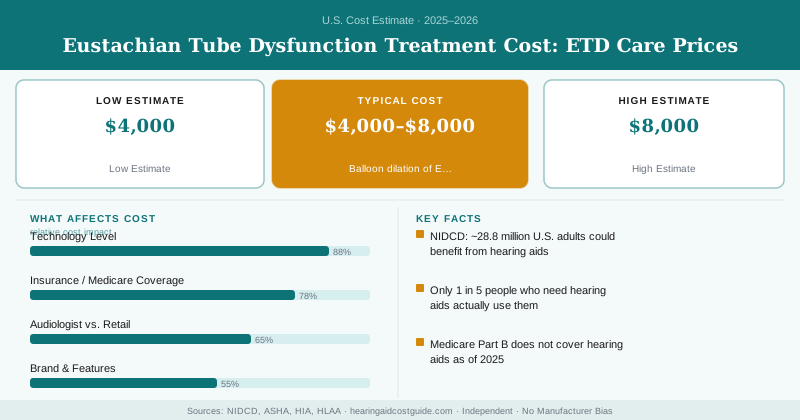
| Balloon dilation of Eustachian tube | $4,000–$8,000 |
The jump from medications to procedures is steep. For most people, the first three rows of that table handle the whole problem.
Most Eustachian tube dysfunction clears with $15–$90 of decongestants and nasal sprays as the underlying cold or allergies resolve. Plan a $200–$450 ENT visit for symptoms lasting more than a few weeks. Chronic cases may need ear tubes ($2,000–$4,000) or balloon dilation ($4,000–$8,000).
When to Stop Waiting and See a Specialist
ETD that lingers past a few weeks, keeps coming back, or noticeably drops your hearing deserves an ENT workup. Persistent dysfunction can lead to fluid buildup behind the eardrum and conductive hearing loss. An ENT evaluation sorts out whether it’s allergy-driven, structural, or something needing a procedure. If your hearing feels reduced, a hearing test measures the impact and gives a baseline.
Don’t confuse blocked ears from ETD with blockage from wax, either — they feel similar but cost very different things to fix. A quick look can tell whether you actually need ear wax removal instead.
Insurance Coverage
ETD is a diagnosed medical condition, so visits, prescriptions, allergy testing, and procedures are covered by standard health insurance after copays and deductible. Newer balloon dilation procedures are increasingly covered when conservative treatment has failed and the dysfunction is documented as chronic — but get pre-authorization, since some plans still consider it case-by-case. None of this involves hearing aid coverage rules.
Don’t lean on decongestant nasal sprays (the spray kind) for more than three days. They work fast for ETD but cause rebound congestion if overused, leaving you more blocked than when you started — and chasing relief with a costlier ENT workup. Use oral decongestants or steroid sprays for anything beyond a couple of days.
How to Keep Costs Low
- Treat the cause, not just the ear. Most ETD is downstream of allergies or a cold — manage those cheaply and the ear follows.
- Try auto-inflation. A $15–$60 balloon auto-inflation device resolves many cases without any prescription.
- Give it a few weeks. Mild ETD usually self-resolves; rushing to procedures wastes money.
- Reserve surgery for documented chronic cases. Tubes and balloon dilation are for ETD that won’t quit, not a two-week clog from a head cold.
Bottom Line
For most people, Eustachian tube dysfunction is a cheap, self-resolving annoyance treated with over-the-counter medications and a little patience. The cost only escalates when it turns chronic and needs ear tubes or balloon dilation — procedures running $2,000 to $8,000 but generally covered by insurance. Treat the underlying allergies or cold, avoid spray overuse, and see an ENT if it lingers past a few weeks or your hearing drops.
Frequently Asked Questions
Non-surgical ETD treatments are the most affordable option, ranging from $15–$200. Over-the-counter decongestants cost $15–$30, nasal corticosteroid sprays run $25–$60, and a single audiology visit for ear pressure assessment typically costs $75–$200 out-of-pocket depending on your insurance.
Most major insurance plans cover ETD surgery (balloon dilation or tubes) when conservative treatments fail, typically requiring a referral and documentation of 3+ months of failed treatment attempts. However, out-of-pocket costs after insurance usually range from $500–$2,000 for a balloon dilation procedure, while tube insertion may cost $1,500–$3,000 depending on your deductible and coinsurance.
Non-surgical treatments like nasal decongestants and corticosteroids typically show improvement within 1–2 weeks, while Eustachian tube exercises may take 2–4 weeks of consistent practice. Most ENT doctors recommend trying conservative treatments for at least 3 months before considering surgery, which means you can often resolve ETD for under $100 before pursuing procedures that cost thousands.