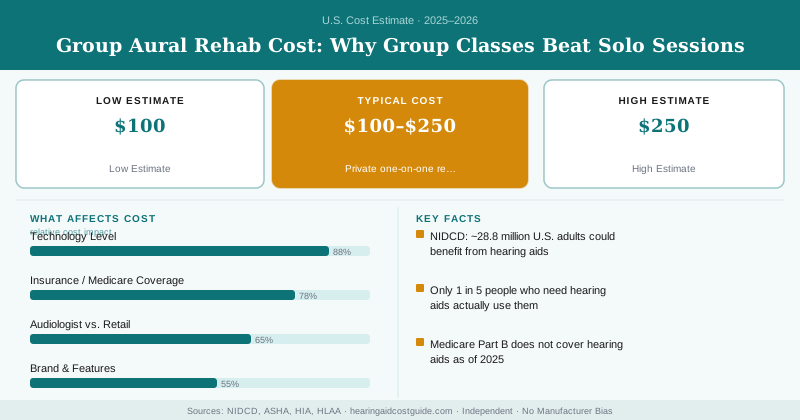
Private aural rehab sessions can run $100 to $250 an hour. A multi-week group program covering much of the same ground? Often free, or a flat fee under $600. That price gap is the whole reason group aural rehabilitation exists — and the surprising part is that for many people, the group format actually works better, not just cheaper. Here’s what it costs and why it punches above its weight.
Group Aural Rehab Costs
| Format | Cost |
|---|---|
| Hospital / clinic group program (multi-week) | $0–$400 |
| University audiology clinic group class | Free–$200 |
| Nonprofit / VA group rehab | Often free |
| Community center group sessions | Free–$150 |
| Online group programs | $50–$300 |
| Private one-on-one rehab (for comparison) | $100–$250/session |
Many group programs are subsidized by hospitals, universities, the VA, or nonprofits, which is why so many land at little or no cost. You get a structured curriculum across several weeks for a fraction of what private sessions would total.
What Group Aural Rehab Covers
Group programs typically teach communication strategies, listening practice, speechreading, hearing aid troubleshooting, and ways to manage tough listening environments. ASHA recognizes aural rehabilitation as a key part of hearing-loss management, and the group setting delivers it efficiently — one facilitator, many participants, shared curriculum.
The social dimension is the secret ingredient. The NIDCD notes that untreated hearing difficulty is linked to social isolation, and a group of people facing the same challenges provides support, accountability, and real-world practice partners that a solo session can’t replicate.
Group aural rehab costs $0–$600 total versus $100–$250 per private session. Beyond the savings, the group format adds peer support and live communication practice that often improves outcomes. For most people with hearing loss, group rehab is the smarter first choice.
Group vs. Private
Group is best when you want affordability, peer support, and a structured curriculum — which covers most newly diagnosed adults and new hearing aid users.
Private is best when you have a complex case, need a customized pace, or want privacy. It’s faster and tailored, but you’ll pay several times more for comparable content.
Plenty of people do both: a free group program to build the foundation, then a private session or two to address specific sticking points.
Group rehab isn’t a substitute for proper fitting and medical care. Get your hearing tested and your devices properly fitted first — group classes build communication skills, but they can’t replace an evaluation or correctly programmed hearing aids.
How It Fits Your Hearing Plan
Group rehab is one delivery method for the broader aural rehabilitation cost covered in detail elsewhere. It pairs naturally with your hearing aid cost investment — the device handles the signal, the rehab teaches you to use it well. Start with a hearing test and an audiologist visit so the class targets your real needs.
Finding Low-Cost or Free Programs
- Ask your audiologist. They usually know which local clinics run group programs.
- Check university audiology clinics. Student-run programs are supervised and often free or cheap.
- Contact the VA if eligible. Veterans frequently access group rehab at no cost.
- Look at hearing-loss nonprofits. Many host free or low-cost group sessions and support meetings.
The Bottom Line
Group aural rehab gives you most of what private sessions offer at a fraction of the price — frequently free — plus a built-in support network that genuinely helps. Start here, lean on the subsidized programs at hospitals, universities, and the VA, and save private sessions for the specific problems a group can’t solve.
Frequently Asked Questions
Group aural rehab programs typically cost $0 to $600 for a multi-week course, while private one-on-one sessions range from $100 to $250 per hour. A 6–8 week group program covering similar material often costs one-third to one-half the price of just 2–3 private sessions.
Coverage varies by plan and provider; some Medicare Advantage plans and private insurers cover group aural rehab partially or fully, while others classify it as out-of-pocket. Contact your insurer directly, as hospital-based programs are more likely to be covered than independent clinics.
Group programs work well for newly fitted hearing aid users, people with mild-to-moderate hearing loss, and those seeking communication strategies and peer support alongside device training. If you need intensive one-on-one troubleshooting or have complex listening demands, private sessions may be more appropriate, though group classes can follow as reinforcement.