The average hearing aid wearer needs 3–5 programming adjustments in the first year. Most people don’t know whether those adjustments are included in what they paid — until they show up for their second appointment and hand over a credit card.
That moment of surprise is entirely preventable. It comes down to one question you should ask before you sign anything: bundled or unbundled?
Follow-Up Visit Costs by Pricing Model
| Visit Type | Bundled Package | Unbundled (Per Visit) |
|---|---|---|
| Programming adjustment | Included | $75–$200 |
| Real-ear measurement verification | Included | $100–$200 |
| Cleaning and inspection | Included | $50–$100 |
| Minor repair (tube replacement, dome change) | Usually included | $25–$75 |
| Annual audiogram update | Sometimes included | $100–$250 |
| Remote programming session | Sometimes included | $50–$150 |
| Major repair (send to manufacturer) | Warranty covers defects; damage extra | $200–$500 |
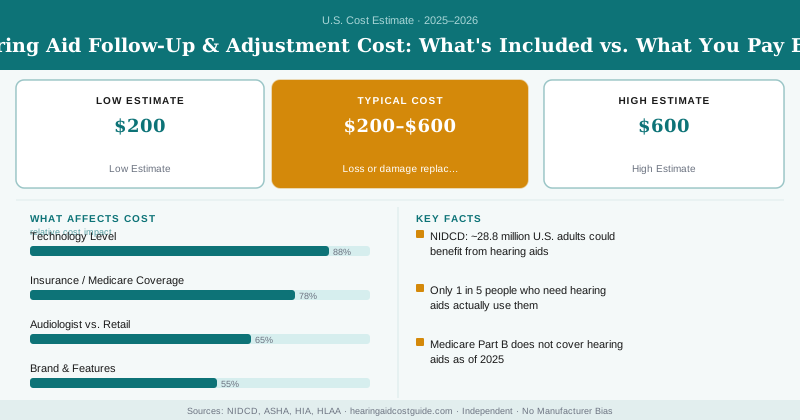
| Loss or damage replacement | Not included — separate insurance | $200–$600/device |
Bundled vs. Unbundled: The Model That Changes Everything
HIA consumer research consistently shows that most hearing aid buyers don’t understand which pricing model their clinic uses — until they receive an unexpected bill.
Bundled pricing is the traditional audiology model. The clinic wraps 2–3 years of professional services into the purchase price of the hearing aids. A $5,500 pair comes with your fitting, all programming adjustments, regular cleaning and inspection visits, and sometimes an annual audiogram update. There’s no separate invoice when you come back for a tune-up.
What you get: predictable total cost, no per-visit billing anxiety, and an incentive to show up for follow-ups — which matters because AAA research shows patients who attend follow-up appointments regularly report significantly higher satisfaction and longer sustained hearing aid use.
What you give up: portability. If you move, change audiologists, or your clinic closes, you’ve pre-paid for services you won’t receive. You also can’t easily comparison-shop the device cost across providers, since the service cost is built into the quote.
Unbundled pricing separates the device cost from the service cost. You pay for the hearing aids at or near the device-only price, then pay per visit as you use services. Some academic medical center audiology departments and some independent practices have moved to this model.
What you get: full transparency. You pay only for what you use. If you’re a confident self-manager who asks few questions and comes in only when something’s wrong, you may spend $300–$500 total in service fees over three years — well below what bundled service would have cost.
What you pay: $75–$200 per visit, cash at the counter. If you need four adjustments in year one, that’s $300–$800 in service fees on top of the device. For someone who needs more hand-holding during the adjustment period, bundled pricing may actually be cheaper.
Before finalizing any hearing aid purchase, get written answers to: (1) How many follow-up visits are included, and for how long? (2) What specifically is included — programming only, or cleaning and minor repairs too? (3) Is remote programming included? (4) What happens if I move — can I transfer service to a local audiologist? (5) What’s excluded from the package? Getting these answers upfront prevents every surprise bill.
What Your First-Year Follow-Up Schedule Should Look Like
Most audiologists recommend a specific follow-up schedule in the first 12 months. The AAA’s guidelines on service delivery suggest:
2-week follow-up: First programming adjustment after initial wear period. This is when most patients report “something sounds off” — the initial fitting may have been accurate to prescription but feels too loud, tinny, or hollow. Adjustments here are normal and expected.
4–6 week follow-up: Second adjustment and check on adaptation. Real-ear measurement verification is often done at this visit if it wasn’t completed at fitting.
3-month follow-up: Assessment of how well you’re adapting across different environments. Program adjustments for specific problem situations. Cleaning.
6-month follow-up: Check on battery/charging performance. Cleaning. Any complaints from the previous months addressed.
12-month follow-up: Annual audiogram or hearing check to determine if your prescription needs updating. Full cleaning and inspection.
In a bundled package, all of these visits should be included. In an unbundled model, plan for $450–$1,000 in service fees over year one if you follow this schedule.
Remote Programming: An Included Feature or a Separate Cost
Telehealth hearing aid programming exists and it’s genuinely useful. Phonak’s RemoteCare, Oticon RemoteCare, Starkey Remote Support, and Signia TeleCare all allow an audiologist to connect to your hearing aids through an app and adjust programming settings without an office visit.
This is valuable when:
- A specific new situation (a new job, a move, a change in listening environments) needs a targeted adjustment
- You travel and can’t get to your usual clinic
- You have mobility limitations that make office visits burdensome
Cost when billed separately: $50–$150 per session. Many premium bundled packages include remote sessions as part of the service package — confirm this specifically.
Not all adjustments can be done remotely. Real-ear measurement requires in-person equipment. Major complaints requiring diagnostic evaluation need a face-to-face visit. Remote programming is a supplement, not a complete replacement for in-person care.
What to Expect When You Change Audiologists
You move. Your audiologist retires. Your insurance changes your preferred provider network. It happens. Here’s what transferring care actually involves:
Any licensed audiologist with access to the relevant manufacturer’s fitting software can program your hearing aids. Phonak uses Phonak Target software; Oticon uses Genie 2; Starkey uses Inspire. These programs are available to licensed professionals, so nearly any full-service audiology clinic can handle most brands.
What a transfer visit costs: $100–$200 for the initial appointment at a new practice. This covers reviewing your history, connecting your aids, and making initial adjustments. You won’t be covered under your original purchase package. Bring your audiogram from the previous provider — most practices will accept it rather than repeat testing immediately.
What you lose: The pre-paid service portion of a bundled package. If you bought a $6,000 bundled package and move 6 months later, the service portion you paid for (typically $600–$1,200 in professional time) doesn’t transfer.
Loss and damage (L&D) insurance for hearing aids is not the same as a manufacturer warranty. The manufacturer warranty covers defects in materials and workmanship — typically 2–3 years, included in purchase. It doesn’t cover losing a device in the ocean or a dog chewing it. L&D insurance ($50–$150/year or included in some purchase packages) covers those events with a deductible of $200–$500 per device. If your purchase doesn’t include L&D coverage, ask about adding it — especially if you’re active outdoors or travel frequently.
Frequently Asked Questions
A typical programming adjustment visit runs 30–45 minutes. Your audiologist connects your hearing aids to fitting software via a programming interface, reviews your listening log and any complaints, adjusts gain targets across frequency bands, may fine-tune compression ratios or noise reduction settings, and in some practices performs real-ear measurement to verify the programmed output matches your prescription targets. You should leave with aids that sound different — ideally better — in the specific situations you reported struggling with.
Yes. Any licensed audiologist with access to the relevant manufacturer's fitting software can program your hearing aids. Proprietary programming software (Phonak Target, Oticon Genie 2, Starkey Inspire) is distributed to licensed professionals, so most audiology practices can service most brands. Transfer visits typically cost $100–$200 and are not covered under your original purchase package if you move providers.
Ask specifically during your purchase conversation: 'Does my package include remote programming adjustments through the app?' Many premium packages include Telehealth/remote care as part of the bundled service. If it's not included, most manufacturers charge $50–$150 per remote session when billed separately. Some audiologists offer remote sessions as a courtesy for established patients — but verify before assuming.