Your hearing changes. The audiogram you had two years ago probably doesn’t perfectly match your hearing today — and your hearing aids’ programming is only as accurate as your most recent test.
Most people don’t know that hearing aids can and should be reprogrammed as your hearing evolves. Here’s what it costs, when you need it, and how to avoid overpaying.
Hearing Aid Reprogramming Cost Breakdown
| Scenario | Typical Cost | Notes |
|---|---|---|
| Reprogramming within warranty/bundled period | $0 | Included in original purchase price |
| Reprogramming after bundled period (audiologist) | $50–$200/session | Varies by practice |
| Remote programming via telehealth | $0–$75/session | Many brands now offer app-based adjustments |
| Third-party audiologist reprogramming | $75–$200/session | May need hearing aid software compatibility |
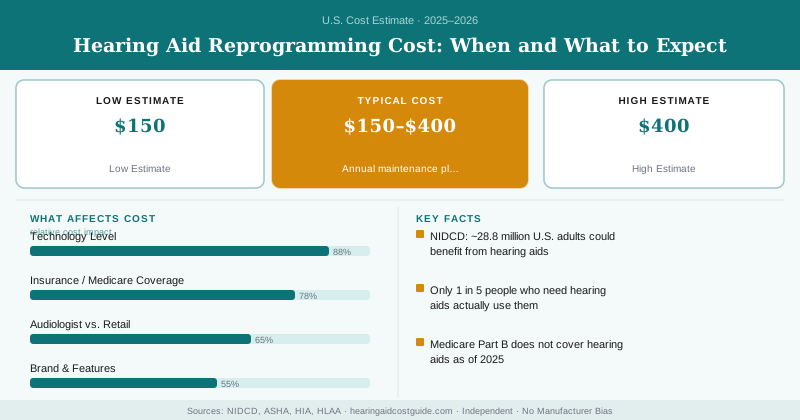
| Full re-evaluation + new programming | $150–$400 | Includes updated audiogram |
| Annual maintenance plan (includes adjustments) | $150–$400/year | Offered by many audiologists |
What’s Usually Included in the Hearing Aid Purchase Price
Most US audiologists sell hearing aids on a “bundled” pricing model. You pay one price for the device plus professional services for a defined period — typically 1 to 3 years. During this period, follow-up adjustments and reprogramming are free.
According to ASHA, this bundled model is standard practice and means most first-year reprogramming is already paid for. The problem comes later.
After the bundled period ends, you’re paying per visit. Some audiologists are upfront about this; many aren’t. Ask specifically at purchase: “How many follow-up visits are included, and what’s the per-visit fee after that?”
Signs You Need Reprogramming
- Sounds that used to be clear have become muffled or distorted
- Speech understanding has gotten worse with no change in environments
- Your audiogram result has changed at your last hearing test
- You’ve started a new medication that affects hearing (ototoxic drugs)
- Background noise management feels worse than it used to
- You’ve moved to a different region with different ambient noise environments
Most audiologists recommend a hearing evaluation every 1–2 years. If your audiogram shows change, reprogramming should follow immediately.
Major hearing aid brands — including Phonak, Oticon, Signia, Resound, and Starkey — now offer remote programming through their smartphone apps. Your audiologist adjusts your hearing aid settings from their office while you’re sitting at home. Many audiologists offer remote sessions at lower cost than in-office visits, sometimes free within a service plan. Ask your audiologist if remote programming is available for your model.
Who Can Reprogram Your Hearing Aids?
- Your original audiologist — Knows your history, has your records; most straightforward option
- Any licensed audiologist — Can reprogram any major brand if they have the manufacturer’s software (NOAH-compatible systems)
- Hearing instrument specialists — Can reprogram in most states; check licensure requirements in your state
- Manufacturer service centers — Some brands allow mail-in reprogramming for a fee
- Costco — If you bought Costco-branded hearing aids, any Costco Hearing Center can reprogram them at no charge
The NIDCD notes that accessing qualified audiological care matters as much as the hearing aid itself — a poorly programmed premium aid performs worse than a mid-range aid correctly fitted.
When Reprogramming Isn’t the Answer
Sometimes, what feels like a programming issue is actually:
- A clogged wax guard or dome (replace it; costs $2–$10)
- A dead or weak battery
- Physical damage to the receiver
- A significant change in hearing that requires new aids entirely
Always troubleshoot the basics first. If your audiologist runs diagnostics and finds no programming improvement is needed, they should tell you — not charge you $150 for nothing.
Avoid “hearing aid tuners” or third-party software sold online that claim to let you self-program hearing aids. Without a current audiogram and proper fitting equipment, self-programming frequently makes hearing worse, not better. This is a task for a licensed professional.
The Bottom Line
Reprogramming costs $0 if you’re within the bundled service period — and this alone is a reason to confirm exactly what services are included when you buy. After that, budget $50–$200 per session, or $150–$400/year for a maintenance plan that covers all adjustments. Given that hearing aids cost $2,000–$7,000, a $200/year service agreement to keep them working optimally is a reasonable investment.
Frequently Asked Questions
Hearing aid reprogramming typically costs $0–$200 per session, depending on your audiologist and location. Most audiologists include complimentary follow-up adjustments and reprogramming in the initial purchase price for 1–3 years after fitting, so many patients pay nothing for routine adjustments during this period.
Most health insurance plans do not cover hearing aid reprogramming as a separate service, though some Medicare Advantage plans may include it as part of durable medical equipment benefits. You should contact your insurance provider directly, as coverage varies by plan; out-of-pocket costs typically range from $0–$200 per session if not covered by your initial purchase agreement.
You should have your hearing aids reprogrammed every 1–2 years or whenever your hearing changes noticeably, such as after a significant hearing loss or if sounds seem too loud or too soft. Most audiologists schedule reprogramming after performing a new audiogram to match your current hearing levels, and many include this service free during the first 1–3 years following your initial fitting.