In 2012, hearing aid technology had essentially no smartphone integration — adjustments happened entirely through physical buttons on the device or in the audiologist’s office. Today, app-compatible hearing aids are close to the industry standard even at mid-tier pricing, and the app itself has become one of the more genuinely useful additions to hearing aid technology in the past decade.
App-Compatible Hearing Aid Costs
| Technology Tier | Typical Cost (Per Device) | App Features Included |
|---|---|---|
| Entry-level (app-compatible) | $900–$1,800 | Basic volume/program control |
| Mid-tier | $1,800–$2,800 | Volume, presets, fine-tuning, device finder |
| Premium | $2,800–$3,900 | Full remote adjustment, streaming, health tracking |
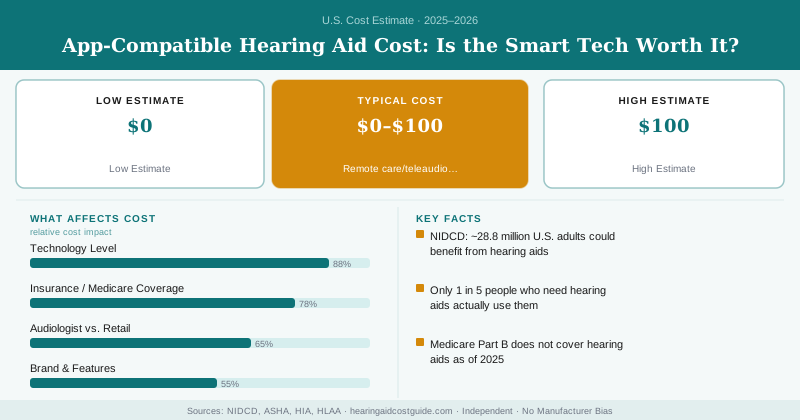
| Remote care/teleaudiology visit (via app) | $0–$100 | Adjustment without in-person visit |
What the App Actually Adds
The core function of a hearing aid — amplifying and processing sound — works identically whether or not you ever open the companion app. What the app adds is convenience and control layered on top:
- Discreet volume and program adjustment — changing settings from your phone rather than reaching up to your ear in public
- Environment presets — saving custom settings for specific locations (your office, a favorite restaurant, your car) and switching between them with a tap
- Device finder — using Bluetooth to locate a misplaced hearing aid, similar to how phone-finding apps work
- Remote adjustments (teleaudiology) — some premium apps let your audiologist make programming changes remotely based on your feedback, without requiring an in-office visit for every minor tweak
- Health and activity tracking — some premium models now include fall detection, activity tracking, and even basic translation features
Is the Premium Actually a Premium Anymore?
Because app compatibility has become nearly universal across current-generation hearing aids — even many entry-level models now include basic app control — it’s increasingly inaccurate to think of it as a separate upcharge. The bigger cost driver remains the underlying technology tier (noise reduction sophistication, number of listening programs, feature set), with app connectivity simply included as part of that tier’s overall package.
If your hearing aid app supports remote teleaudiology adjustments, use it before scheduling an in-person follow-up for minor tweaks. Many practices offer a limited number of remote adjustment sessions at no additional charge, and using this feature for small changes — rather than driving in for an office visit — can meaningfully reduce the number of paid follow-up visits you need once your included visits run out.
Battery Life and Connectivity Tradeoffs
Continuous Bluetooth connectivity for app control and audio streaming does use additional battery power compared to a hearing aid without wireless features. Most current rechargeable app-compatible models are designed with this in mind and still achieve a full day of use on a single charge, but if you’re considering an older or lower-tier app-compatible model with disposable batteries, ask your audiologist specifically how streaming and app use affects expected battery life for that model.
Not all hearing aid apps work with both iPhone and Android, and some older or entry-level app-compatible models support only one platform. Confirm your specific phone’s compatibility with the exact hearing aid model and app before purchasing, especially if smartphone control is a feature you specifically want to use regularly.
Do You Actually Need It?
If you’re comfortable with smartphone apps generally and value the convenience of discreet, on-the-go adjustments, app compatibility is a genuinely useful feature worth prioritizing. If you’re not a frequent smartphone user or prefer physical buttons, don’t let a sales pitch push you toward a more expensive tier purely for app features you’re unlikely to use — ask your audiologist to recommend the right technology tier based on your actual hearing needs first, with app compatibility as a secondary consideration.
Frequently Asked Questions
App-compatible hearing aids typically cost $1,200 to $3,900 per device, similar to standard mid-tier and premium hearing aids, since smartphone app connectivity has become a standard feature across most technology tiers rather than a significant separate upcharge.
Most hearing aid apps let you adjust volume, switch between environment presets, fine-tune bass and treble, locate a misplaced device via Bluetooth tracking, and in some cases stream phone calls or audio directly, plus some allow remote adjustments from your audiologist without an in-office visit.
No, app-compatible hearing aids function fully as standard hearing aids without a smartphone connected. The app adds optional convenience features, but the core hearing aid functionality — amplification and sound processing — works independently of any phone or app connection.