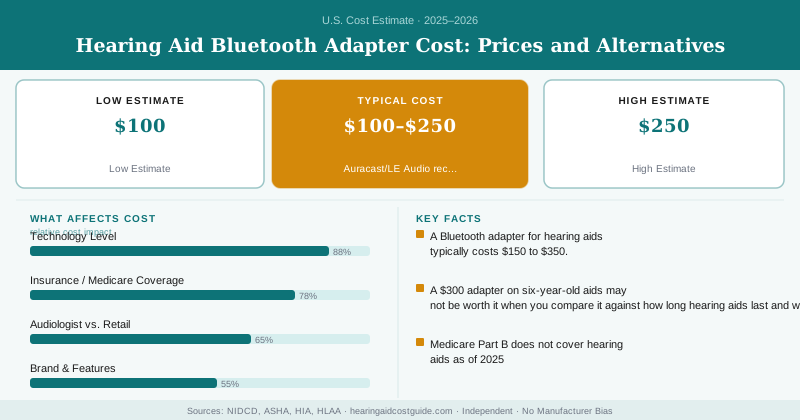
Most people assume their hearing aids stream straight from any phone. Wrong. Plenty of older or budget devices need a separate Bluetooth adapter — a small relay gadget that bridges your aids to your phone, TV, or computer. And those adapters aren’t free.
A Bluetooth adapter for hearing aids typically costs $150 to $350. If your aids already have direct streaming built in, you don’t need one at all. So before you buy, figure out which camp you’re in.
What Bluetooth Adapters Cost
| Adapter Type | Cost |
|---|---|
| Basic streamer/intermediary device | $150–$250 |
| Premium streamer with phone-call relay | $250–$350 |
| Neck-loop Bluetooth streamer | $180–$300 |
| Made-for-iPhone direct (no adapter needed) | $0 |
| Auracast/LE Audio receiver (emerging) | $100–$250 |
The classic adapter is a small device you wear around your neck or clip to your shirt. It pairs with your phone over standard Bluetooth, then relays audio to your aids over a near-field magnetic signal. Clunky, but it works for devices that can’t connect directly.
Do You Even Need One?
Here’s the deciding question: do your hearing aids stream audio directly from your phone already? If yes, skip the adapter entirely.
Direct-streaming aids — sometimes called “Made for iPhone” or “Made for Android (ASHA)” — connect with no middleman. The shift toward this has been dramatic. According to the Hearing Industries Association, the vast majority of premium hearing aids sold in recent years ship with built-in wireless connectivity. If you bought your aids in the last few years, check the spec sheet before spending $300 on hardware you don’t need.
You likely do need an adapter if:
- Your aids are more than five or six years old
- You wear a budget or entry-level model without direct streaming
- You have an Android phone and aids that only support iPhone direct connection
Why the Price Tag?
These adapters pack a real radio and processor into a tiny shell. They handle Bluetooth pairing, audio codec translation, and the magnetic-induction handoff to your aids — all while running on their own battery. That’s genuine engineering, not just plastic.
Brand lock-in matters too. A Phonak ComPilot won’t talk to Oticon aids. You’re buying within your manufacturer’s ecosystem, which keeps prices firm.
Don’t buy a generic “Bluetooth hearing aid adapter” off a marketplace without confirming it works with your exact model and your phone’s operating system. Many cheap adapters only support one brand’s proprietary signal — or only iPhones. A non-returnable $90 mistake stings.
The Cheaper Path: Upgrade Instead
Sometimes the smarter move isn’t an adapter at all. If your aids are aging and you’re already eyeing replacements, a new pair with native Bluetooth hearing aid streaming solves the problem permanently — no extra gadget to charge, lose, or replace.
Run the numbers. A $300 adapter on six-year-old aids may not be worth it when you compare it against how long hearing aids last and what new ones cost.
What About Auracast?
There’s a newer standard worth knowing about. Bluetooth LE Audio and its broadcast feature, Auracast, are starting to replace the old relay model. Newer aids can receive Auracast signals directly in airports, theaters, and gyms — no neck-loop required. If you’re shopping now, ask whether a device supports LE Audio so you’re not locked into yesterday’s tech.
A Bluetooth adapter costs $150–$350 and only matters if your hearing aids can’t stream directly. Check your model first — most aids from the last few years connect to phones without any adapter. If yours can’t and you’re due for an upgrade, putting that money toward newer direct-streaming aids often beats buying a relay device.
Where to Buy
Stick with authorized channels. Your audiologist can confirm compatibility and order the right unit. The manufacturer’s website is the safe second choice. Treat adapters like any other one of your hearing aid accessories — buy authorized, keep the receipt, and verify the return policy.
The Bottom Line
For some wearers, a Bluetooth adapter is the difference between hearing phone calls clearly and missing half of them. For others, it’s a $300 paperweight because their hearing aids already stream on their own. Figure out your model’s capabilities first — then decide whether to buy the adapter or put the cash toward your next pair.
Frequently Asked Questions
A Bluetooth adapter for hearing aids typically costs between $150 and $350, depending on the brand and compatibility with your specific hearing aid model. Some premium adapters from major manufacturers like Phonak or ReSound may fall at the higher end of this range, while basic third-party options may be closer to $150.
Most insurance plans, including Medicare and many private insurers, do not cover Bluetooth adapters as they are considered optional accessories rather than necessary medical devices. You will typically pay the full $150–$350 out-of-pocket, though some manufacturers offer financing plans or discounts for registered users.
You only need a Bluetooth adapter if your hearing aids do not have direct streaming capability built in—many newer models and premium hearing aids stream directly to phones without an adapter. Before purchasing, check your hearing aid model specifications or ask your audiologist whether your device supports direct Bluetooth connectivity, which could save you $150–$350 entirely.