A Kirkland Signature hearing aid costs about the same in Little Rock as it does in Los Angeles. What doesn’t stay the same is what you’ll actually pay out-of-pocket once insurance, Medicaid rules, and state mandates enter the picture — and that variance can mean thousands of dollars depending entirely on your zip code.
Why Location Changes Your Real Cost
| Cost Factor | Low-Cost States | High-Cost States |
|---|---|---|
| Private prescription hearing aids (pair) | $2,800–$4,500 | $4,500–$7,000 |
| Adult Medicaid hearing aid coverage | Available (CA, NY, MA, others) | Minimal/none (many Southern & Plains states) |
| Adult insurance mandate | Yes (AR, NH, RI, and others) | No mandate (majority of states) |
| Costco/wholesale club availability | Widely available in urban/suburban areas | Limited in rural areas |
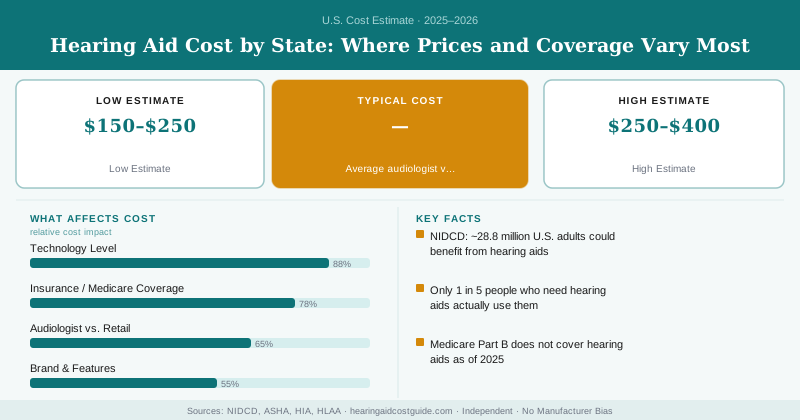
| Average audiologist visit cost | $150–$250 | $250–$400 |
The Insurance Mandate Patchwork
Unlike hearing aid coverage for children — which is federally guaranteed nationwide through Medicaid’s EPSDT (Early and Periodic Screening, Diagnostic, and Treatment) benefit for anyone under 21 — adult hearing aid coverage is a state-by-state patchwork. More than 20 states have passed some form of hearing aid insurance mandate, but the details matter enormously:
- Full adult mandates (coverage required for adults, not just kids): Arkansas, New Hampshire, Rhode Island, and a handful of others require private insurers to cover adult hearing aids, often with dollar caps ($1,000–$2,500 every few years) rather than unlimited coverage.
- Children-only mandates: The majority of states with any mandate at all limit it to minors, leaving working-age and older adults to pay out-of-pocket regardless of their private insurance plan.
- No mandate at all: A significant number of states have no hearing aid insurance requirement whatsoever, meaning coverage depends entirely on your specific employer plan’s voluntary benefit design.
Medicaid Adult Coverage: An Even Bigger Gap
Medicaid hearing aid coverage for adults is optional at the federal level, which means each state decides independently whether and how much to cover. States like California, New York, and Massachusetts provide meaningful hearing aid benefits through Medicaid for qualifying adults. Others provide minimal coverage or none at all for anyone over 21, leaving low-income adults in those states to rely entirely on nonprofit assistance programs, OTC devices, or going without.
Insurance mandates and Medicaid rules change through state legislative sessions, sometimes yearly. Before assuming you have or lack coverage, call your state’s Department of Insurance or Medicaid office directly, or ask your audiologist’s billing staff — they deal with this daily and usually know current state-specific rules better than a general web search will tell you.
Cost of Living and Practice Overhead
Beyond insurance policy, plain cost-of-living differences shape audiologist visit fees and device markup. A private audiology evaluation in a major coastal metro area often runs $250–$400, driven by higher rent, staffing costs, and regional wage standards, compared to $150–$250 in lower cost-of-living regions. This overhead difference shows up in device pricing too, even though the manufacturer’s wholesale cost to the practice is identical nationwide.
Wholesale Club Access Varies by Region
Costco and Sam’s Club/HearUSA pricing offers a partial workaround to regional cost variation, since their pricing is set nationally rather than by local practice overhead. But access itself varies — rural areas and smaller metro regions may have far fewer wholesale club hearing centers within reasonable driving distance, pushing rural residents back toward higher-cost private practices or long drives for lower-cost options.
What to Actually Do With This Information
- Check your state’s specific mandate status through your state insurance department’s website
- Call your Medicaid office directly if you’re an adult Medicaid recipient — don’t assume based on general information
- Compare wholesale club distance against private practice pricing in your specific area
- Ask about nonprofit assistance programs — the Hearing Loss Association of America (HLAA) maintains state-by-state resource directories that account for these regional differences
Don’t rely on outdated online lists of “states with hearing aid mandates” — insurance mandate laws change through state legislatures, and a list from even two years ago may no longer reflect current coverage requirements or dollar caps. Verify directly with your state insurance department before making a purchase decision based on assumed coverage.
Your zip code won’t change what a hearing aid physically costs to manufacture — but it can easily change your out-of-pocket bill by thousands of dollars. Check your specific state’s rules before assuming national averages apply to you.
Frequently Asked Questions
As of 2026, over 20 states have some form of hearing aid insurance mandate, though coverage requirements vary widely — some only mandate coverage for children, while a smaller number, including Arkansas, New Hampshire, and Rhode Island, extend mandates to adults.
Medicaid coverage for adult hearing aids is state-optional and varies significantly — some states like California and New York provide meaningful adult hearing aid benefits through Medicaid, while others offer minimal or no adult coverage at all. Coverage for children under 21 is federally mandated in all states through EPSDT.
The devices themselves are priced similarly nationwide by manufacturers, but out-of-pocket costs vary by state due to differences in insurance mandates, Medicaid adult coverage, average practice overhead costs, and regional competition among audiology providers and retail options like Costco.