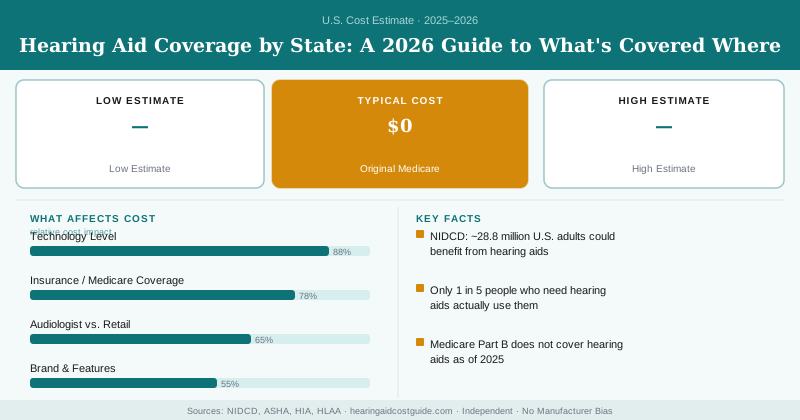
Move two states over and your hearing aid coverage can change completely. A pair that’s partly covered in one state might be 100% on you next door. That’s the reality of hearing aid benefits in the U.S. — there’s no single national rule for adults, so coverage is a state-by-state mosaic.
Let’s untangle what drives the differences and how to read your own state’s situation.
Three layers stack up in every state
Coverage in any given state comes from three separate sources, and they don’t coordinate:
- Medicaid — set partly by federal rules, partly by each state. Adult hearing aid coverage varies enormously.
- State insurance mandates — laws requiring private insurers to cover hearing aids, mostly for children.
- Private and employer plans — vary by carrier and whether the plan is self-funded.
The U.S. Centers for Medicare & Medicaid Services (CMS) lets states decide whether adult Medicaid covers hearing aids, which is why some states cover them in full while others cover nothing for adults over 21.
| Coverage Source | Range Across States |
|---|---|
| Adult Medicaid | $0 to full cost (varies widely) |
| State mandate (private) | $0 – $3,000+ per ear |
| Children’s Medicaid (EPSDT) | Generally covered nationwide |
| Original Medicare | $0 everywhere (not covered) |
Medicaid is the biggest swing factor
For lower-income adults, Medicaid is where the state-by-state gap is widest. Children are protected nearly everywhere under the federal EPSDT benefit, but adult coverage is optional. Some states cover a full pair every few years; others stop hearing aid coverage at age 21.
Our deep dive on Medicaid hearing aid coverage explains how to check your state’s specific adult rules — this is the first thing to verify if you’re on Medicaid.
Medicare is the same everywhere (and that’s bad news)
Here’s the one rule that doesn’t vary: Original Medicare (Parts A and B) does not cover hearing aids in any state. The NIDCD reports that roughly 1 in 3 adults aged 65 to 74 has hearing loss, yet traditional Medicare still excludes the devices nationwide. The only Medicare path to coverage is a Medicare Advantage plan that adds a hearing benefit — and those vary by county. See does Medicare cover hearing aids for the details.
There’s no national hearing aid coverage standard for U.S. adults. Original Medicare covers $0 everywhere, while Medicaid and private mandates swing from nothing to $3,000+ per ear depending on your state. Always check all three layers — Medicaid, mandate, and your plan — before assuming you’re uncovered.
How to research your own state in 15 minutes
You don’t need a lawyer. Three calls or clicks get you the full picture:
- State Medicaid office — ask if adult hearing aids are covered and what the dollar limit is.
- State department of insurance — ask about hearing aid mandates for private plans.
- Your plan’s Summary of Benefits — check the hearing aid line and whether the plan is self-funded.
If all three come back empty, you’re paying market rate. A prescription pair runs $2,000 to $6,000 — our hearing aid cost guide breaks down each tier.
Coverage laws change yearly. A blog post or chart you found two years ago may be outdated. Always confirm the current year’s rules directly with your state Medicaid office or insurance department before making a buying decision.
When your state leaves you uncovered
Plenty of adults find all three layers come up empty. That’s frustrating, but you’ve still got moves. OTC hearing aids sidestep insurance entirely for mild-to-moderate loss. Nonprofit programs in our free hearing aids programs roundup operate nationwide. And our hearing-loss financial assistance guide lists grants and discount routes that don’t depend on your zip code.
The bottom line
Where you live really does change what you pay. Original Medicare is the one constant — and it’s zero coverage — but Medicaid and state mandates can be worth thousands if your state is generous. Spend 15 minutes checking all three layers for your specific state before you assume you’re on the hook for the full price.
Frequently Asked Questions
In states without hearing aid coverage mandates, you typically pay the full retail price of $1,000 to $6,000 per pair, depending on the style and technology level. Basic analog models may cost $500–$1,500 per ear, while advanced digital or rechargeable options range from $1,500–$3,000+ per ear.
Original Medicare does not cover hearing aids or fittings for adults, though some Medicare Advantage plans offer partial coverage up to $500–$2,000 per year. Medicaid coverage varies by state—some states cover hearing aids fully or partially for eligible adults, while others limit coverage to children only.
A hearing test and initial fitting typically take 1–2 hours, but you usually don't leave with working aids that same day. Most providers require 1–2 weeks for custom molds to be created, after which you return for final fitting and programming, followed by a 30–60 day trial period.