Moisture is the number-one cause of hearing aid failure. Not drops in the sink, not falling in the pool — ordinary, daily wear. Sweat from exercise. Humidity on a July afternoon. The natural moisture in your ear canal. It works into the battery compartment, the microphone ports, the receiver, day after day, until something stops working.
A simple drying routine costs $10–$200 one time and can easily extend a hearing aid’s life by two to three years. That’s potentially thousands of dollars in avoided repairs and early replacement. Here’s what you’re actually buying when you buy a hearing aid dehumidifier — and what’s not worth the markup.
Hearing Aid Dehumidifier Prices
| Drying Option | Price Range | Best For |
|---|---|---|
| Silica gel drying jar (passive) | $10–$20 | Budget drying; replace gel every 6–12 months |
| Peli/Dry Aid desiccant capsule | $8–$15 | Portable travel drying |
| Dry-Brik II desiccant block | $12–$18 for 3-pack | Fits electric dryers; replacement block |
| Dry & Store Global II (electric) | $50–$75 | Overnight drying with gentle heat + fan |
| Dry & Store Breeze (basic electric) | $40–$55 | Entry-level electric dryer without UV |
| PerfectDry Lux (UV-C + heat) | $75–$100 | UV sanitizing + thorough moisture removal |
| Zephyr Dry & Clean (UV) | $90–$120 | UV-C LED sanitizing, recommended by several AuD offices |
| Phonak DryAid Kit | $85–$110 | Phonak-branded UV dryer; works with any brand |
| Oticon DryAid Box | $80–$100 | Oticon-branded, standard electric heat |
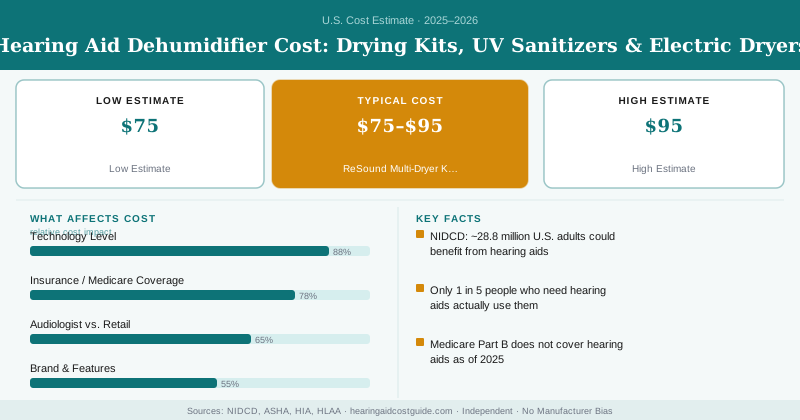
| ReSound Multi-Dryer Kit | $75–$95 | ReSound-branded travel + home combination |
Passive vs. Electric: Which One Do You Actually Need?
Passive desiccant jars ($10–$20) are airtight containers with silica gel or molecular sieve crystals inside. You drop your hearing aids in overnight and the gel absorbs ambient moisture. They work — especially in dry climates and for mild perspiration users. The downside is that they require regular gel replacement (every 6–12 months, or when the indicator beads change color), and they don’t address bacterial buildup.
Electric dryers ($40–$120) use gentle heat (typically 104°F / 40°C — warm enough to remove moisture, not so hot as to damage seals or adhesives) and airflow to actively circulate dry air through the device. Electric dryers are meaningfully more effective in humid climates and for people who sweat heavily.
UV-C dryers add an ultraviolet sanitizing cycle that kills bacteria and fungi on the hearing aid surface. For people with recurring ear infections or who wear their aids during exercise, this is worth the additional $25–$50 over a basic electric model.
- Remove hearing aids and open battery doors (for disposable-battery models)
- Wipe down aids with a soft dry cloth — remove visible moisture first
- Remove any silicone domes or earmolds that can trap moisture underneath
- Place in dryer overnight (6–8 hours is ideal)
- In the morning, let aids reach room temperature before inserting — putting cold aids in a warm ear canal can cause condensation inside the device
When a $10 Jar Is Enough
A passive silica gel jar handles most users’ needs if you live in a low-humidity environment (Colorado, Arizona, Nevada), don’t exercise with your aids in, and change the gel capsules as recommended. ASHA (American Speech-Language-Hearing Association) has noted that any nightly drying routine — even passive — substantially reduces moisture-related malfunction rates.
Don’t let perfect be the enemy of good. A consistent $12 habit beats a $100 dryer that sits in a drawer.
When to Upgrade to Electric or UV
Consider an electric or UV dryer if you:
- Live in a humid climate (Southeast US, Pacific Northwest, anywhere with summers above 75% humidity)
- Exercise with hearing aids in — swimming aside, running, cycling, and gym workouts generate significant sweat exposure
- Have a history of ear infections — UV-C reduces bacterial load on ear-contact surfaces
- Use hearing aids with thin-tube or receiver-in-canal (RIC) configurations — moisture can travel up the tube to the receiver, and electric drying addresses this better than passive options
- Wear aids 16+ hours per day — longer daily wear means more cumulative moisture exposure
MarkeTrak data has consistently shown that hearing aid users who follow a nightly maintenance routine report 30–40% fewer service calls over a 3-year period compared to users who don’t. For a $3,000–$6,000 device, a $60 dryer has one of the best cost-benefit ratios of any hearing aid accessory.
Desiccant Replacement Cost
If you’re using a passive or hybrid electric dryer, you’ll need replacement desiccant:
- Dry-Brik II blocks (fit most Dry & Store units): $12–$18 for a 3-pack; replace every 2–3 months
- Silica gel capsules (for passive jars): $8–$15 for a 2-pack; replace every 6–12 months or when indicator shows saturation
- Annual desiccant cost: roughly $25–$60/year for electric dryer users; $10–$20/year for passive jar users
Some higher-end UV models use no consumable desiccant — the UV-C cycle does all the work. Factor this in when comparing sticker prices.
Brand vs. Generic
Audiologist-branded dryers from Phonak, Oticon, ReSound, and Signia are functionally similar to unbranded equivalents. You’re often paying a 20–30% premium for the logo. The Dry & Store line (now marketed as Ear Technology Corporation products) is widely respected by audiologists across all brands.
If your audiologist recommends a specific model, ask whether an equivalent generic is appropriate. For routine home use, an unbranded electric dryer in the $40–$65 range performs comparably to branded units costing $80–$120.
Never use a microwave, conventional oven, hair dryer, or direct sunlight to dry hearing aids. Heat above 120°F can warp plastic housings, damage receiver coils, and void manufacturer warranties. Always use a purpose-built hearing aid dryer that stays below safe temperature limits.
Protecting Rechargeable Hearing Aids
Rechargeable hearing aids can’t simply have their battery doors opened for drying. Most current-generation rechargeable aids have integrated silicone seals rated IP68 (dust and water resistant). They’re more resistant to moisture than older disposable-battery models — but not immune.
For rechargeable aids, UV-C dryers are the preferred option since they don’t rely on airflow into battery compartments. Your audiologist may recommend a model designed for sealed devices, such as the Phonak DryAid or a compatible UV system. Check with your clinic before purchasing any dryer for a rechargeable device.
Bottom Line
For most hearing aid users, a quality nightly drying routine costs $40–$75 upfront and about $20–$60 per year in desiccant. Compare that to a single moisture-related repair visit at $150–$400, and the math is obvious. Buy the dryer, use it every night, and you’ll very likely recover the cost within the first year alone.
Frequently Asked Questions
Hearing aid dehumidifiers range from $10–$200 depending on the type. Basic manual drying kits and silica gel containers cost $10–$30, UV sanitizers typically run $50–$150, and electric heated dryers are usually $100–$200. Most users find a $30–$50 option sufficient for daily home use.
Most health insurance plans and Medicare do not cover dehumidifiers or drying kits as they are considered maintenance accessories rather than medical devices. However, some hearing aid manufacturers include a basic drying kit free with purchase, and many audiologists offer them at cost ($10–$25) as part of routine care packages. Contact your specific insurance provider to confirm coverage.
You should dry your hearing aids nightly using a dehumidifier—this takes just 6–8 hours overnight and is the most effective way to prevent moisture damage. Even a basic silica gel container used every night can double your hearing aid lifespan from 3–5 years to 5–7 years. Skip this routine, and moisture damage typically appears within 1–2 years of regular wear.