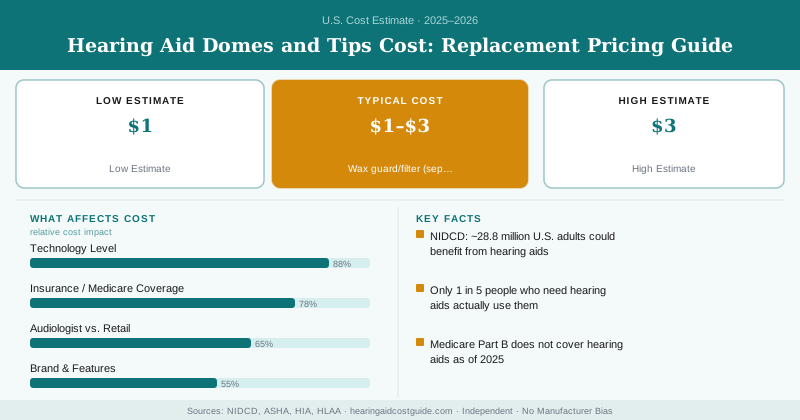
It’s a two-dollar part, and it’s the single most commonly forgotten line item in hearing aid ownership costs. Domes — the small silicone tips that sit at the end of a receiver-in-canal hearing aid, directing sound into your ear canal — wear out, degrade, and need routine replacement, and most buyers have no idea this is an ongoing cost until they’re standing at the audiologist’s front desk asking for more.
Dome and Tip Replacement Costs
| Item | Typical Cost | Replacement Frequency |
|---|---|---|
| Standard open dome | $2–$5 each | Every 4–8 weeks |
| Closed/power dome | $2–$6 each | Every 4–8 weeks |
| Double dome | $3–$8 each | Every 4–8 weeks |
| Multi-pack (8–10 domes) | $15–$40 | 4–8 months of supply |
| Custom earmold (per ear) | $50–$150 | Every 1–3 years |
| Wax guard/filter (separate from dome) | $1–$3 each | Every 2–4 weeks |
Why Domes Wear Out So Fast
Domes are made of thin, flexible silicone designed to sit comfortably and securely in your ear canal for 12+ hours a day. That flexibility comes at a cost: the material degrades from earwax exposure, moisture, and simple mechanical wear from insertion and removal. A dome that’s become stiff, discolored, or torn no longer creates a proper seal, which directly affects sound quality — often the actual cause when a hearing aid “suddenly sounds worse” after weeks of fine performance.
The Annual Cost Most Buyers Don’t Budget For
At roughly $2–$8 per dome, replaced every 4 to 8 weeks per ear, annual dome costs for a pair of hearing aids typically run $30 to $100 — not a huge number individually, but one that adds up over a device’s typical 4-to-6-year lifespan, and one that’s easy to overlook when budgeting for hearing aid ownership beyond the upfront purchase price.
Most hearing aid manufacturers and third-party suppliers sell domes in multi-packs of 8 to 10, which reduces the per-dome cost noticeably compared to buying individual replacements from your audiologist as needed. If you know your specific dome size and style (your audiologist can tell you, or it’s listed on your hearing aid fitting paperwork), ordering directly from the manufacturer or an authorized online supplier is usually cheaper than replacing them one at a time during office visits.
Custom Earmolds: The Alternative Worth Considering
For some hearing aid styles and hearing loss levels, a custom earmold — molded specifically to your ear canal shape — replaces the standard dome. Custom earmolds cost more upfront ($50–$150 per ear) but last considerably longer, typically 1 to 3 years, before needing replacement due to ear canal shape changes or material degradation. For people who go through domes especially quickly due to heavy earwax production or an unusually shaped canal where domes don’t seal well, a custom earmold can end up costing less annually despite the higher upfront price.
Signs Your Dome Needs Replacing
Watch for these signals rather than waiting for a fixed calendar reminder:
- Whistling or feedback sounds that weren’t there before
- Reduced volume or muffled sound quality
- Visible wax buildup, discoloration, or stiffness in the silicone
- The dome feels looser or less secure than when new
Don’t ignore a hearing aid that suddenly sounds distorted or produces feedback — before assuming the device itself needs repair, check whether the dome is simply due for replacement. A worn-out $3 dome is a far more common (and far cheaper) explanation than an actual hardware malfunction, and swapping it takes seconds once you have replacements on hand.
Keeping a Supply on Hand
Ask your audiologist for your exact dome size and style at your next visit, and keep a multi-pack on hand at home rather than waiting until your current dome fails to reorder. Running out unexpectedly, especially before a trip or important event, is a preventable inconvenience given how inexpensive and simple it is to keep a small backup supply.
Frequently Asked Questions
Hearing aid domes typically cost $2 to $8 each, or $15 to $40 for a multi-pack of 8 to 10 domes, and generally need replacing every 4 to 8 weeks depending on wear and earwax exposure.
Most audiologists recommend replacing domes every 4 to 8 weeks, though this varies based on how much earwax you produce, how often you clean your hearing aids, and the specific dome material, since some silicone domes degrade faster than others.
Custom earmolds cost more upfront ($50–$150 per ear) but last 1 to 3 years before needing replacement, whereas standard domes cost less individually but need replacing every 4 to 8 weeks, meaning the annual cost is often comparable depending on usage.