Most hearing aid users know their devices cost thousands of dollars. What surprises them is how much a $0.50 silicone tip affects the sound.
Hearing aid domes — those small soft silicone tips at the end of the thin tube or receiver wire — are the last thing sound passes through before reaching your eardrum. A dome that’s stretched out of shape, earwax-clogged, or the wrong size can reduce speech clarity and amplification by a meaningful margin. Replacing them takes about 30 seconds. A pack of 10 costs $10–$40. Here’s everything you need to know.
Hearing Aid Dome Prices
| Dome Type | Pack Size | Price Range | Hearing Loss Type |
|---|---|---|---|
| Open dome (generic, 6mm) | 10-pack | $10–$18 | Mild to moderate; maximum airflow |
| Closed dome (generic, 8mm) | 10-pack | $12–$20 | Moderate to moderately-severe |
| Power dome (double-walled) | 10-pack | $14–$22 | Severe; maximum seal |
| Tulip / vented dome | 10-pack | $12–$18 | Mild loss; prevents occlusion |
| Phonak brand domes (open, size M) | 10-pack | $18–$28 | Phonak aids (Marvel, Paradise, Lumity) |
| Oticon brand domes | 10-pack | $20–$30 | Oticon aids (More, Intent, Real) |
| ReSound brand domes | 10-pack | $18–$26 | ReSound aids |
| Signia brand domes | 10-pack | $18–$26 | Signia aids |
| Widex brand domes | 10-pack | $20–$28 | Widex aids |
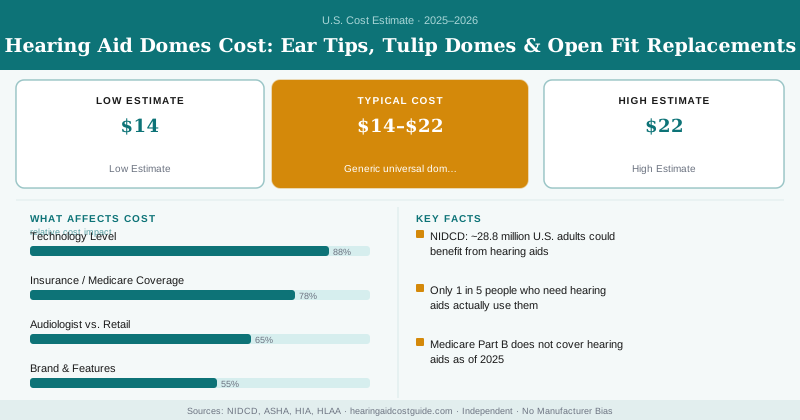
| Generic universal domes (mixed pack) | 20-pack | $14–$22 | Most RIC/RITE aids |
What Kind of Dome Do You Have?
Domes come in a handful of standard types, and the type matters for your hearing profile:
Open domes have several small holes or slots that allow natural sound to pass through alongside amplified sound. They’re used for mild-to-moderate high-frequency hearing loss and feel the most natural. The downside: they leak low-frequency sound out, meaning they don’t amplify bass very well — which is fine if you have normal or near-normal low-frequency hearing.
Closed domes seal tighter against the ear canal wall with no venting. They hold more sound in and work better for moderate-to-moderately-severe loss. Some people find them more occlusive (the “talking in a barrel” effect).
Power domes (double-walled or full-seal) have an inner and outer silicone wall for maximum sealing. They’re designed for severe hearing loss where you need maximum amplification with minimum feedback. If you’re using power domes, the fit is critical — an improperly sized power dome can cause uncomfortable feedback.
Tulip domes have a distinctive petal-like flare that helps them seat in the canal without fully blocking it. Often preferred by first-time users or those who find standard domes uncomfortable.
Your audiologist chose your current dome type based on your audiogram. Don’t switch types on your own without confirming the change is appropriate for your hearing prescription.
Domes come in small (S), medium (M), and large (L) — and sizing matters for both comfort and acoustic performance. Sizing that’s too small = poor seal = feedback and reduced amplification. Sizing too large = discomfort, pressure, and risk of dome detaching inside the ear canal.
Most brands use the same size designations. If you’re ordering replacements:
- Check the packaging from your last purchase — the size is usually printed on the bag
- Ask your audiologist to confirm your size at your next visit
- When in doubt, start with medium (M) — it fits the widest range of adult ear canals
If you’ve been fitted for a different size than medium and you order medium, you may get poor results. Stick with what was prescribed.
How Often Should You Replace Hearing Aid Domes?
Most audiologists recommend replacing domes every 4–8 weeks as a general rule. In practice, several factors affect the realistic replacement schedule:
- Earwax production: High wax producers will see domes clog and degrade faster — possibly every 2–4 weeks
- Skin oils: Natural skin oils break down silicone faster in some people
- Climate and humidity: Humid environments accelerate dome deterioration
- Usage hours: 16+ hours/day wears domes out faster than 10–12 hours/day
Annual dome cost at the recommended schedule:
- Replacing every 4 weeks for both aids: ~13 packs/year = $130–$370/year (brand-name)
- Replacing every 8 weeks: ~7 packs/year = $70–$210/year
- Generic domes (same quality, different box): $70–$150/year
ASHA guidance on hearing aid maintenance emphasizes that users who replace domes and wax guards on schedule report consistently better satisfaction with sound quality than those who wait until problems arise.
Brand vs. Generic Domes
This is one area where generic often works just as well as brand-name. Phonak domes, for example, are standard silicone tulip or open designs — and third-party universal domes in the same size frequently fit Phonak receivers identically. The same is true for Oticon, ReSound, and most other major brands.
The main exception: Widex uses a proprietary snap-on dome system that’s less compatible with universals. Starkey also uses proprietary fittings on some models. When in doubt, check with your audiologist or the manufacturer’s compatibility guide before ordering third-party replacements.
For a $3,000–$6,000 hearing aid, saving $8–$15 per pack on domes doesn’t carry much risk — but accidentally buying an incompatible size or style does. Get your first replacement pack from the audiologist or clinic, confirm it works perfectly, then comparison-shop for subsequent orders.
Signs Your Domes Need Replacing Now
Don’t wait for a scheduled visit if you notice:
- Feedback or whistling that wasn’t there before
- Dull or muffled sound quality
- Visible earwax blocking the dome opening
- A dome that no longer seats snugly and slides out easily
- Any cracks, tears, or discoloration in the silicone
Muffled sound is the most common complaint — and it’s often nothing more than a clogged dome that costs $1.50 to replace.
Never try to clean and reuse domes by soaking them in water or cleaning solution. Silicone domes are designed as single-use consumables. Attempting to clean them can push earwax deeper into the receiver, damage the silicone, or create hygiene problems. Replace them — they’re inexpensive enough that reuse isn’t worth the risk.
Wax Guards: The Other Consumable
While you’re ordering domes, check your wax guards too. Wax guards are the small mesh filters inside the receiver tip (inside the dome) that catch earwax before it reaches the receiver. They’re a separate purchase:
- Phonak CeruStop wax guards: $15–$25 for a pack of 8
- Oticon ProWax miniFit: $15–$25 for 6 filters
- Generic wax guards (universal): $10–$18 for 8–10 pack
- Replacement frequency: every 4–8 weeks (similar to domes)
Many audiologists recommend replacing domes and wax guards at the same time on the same schedule — it simplifies maintenance and ensures both consumables are fresh simultaneously.
Annual Dome + Wax Guard Budget
For a hearing aid user wearing two RIC/RITE aids with typical earwax levels:
- Brand-name domes: $130–$370/year
- Generic domes: $70–$150/year
- Wax guards (brand or generic): $60–$200/year
Total annual maintenance consumables: $130–$570/year depending on brand preference and replacement frequency. For most people, budgeting $150–$250/year covers domes and wax guards comfortably with brand-agnostic purchasing.
Frequently Asked Questions
A standard pack of 10 hearing aid domes typically costs $10–$40, depending on the dome type (tulip, open fit, or custom ear tips) and manufacturer. Most users find that buying packs in bulk or through their hearing aid provider reduces the per-unit cost to around $1–$2 per dome.
Most standard health insurance plans do not cover hearing aid domes or accessories as a separate benefit, though some Medicare Advantage plans may include them as part of a hearing aid benefit package. Out-of-pocket costs typically range from $10–$40 per pack, making domes one of the most affordable ongoing maintenance expenses for hearing aid users.
Hearing aid domes should be replaced every 1–3 months, depending on how quickly they accumulate earwax, dust, or physical wear that degrades sound quality. Replacing domes regularly is one of the easiest and cheapest ways to maintain clear amplification and speech clarity without professional service costs.