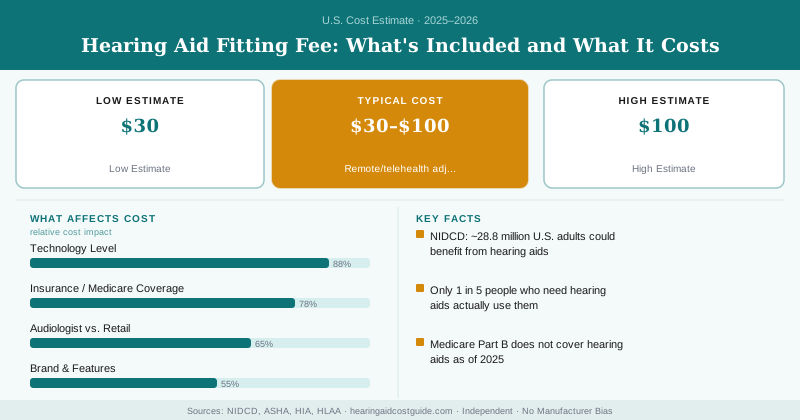
The National Institute on Deafness and Other Communication Disorders estimates that roughly 28.8 million U.S. adults could benefit from hearing aids — yet a significant share who do get fitted underestimate what the fitting process itself actually involves, and what it costs when it’s not simply bundled invisibly into the device price.
Hearing Aid Fitting Fee Breakdown
| Service | Typical Cost (If Itemized) |
|---|---|
| Initial fitting appointment | $100–$300 |
| Real-ear measurement verification | $50–$150 |
| Follow-up adjustment visit (each) | $50–$150 |
| Included follow-up visits (bundled model, per practice) | Usually 2–4 visits included |
| Full fitting package (unbundled providers) | $200–$800 total |
| Remote/telehealth adjustment | $30–$100 |
Bundled vs. Itemized Pricing Models
Most traditional audiology practices in the U.S. use a bundled pricing model: the price you’re quoted for the hearing aids themselves already includes the fitting appointment, verification testing, and a set number of follow-up visits (commonly 2 to 4) over the following months or years. This is convenient but makes it hard to compare prices directly between providers, since two practices quoting the “same” hearing aid model at different prices might be including very different amounts of bundled service.
Some newer online and OTC hearing aid sellers use an itemized or unbundled model instead — a lower device price, with fitting and follow-up services either optional, remote, or billed separately. This can save money for tech-comfortable buyers with straightforward hearing loss, but leaves less room for hands-on troubleshooting if something isn’t working right.
What Real-Ear Measurement Actually Verifies
Real-ear measurement (REM) is considered a best-practice verification step where a small probe microphone measures the actual sound reaching your eardrum while wearing the hearing aid, confirming the device is delivering the prescribed amplification for your specific hearing loss and ear canal shape. Studies in audiology literature consistently show that hearing aids fitted using REM verification perform meaningfully better than those fitted using manufacturer default settings alone. Not every provider includes this step — it’s worth asking directly whether REM verification is part of your fitting.
When comparing hearing aid quotes between two providers, ask specifically: “How many follow-up visits are included in this price, and does it include real-ear measurement verification?” A lower quoted price that includes only one follow-up visit and no REM verification may actually be a worse value than a higher quote that includes four visits and full verification testing.
When You’ll Pay Separately for Fitting Adjustments
Even with a bundled pricing model, most practices cap the number of included follow-up visits. Once you’ve used your included visits — commonly within the first year — additional adjustment appointments are typically billed separately, usually $50 to $150 per visit. This is worth knowing upfront if you anticipate needing more frequent adjustments due to progressive hearing loss or a particularly difficult fit.
Get the specific number of included follow-up visits, and the timeframe they’re valid for, in writing at the time of purchase — not just a verbal assurance that “adjustments are included.” Some practices count included visits from the purchase date regardless of when you actually use them, meaning visits can expire unused if you don’t schedule them within the stated window.
Getting the Most From Your Fitting Visits
Bring specific, concrete feedback to follow-up visits rather than a general “it doesn’t sound right.” Note specific situations where the hearing aids underperform — a particular restaurant, a specific person’s voice, wind noise during a walk — since specific feedback lets your audiologist make targeted programming adjustments rather than guessing at broad changes.
Frequently Asked Questions
A hearing aid fitting fee covers the professional services involved in programming, adjusting, and verifying your hearing aids once purchased, typically including the initial fitting appointment, real-ear measurement verification, and a set number of follow-up adjustment visits.
Often, yes. Most traditional audiology practices bundle the fitting fee into the total device price rather than billing it separately, though some providers, especially online or OTC retailers, itemize it as a separate charge ranging from $200 to $800 per pair.
Most practices include a set number of follow-up adjustment visits (commonly 2 to 4) within the original fitting fee or bundled price. Additional visits beyond that are typically billed separately, usually $50 to $150 per visit.