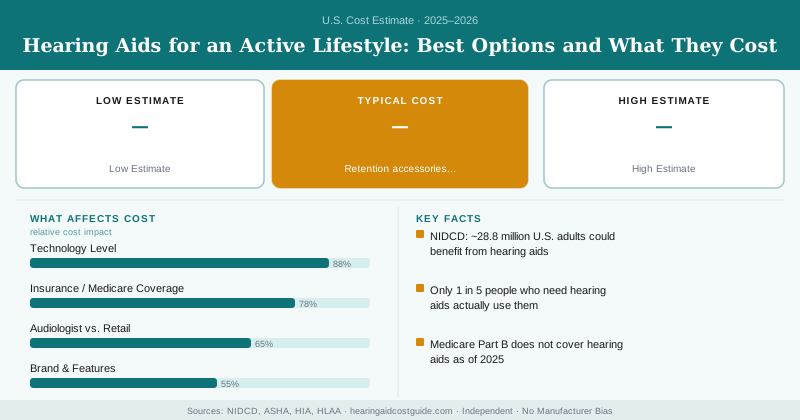
In 2012, an active lifestyle and hearing aids barely coexisted — early digital hearing aids weren’t built to handle sweat, and retention clips were an afterthought. Today, in 2026, entire product lines are engineered specifically around runners, swimmers, and gym-goers, with IP68 water resistance and secure-fit designs as standard features rather than rare upgrades.
Active Lifestyle Hearing Aid Costs
| Device Category | Cost | Key Feature |
|---|---|---|
| Standard mid-tier with IP68 rating | $2,000–$3,500/pair | Sweat/dust resistant, standard retention |
| Premium with enhanced retention clips | $3,000–$5,000/pair | Secure hooks, athletic band compatibility |
| Rechargeable sport-focused models | $3,500–$6,000/pair | All-day battery, quick charge for active days |
| Water-resistant + Bluetooth streaming | $4,000–$6,500/pair | Music/call streaming during workouts |
| Retention accessories (clips, bands, locks) | $10–$60 | Add-on security for any existing device |
What “Active Lifestyle” Features Actually Mean
The IP (Ingress Protection) rating system is the key spec to understand. A rating like IP68 means the device is dust-tight and can withstand continuous submersion — though “submersion” in a manufacturer’s testing lab doesn’t automatically mean swimming laps is safe for your specific model. Most hearing aids marketed for active users handle sweat, light rain, and humidity extremely well, since sweat exposure during exercise is the single most common moisture challenge for this group.
Beyond water resistance, active-lifestyle-focused hearing aids typically emphasize:
- Secure retention — clips, locks, or wire attachments that prevent the device from falling out during running, jumping, or contact sports
- Wind noise reduction — algorithms specifically tuned to reduce the whooshing sound of wind hitting the microphone during outdoor cardio
- Durable, sweat-resistant casing materials that resist degradation from repeated moisture exposure over years of regular workouts
- Longer battery life or rechargeable options that survive an active, all-day schedule without a midday swap
Retention Accessories: A Cheap Add-On for Any Device
If you already own hearing aids without built-in athletic retention features, aftermarket accessories can add security without replacing the entire device:
- Retention clips ($10–$20) — attach to clothing as a safety tether
- Sport locks or hooks ($15–$30) — clip around the ear for extra hold during high-motion activity
- Sweatbands designed for hearing aid wearers ($20–$40) — absorb moisture before it reaches the device
- What’s the exact IP rating of this specific model, and does it cover full submersion or just splash/sweat resistance?
- Does the manufacturer’s warranty explicitly cover sweat-related damage, or does it get treated as user-caused wear?
- Is a retention accessory included, or is that a separate purchase?
- How does the wind noise reduction feature perform specifically for outdoor running or cycling, versus general everyday use?
Swimming: A Different Category Entirely
Even devices rated for heavy sweat and rain exposure are generally not recommended for actual swimming unless the manufacturer explicitly states so for that model — chlorine, salt water, and sustained pressure at swimming depths are more demanding than everyday sweat or rain exposure. If you’re a competitive or recreational swimmer needing hearing assistance in the water, ask your audiologist about waterproof-specific devices built for that exact use case, which is a narrower and more specialized product category.
Insurance and the “Active Lifestyle” Premium
Insurance and Medicaid coverage rules don’t typically distinguish between standard and active-lifestyle-focused hearing aids — coverage depends on medical necessity and technology tier generally, not on sweat resistance specifically. Since many current mid-tier devices already include solid IP ratings as a standard feature, you may not need to pay a true premium at all to get adequate active-lifestyle performance; ask your audiologist which models in your covered tier already meet your activity needs before assuming you need the most expensive option.
Don’t assume a high IP rating means unlimited water exposure is safe. IP68 testing is done under controlled laboratory conditions that may not match real-world swimming, diving, or prolonged submersion. Always confirm your specific model’s actual use recommendations with your audiologist or the manufacturer’s documentation before swimming or engaging in water sports with any hearing aid.
If you’re active and shopping for new hearing aids, prioritize checking the specific IP rating and retention options over marketing language like “sport edition” — the actual spec sheet tells you more than the product name does.
Frequently Asked Questions
Hearing aids with sweat and water resistance, secure retention features, and rugged build quality cost $2,000–$6,500 per pair, similar to standard premium hearing aids, since these features are increasingly standard rather than a separate premium tier.
Not necessarily. Many mid-tier and premium hearing aids now include IP68 water/dust resistance ratings as standard, so the added cost for sweat resistance specifically is often minimal — the bigger cost driver is overall technology tier, not water resistance alone.
Most modern hearing aids with high IP ratings (IP68) can handle sweat, rain, and brief splashes, but full submersion swimming is generally not recommended even for water-resistant models unless specifically rated for it — check your exact model's rating before swimming.