Ringing that never stops. That’s how most people describe tinnitus, and for the roughly 25 million American adults who experience it according to American Speech-Language-Hearing Association (ASHA) estimates, finding relief often starts in an unexpected place: a hearing aid, not a tinnitus-specific device at all.
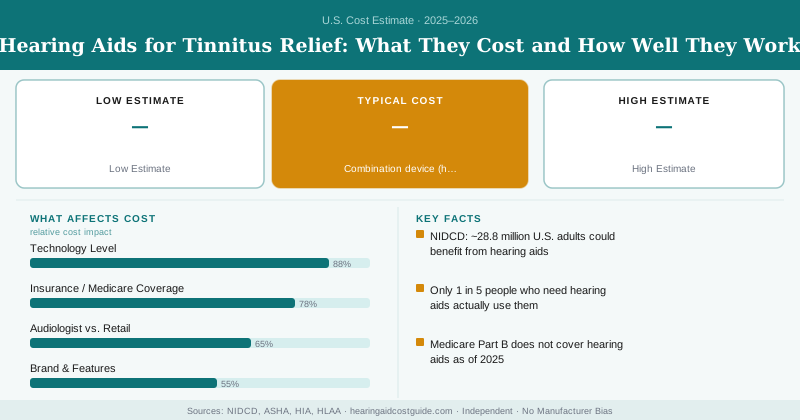
Tinnitus-Relief Hearing Aid Costs
| Device Type | Cost | Tinnitus Feature |
|---|---|---|
| Standard hearing aid (no dedicated masking) | $1,500–$4,000/pair | Indirect relief via amplification |
| Hearing aid with built-in tinnitus masker | $2,000–$5,000/pair | Adjustable white noise/nature sound generator |
| Premium hearing aid with app-controlled masking | $3,500–$6,500/pair | Customizable masking programs via smartphone app |
| Standalone tinnitus masker (no amplification) | $200–$500 | For normal-hearing tinnitus sufferers |
| Combination device (hearing aid + masker) | $2,500–$6,500/pair | Most common recommendation when both conditions co-occur |
Why Hearing Aids Help Tinnitus in the First Place
Tinnitus and hearing loss are closely linked — many audiologists describe tinnitus as, in part, the brain’s response to reduced auditory input from damaged hair cells. When ambient sound is amplified through a hearing aid, the brain receives more real, external sound input, which for many people reduces the relative prominence of the internal ringing. This is sometimes called the “residual inhibition” or masking effect, and it explains why standard hearing aids — even without a dedicated tinnitus feature — often provide meaningful relief for people whose tinnitus coexists with hearing loss.
What Dedicated Tinnitus Masking Features Add
Beyond simple amplification, many current hearing aid models include a built-in sound generator producing customizable white noise, pink noise, or nature sounds (ocean waves, rainfall) that plays either continuously or on-demand through the hearing aid speaker. This masking sound is layered underneath or alongside your amplified hearing, giving your brain an external, controllable sound to focus on instead of the internal ringing — a technique rooted in sound therapy approaches that predate hearing aid technology but are now built directly into the device.
Many audiologists combine a masking-equipped hearing aid with tinnitus retraining therapy (TRT) or cognitive behavioral therapy (CBT) techniques, addressing both the physical sound perception and the emotional/attentional response to it. The device alone often helps, but pairing it with counseling — sometimes included in the audiologist’s tinnitus management program, sometimes billed separately — tends to produce better long-term outcomes than the device by itself.
When a Standalone Masker Makes More Sense
Not everyone with tinnitus has measurable hearing loss requiring amplification. For people with normal hearing thresholds and tinnitus, a standalone masking device (worn like an earbud, without amplification circuitry) costs considerably less — $200–$500 — since it skips the complex programmable amplification hardware entirely. If your audiogram comes back normal but tinnitus persists, ask specifically about this lower-cost option rather than assuming a full hearing aid is necessary.
What the Research Actually Shows
According to research summarized by ASHA, roughly 90% of people with chronic tinnitus also have some measurable degree of hearing loss, which is why audiologists typically recommend addressing hearing loss first, even when tinnitus is the primary complaint driving the appointment. The overlap is substantial enough that a comprehensive audiogram is considered a standard, necessary first step for anyone seeking tinnitus relief — not an optional add-on.
Getting an Accurate Diagnosis First
Before investing in any tinnitus-focused hearing aid, get a full audiological evaluation that includes:
- Standard audiogram to measure hearing thresholds across frequencies
- Tinnitus pitch and loudness matching, which helps calibrate any masking feature to your specific tinnitus characteristics
- A discussion of onset and triggers — sudden-onset tinnitus, especially one-sided, needs medical evaluation to rule out treatable causes before assuming a hearing aid is the answer
Sudden-onset tinnitus, especially when it’s one-sided or accompanied by hearing loss, dizziness, or ear fullness, needs prompt medical evaluation — it can signal conditions ranging from earwax blockage to, rarely, an acoustic neuroma. Don’t assume a masking hearing aid is the right first step without ruling out an underlying medical cause first.
If tinnitus is affecting your daily life, start with a comprehensive audiogram rather than shopping for a device first — the right hearing aid recommendation depends entirely on what that test actually shows.
Frequently Asked Questions
Yes, for many people. Hearing aids with built-in tinnitus masking or sound therapy features cost $1,500–$6,500 per pair and can reduce tinnitus perception both by amplifying ambient sound (which reduces the contrast with the internal ringing) and through dedicated masking sound generators.
Tinnitus-specific hearing aid features work best when paired with amplification for actual hearing loss, since research shows the two conditions frequently coexist — treating the hearing loss component often reduces tinnitus perception even without a dedicated masking feature.
Coverage follows the same rules as standard hearing aid coverage — if your insurance or Medicaid plan covers hearing aids generally, a device with tinnitus features is typically covered the same way, since the masking feature doesn't usually carry a separate billing code.