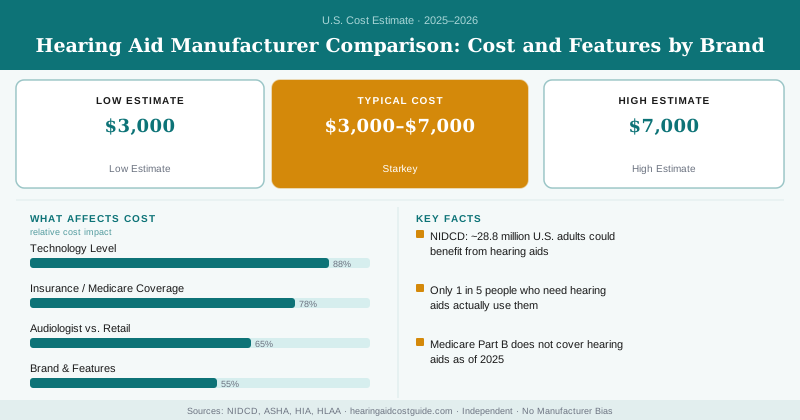
How do you actually pick between six manufacturers whose marketing all sounds identical? Every brand promises “AI-powered sound processing” and “natural hearing” — but the real differences show up in specific technical strengths, not the marketing copy.
Manufacturer Pricing Overview
| Manufacturer | Premium Tier Price (Pair) | Known Strength |
|---|---|---|
| Phonak | $3,000–$7,000 | Connectivity, remote care features, robust build |
| Oticon | $3,000–$6,500 | AI-based sound processing (deep neural network) |
| Resound (GN) | $2,800–$6,000 | Direct smartphone streaming, fall detection |
| Signia | $2,800–$6,500 | Own-voice processing, dual-processing technology |
| Widex | $3,200–$6,800 | Natural, less-processed sound quality |
| Starkey | $3,000–$7,000 | Health sensors (fall detection, activity/heart rate tracking) |
Why Pricing Overlaps So Heavily Between Brands
Unlike consumer electronics categories with clear budget-vs-premium brand identities, hearing aid manufacturers compete largely within the same price bands across comparable technology tiers. A premium device from any of the six major manufacturers listed here will typically cost within a similar range — the practice you visit, your specific market’s overhead costs, and the technology tier you choose (entry, mid, or premium within that brand’s lineup) affect price more than which manufacturer you ultimately select.
What Actually Differentiates Each Brand
Phonak has built a strong reputation around remote care capabilities — allowing audiologists to make programming adjustments remotely via app without an in-office visit — along with rugged, reliable hardware favored in industrial and active-lifestyle use cases.
Oticon emphasizes its deep neural network processing chip, marketed as processing sound more like the human brain naturally would, with a particular focus on reducing listening effort in complex environments.
Resound (GN), was among the first to offer direct Bluetooth streaming to both iPhone and Android without an intermediary device, and has continued to build out health-monitoring features like fall detection.
Signia offers a distinctive “own voice processing” feature, designed to make the wearer’s own voice sound more natural through the hearing aid — a common complaint with earlier-generation devices from any brand.
Widex has a long-standing reputation for prioritizing natural, less digitally processed sound quality, appealing to users sensitive to the “digital” or “processed” quality some wearers notice with heavily algorithm-driven competitors.
Starkey has leaned furthest into health-tracking sensor integration, including fall detection alerts sent to designated contacts and basic activity/engagement tracking — positioning some of its hearing aids as much as health devices as as hearing devices.
Rather than picking a brand first, work backward from these questions with your audiologist:
- What specific hearing loss pattern do I have, and which manufacturer’s technology best addresses it?
- What features matter most to my lifestyle — remote adjustments, health tracking, streaming quality, natural sound?
- Which brands does my audiologist carry and have the most fitting experience with?
- What’s my budget, and which technology tier within each brand fits it?
The “best” manufacturer is the one whose specific strengths match your individual needs — not a universal ranking.
Does Your Audiologist’s Brand Selection Matter?
Most audiology practices carry multiple manufacturer lines rather than being locked into a single brand, which means your audiologist can typically recommend based on your actual hearing profile and preferences rather than inventory constraints. If a practice only carries one manufacturer, ask directly why that specific brand was recommended for your case — a good answer will reference your audiogram pattern and lifestyle, not just availability.
Technology Tiers Exist Within Every Brand
Every major manufacturer offers multiple technology tiers within their own product line — typically basic, mid, and premium — with pricing differences of $1,000–$3,000 between tiers from the same brand. This means a mid-tier device from one manufacturer may cost similarly to a mid-tier device from a competitor, while both are considerably cheaper than either brand’s premium flagship. Comparing tiers, not just brand names, gives a much more accurate cost picture.
Don’t choose a hearing aid manufacturer based solely on online reviews or marketing claims without an in-person trial. Sound quality perception is highly individual, and a feature that reviewers love (like a specific brand’s noise reduction algorithm) may not suit your particular hearing loss pattern or listening environment as well as a different brand’s approach. Insist on a trial period before committing to any specific brand.
Bring your audiogram and a clear list of your daily listening challenges to your fitting appointment — that information matters far more to choosing the right manufacturer than any brand reputation alone.
Frequently Asked Questions
Pricing overlaps significantly across the six major manufacturers (Phonak, Oticon, Resound, Signia, Widex, Starkey), with premium-tier devices from any of them typically running $2,500–$7,000 per pair — the specific practice and technology tier chosen affects price more than brand alone.
The six major manufacturers all produce well-regarded, clinically validated devices, but each has particular strengths — Phonak and Oticon are often noted for connectivity and AI-based sound processing, Widex for natural sound quality, and Starkey for health-tracking sensor features.
It matters less than the technology tier and fitting quality. Most audiologists carry multiple manufacturer lines and will recommend based on your specific hearing loss pattern, lifestyle, and budget rather than being restricted to a single brand — ask why a specific brand is being recommended for your case.